 Add to Chrome
 Add to Firefox
 Add to Edge
Coverage-Driven Adaptive Keyframe Selection for Video Understanding
Aug 01, 2026
Recent advances in large vision-language models (LVLMs) have enabled long-video understanding and analysis. However, processing the large number of frames in a video incurs substantial computational overhead. Existing methods reduce LVLM inference costs by scoring frame-query relevance before inference and selecting keyframes accordingly. Nevertheless, the distribution of relevant frames varies across queries, and these methods often need to score hundreds or thousands of frames. To address this limitation, we propose CSES, a training-free semantic keyframe selector that adaptively determines the numbers of frames to score and keyframes to select. CSES estimates the prominence of the frame-query relevance profile to guide active acquisition and adapt the temporal coverage of each input. It then formulates keyframe selection as a coverage problem that jointly accounts for semantic relevance, temporal redundancy, and visual redundancy. Active acquisition and keyframe selection terminate based on coverage saturation. The selection objective is monotone and submodular, enabling greedy optimization with a standard approximation guarantee. Experiments with four LVLMs on two benchmarks show that our method preserves accuracy while scoring $4$-$13\times$ fewer frames and selecting $18.4\%$-$20.5\%$ fewer input keyframes than existing baselines. CSES further achieves a $3.1$-$5.4\times$ speedup in frame selection over baselines.

Correntropy-Based Logistic Regression with Automatic Relevance Determination for Robust Sparse Brain Activity Decoding
Jul 20, 2022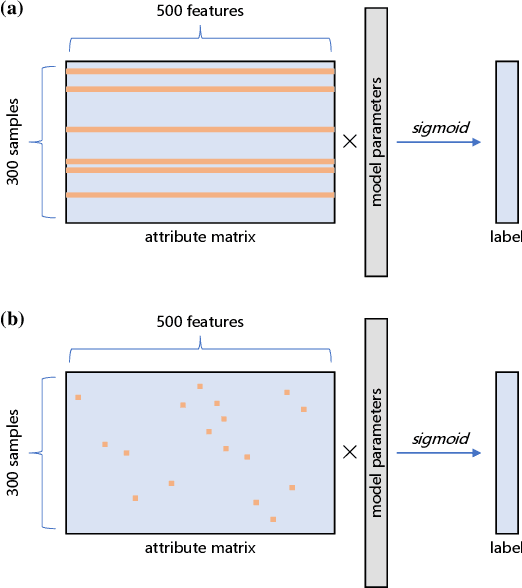
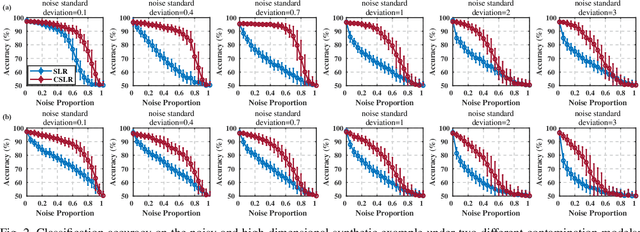
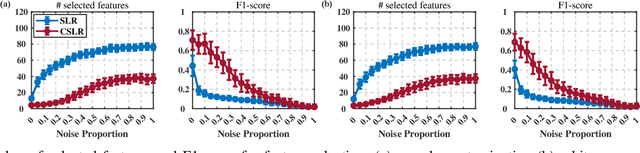
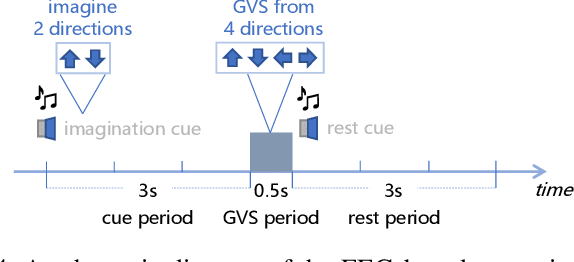
Recent studies have utilized sparse classifications to predict categorical variables from high-dimensional brain activity signals to expose human's intentions and mental states, selecting the relevant features automatically in the model training process. However, existing sparse classification models will likely be prone to the performance degradation which is caused by noise inherent in the brain recordings. To address this issue, we aim to propose a new robust and sparse classification algorithm in this study. To this end, we introduce the correntropy learning framework into the automatic relevance determination based sparse classification model, proposing a new correntropy-based robust sparse logistic regression algorithm. To demonstrate the superior brain activity decoding performance of the proposed algorithm, we evaluate it on a synthetic dataset, an electroencephalogram (EEG) dataset, and a functional magnetic resonance imaging (fMRI) dataset. The extensive experimental results confirm that not only the proposed method can achieve higher classification accuracy in a noisy and high-dimensional classification task, but also it would select those more informative features for the decoding scenarios. Integrating the correntropy learning approach with the automatic relevance determination technique will significantly improve the robustness with respect to the noise, leading to more adequate robust sparse brain decoding algorithm. It provides a more powerful approach in the real-world brain activity decoding and the brain-computer interfaces.