 Add to Chrome
 Add to Firefox
 Add to Edge
Seeing What Matters: Perceptual Wrapper with Common Randomness for 3D Gaussian Splatting
Jun 10, 2026
While 3D Gaussian Splatting (3DGS) achieves impressive real-time rendering, it frequently struggles to synthesize high-frequency textures, a limitation heavily exacerbated in memory-constrained and rate-distortion-optimized (RDO) pipelines. To address this, we propose a versatile 2D perceptual wrapper that enhances the rendered outputs of existing 3DGS representations in a content- and view-dependent manner. Our method leverages a lightweight synthesis network conditioned on pseudo-random Gaussian noise to synthesize perceptually plausible textures. Supervised by Wasserstein Distortion, the network learns to match local feature statistics rather than strictly enforcing pixel-wise reconstruction fidelity, effectively mitigating the blurriness inherent in standard frameworks. We demonstrate the broad applicability of our plug-and-play approach across vanilla, memory-constrained, and RDO 3DGS methods. Comprehensive subjective and objective experiments confirm that our method significantly improves over existing baselines, yielding superior perceptual quality at sharply reduced file or model sizes.

FinNuE: Exposing the Risks of Using BERTScore for Numerical Semantic Evaluation in Finance
Nov 13, 2025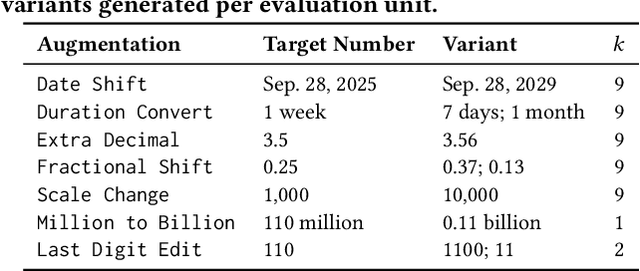
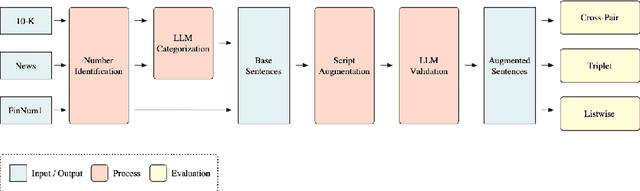
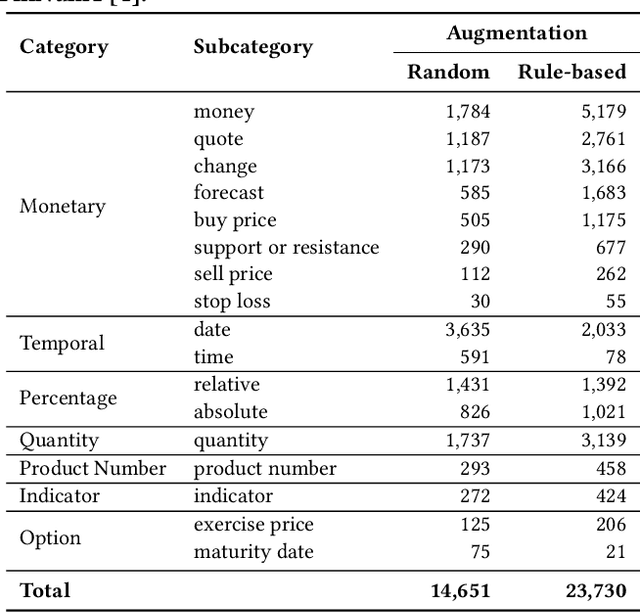

BERTScore has become a widely adopted metric for evaluating semantic similarity between natural language sentences. However, we identify a critical limitation: BERTScore exhibits low sensitivity to numerical variation, a significant weakness in finance where numerical precision directly affects meaning (e.g., distinguishing a 2% gain from a 20% loss). We introduce FinNuE, a diagnostic dataset constructed with controlled numerical perturbations across earnings calls, regulatory filings, social media, and news articles. Using FinNuE, demonstrate that BERTScore fails to distinguish semantically critical numerical differences, often assigning high similarity scores to financially divergent text pairs. Our findings reveal fundamental limitations of embedding-based metrics for finance and motivate numerically-aware evaluation frameworks for financial NLP.