 Add to Chrome
 Add to Firefox
 Add to Edge
FinNuE: Exposing the Risks of Using BERTScore for Numerical Semantic Evaluation in Finance
Nov 13, 2025
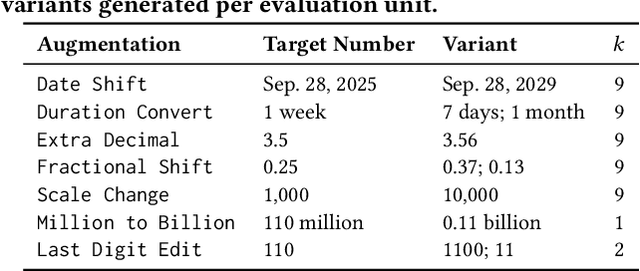
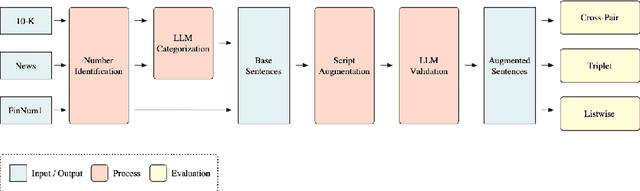
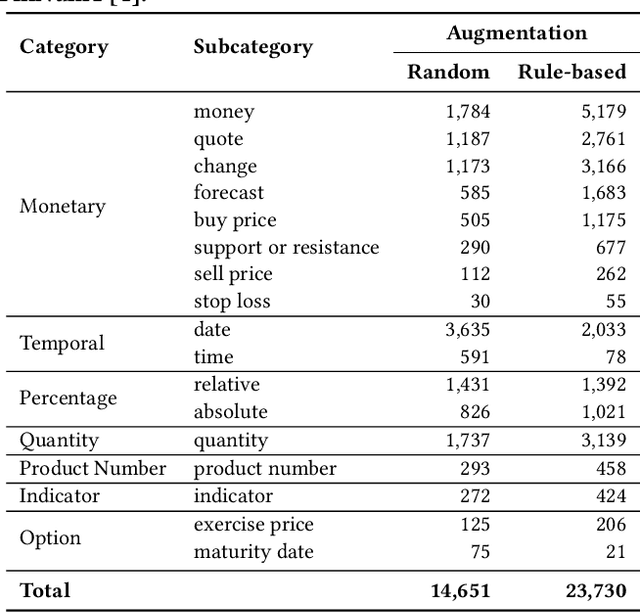

BERTScore has become a widely adopted metric for evaluating semantic similarity between natural language sentences. However, we identify a critical limitation: BERTScore exhibits low sensitivity to numerical variation, a significant weakness in finance where numerical precision directly affects meaning (e.g., distinguishing a 2% gain from a 20% loss). We introduce FinNuE, a diagnostic dataset constructed with controlled numerical perturbations across earnings calls, regulatory filings, social media, and news articles. Using FinNuE, demonstrate that BERTScore fails to distinguish semantically critical numerical differences, often assigning high similarity scores to financially divergent text pairs. Our findings reveal fundamental limitations of embedding-based metrics for finance and motivate numerically-aware evaluation frameworks for financial NLP.

Decision-Oriented Text Evaluation
Jul 03, 2025


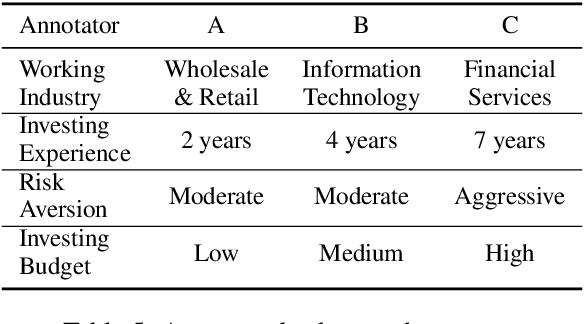
Natural language generation (NLG) is increasingly deployed in high-stakes domains, yet common intrinsic evaluation methods, such as n-gram overlap or sentence plausibility, weakly correlate with actual decision-making efficacy. We propose a decision-oriented framework for evaluating generated text by directly measuring its influence on human and large language model (LLM) decision outcomes. Using market digest texts--including objective morning summaries and subjective closing-bell analyses--as test cases, we assess decision quality based on the financial performance of trades executed by human investors and autonomous LLM agents informed exclusively by these texts. Our findings reveal that neither humans nor LLM agents consistently surpass random performance when relying solely on summaries. However, richer analytical commentaries enable collaborative human-LLM teams to outperform individual human or agent baselines significantly. Our approach underscores the importance of evaluating generated text by its ability to facilitate synergistic decision-making between humans and LLMs, highlighting critical limitations of traditional intrinsic metrics.