 Add to Chrome
 Add to Firefox
 Add to Edge
A Low-Cost Hybrid Reservoir Computing Model for Isolated Sign Language Video Recognition
Aug 04, 2026
Sign language recognition (SLR) enhances communication between hearing and hearing-impaired individuals. Although deep learning (DL) has achieved promising performance in SLR, its high computational cost limits deployment on edge devices. To address this challenge, we propose a lightweight reservoir computing (RC)-based approach for SLR. In the proposed method, MediaPipe extracts body and hand keypoints to capture the spatial and temporal dynamics of gestures. These keypoints are then processed by a hybrid reservoir computing (HRC) architecture that combines deep reservoir computing (DRC) and bidirectional reservoir computing (BRC), transforming the input into a high-dimensional dynamic representation. A ridge regression model maps the final HRC state to class labels. This HRC-based SLR method achieved Top-1, Top-5, and Top-10 accuracies of 61.12%, 86.05%, and 92.56%, respectively, on the Word-Level American Sign Language 100 (WLASL100) video dataset, demonstrating competitive performance compared to deep learning-based approaches. Additionally, due to the lightweight nature of RC, the training time was drastically reduced to only a few seconds compared with DL-based methods such as Bi-GRU.This method offers low computational cost, showing its potential for deployment on edge devices.

CBM-Dual: A 65-nm Fully Connected Chaotic Boltzmann Machine Processor for Dual Function Simulated Annealing and Reservoir Computing
Apr 08, 2026This paper presents CBM-Dual, the first silicon-proven digital chaotic dynamics processor (CDP) supporting both simulated annealing (SA) and reservoir computing (RC). CBM-Dual enables real-time decision-making and lightweight adaptation for autonomous Edge AI, employing the largest-scale fully connected 1024-neuron chaotic Boltzmann machine (CBM). To address the high computational and area costs of digital CDPs, we propose: 1) a CBM-specific scheduler that exploits an inherently low neuron flip rate to reduce multiply-accumulate operations by 99%, and 2) an efficient multiply splitting scheme that reduces the area by 59%. Fabricated in 65nm (12mm$^2$), CBM-Dual achieves simultaneous heterogeneous task execution and state-of-the-art energy efficiency, delivering $\times$25-54 and $\times$4.5 improvements in the SA and RC fields, respectively.
Reservoir Computing inspired Matrix Multiplication-free Language Model
Dec 29, 2025Large language models (LLMs) have achieved state-of-the-art performance in natural language processing; however, their high computational cost remains a major bottleneck. In this study, we target computational efficiency by focusing on a matrix multiplication free language model (MatMul-free LM) and further reducing the training cost through an architecture inspired by reservoir computing. Specifically, we partially fix and share the weights of selected layers in the MatMul-free LM and insert reservoir layers to obtain rich dynamic representations without additional training overhead. Additionally, several operations are combined to reduce memory accesses. Experimental results show that the proposed architecture reduces the number of parameters by up to 19%, training time by 9.9%, and inference time by 8.0%, while maintaining comparable performance to the baseline model.
Sign Language Recognition using Parallel Bidirectional Reservoir Computing
Dec 22, 2025
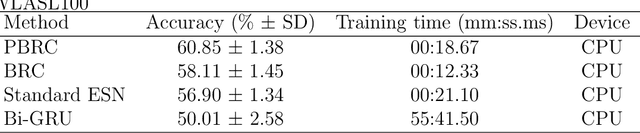
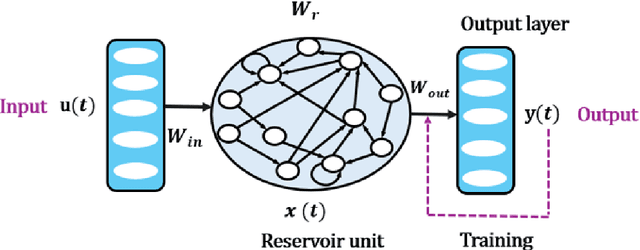
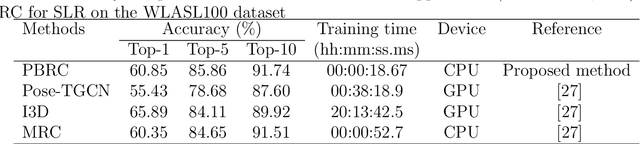
Sign language recognition (SLR) facilitates communication between deaf and hearing communities. Deep learning based SLR models are commonly used but require extensive computational resources, making them unsuitable for deployment on edge devices. To address these limitations, we propose a lightweight SLR system that combines parallel bidirectional reservoir computing (PBRC) with MediaPipe. MediaPipe enables real-time hand tracking and precise extraction of hand joint coordinates, which serve as input features for the PBRC architecture. The proposed PBRC architecture consists of two echo state network (ESN) based bidirectional reservoir computing (BRC) modules arranged in parallel to capture temporal dependencies, thereby creating a rich feature representation for classification. We trained our PBRC-based SLR system on the Word-Level American Sign Language (WLASL) video dataset, achieving top-1, top-5, and top-10 accuracies of 60.85%, 85.86%, and 91.74%, respectively. Training time was significantly reduced to 18.67 seconds due to the intrinsic properties of reservoir computing, compared to over 55 minutes for deep learning based methods such as Bi-GRU. This approach offers a lightweight, cost-effective solution for real-time SLR on edge devices.
Hibikino-Musashi@Home 2024 Team Description Paper
Oct 08, 2024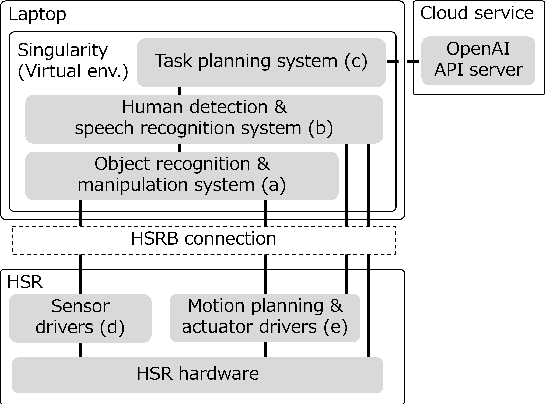
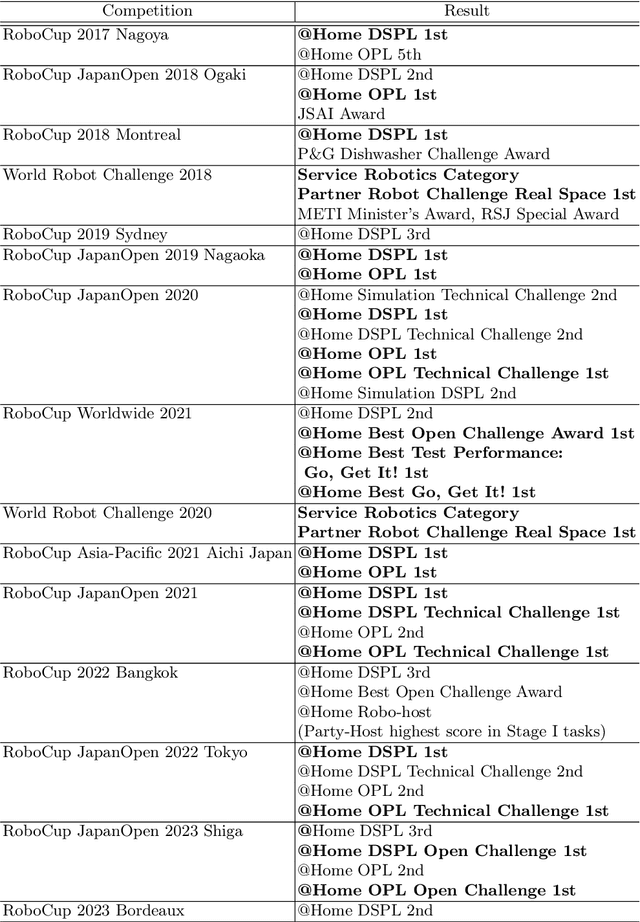
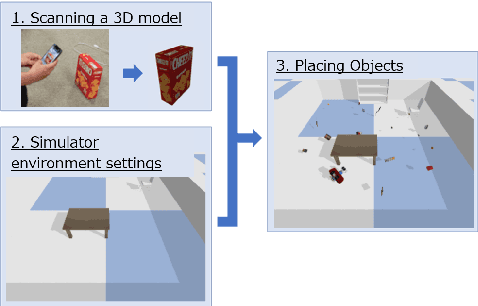
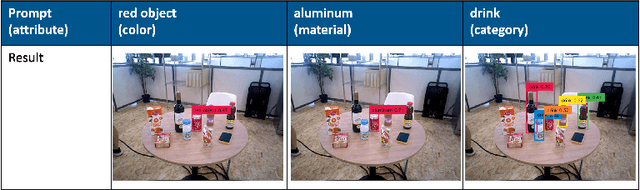
This paper provides an overview of the techniques employed by Hibikino-Musashi@Home, which intends to participate in the domestic standard platform league. The team has developed a dataset generator for training a robot vision system and an open-source development environment running on a Human Support Robot simulator. The large language model powered task planner selects appropriate primitive skills to perform the task requested by users. The team aims to design a home service robot that can assist humans in their homes and continuously attends competitions to evaluate and improve the developed system.
Hibikino-Musashi@Home 2023 Team Description Paper
Oct 19, 2023This paper describes an overview of the techniques of Hibikino-Musashi@Home, which intends to participate in the domestic standard platform league. The team has developed a dataset generator for the training of a robot vision system and an open-source development environment running on a human support robot simulator. The robot system comprises self-developed libraries including those for motion synthesis and open-source software works on the robot operating system. The team aims to realize a home service robot that assists humans in a home, and continuously attend the competition to evaluate the developed system. The brain-inspired artificial intelligence system is also proposed for service robots which are expected to work in a real home environment.
Hibikino-Musashi@Home 2022 Team Description Paper
Nov 12, 2022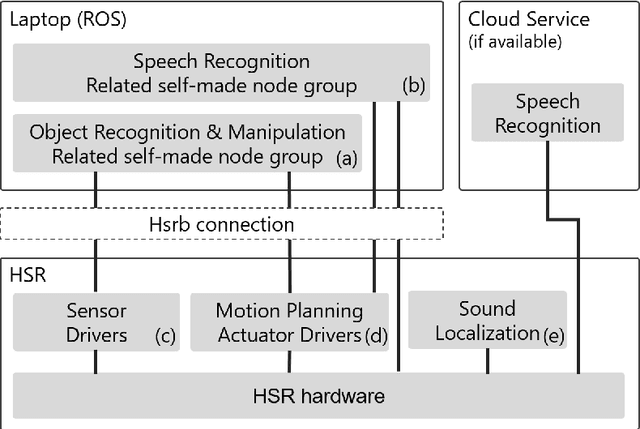

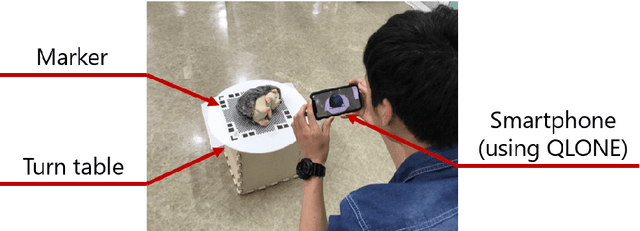
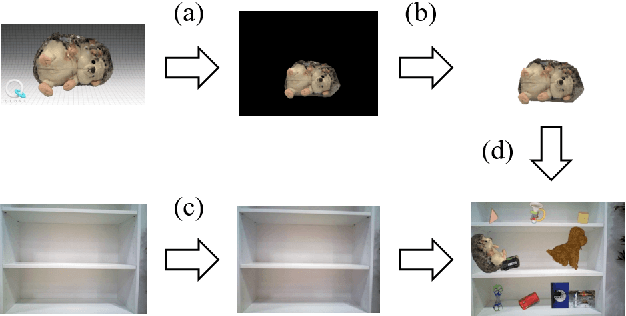
Our team, Hibikino-Musashi@Home (HMA), was founded in 2010. It is based in Japan in the Kitakyushu Science and Research Park. Since 2010, we have annually participated in the RoboCup@Home Japan Open competition in the open platform league (OPL).We participated as an open platform league team in the 2017 Nagoya RoboCup competition and as a domestic standard platform league (DSPL) team in the 2017 Nagoya, 2018 Montreal, 2019 Sydney, and 2021 Worldwide RoboCup competitions.We also participated in theWorld Robot Challenge (WRC) 2018 in the service-robotics category of the partner-robot challenge (real space) and won first place. Currently, we have 27 members from nine different laboratories within the Kyushu Institute of Technology and the university of Kitakyushu. In this paper, we introduce the activities that have been performed by our team and the technologies that we use.
Hibikino-Musashi@Home 2018 Team Description Paper
Nov 09, 2022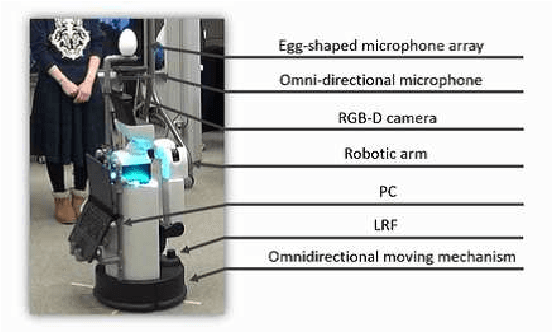

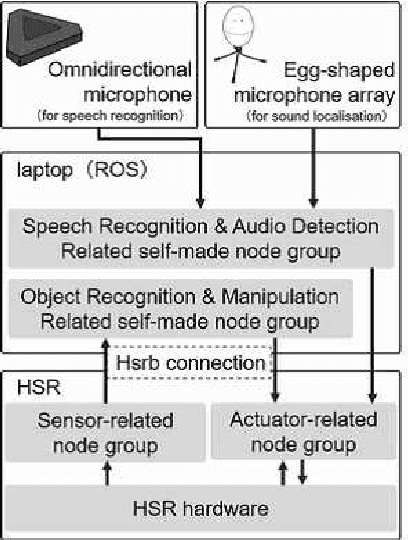

Our team, Hibikino-Musashi@Home (the shortened name is HMA), was founded in 2010. It is based in the Kitakyushu Science and Research Park, Japan. We have participated in the RoboCup@Home Japan open competition open platform league every year since 2010. Moreover, we participated in the RoboCup 2017 Nagoya as open platform league and domestic standard platform league teams. Currently, the Hibikino-Musashi@Home team has 20 members from seven different laboratories based in the Kyushu Institute of Technology. In this paper, we introduce the activities of our team and the technologies.
Hibikino-Musashi@Home 2019 Team Description Paper
May 29, 2020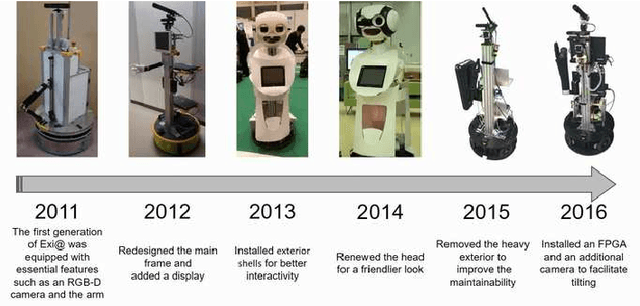
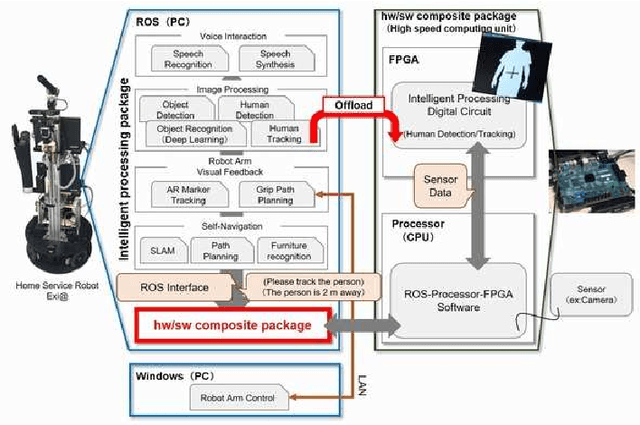
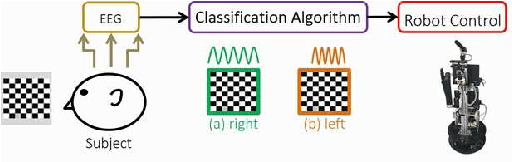
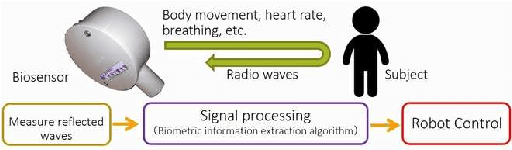
Our team, Hibikino-Musashi@Home (HMA), was founded in 2010. It is based in the Kitakyushu Science and Research Park, Japan. Since 2010, we have participated in the RoboCup@Home Japan Open competition open platform league annually. We have also participated in the RoboCup 2017 Nagoya as an open platform league and domestic standard platform league teams, and in the RoboCup 2018 Montreal as a domestic standard platform league team. Currently, we have 23 members from seven different laboratories based in Kyushu Institute of Technology. This paper aims to introduce the activities that are performed by our team and the technologies that we use.
Hibikino-Musashi@Home 2020 Team Description Paper
May 29, 2020Our team, Hibikino-Musashi@Home (HMA), was founded in 2010. It is based in Japan in the Kitakyushu Science and Research Park. Since 2010, we have annually participated in the RoboCup@Home Japan Open competition in the open platform league (OPL). We participated as an open platform league team in the 2017 Nagoya RoboCup competition and as a domestic standard platform league (DSPL) team in the 2017 Nagoya, 2018 Montreal, and 2019 Sydney RoboCup competitions. We also participated in the World Robot Challenge (WRC) 2018 in the service-robotics category of the partner-robot challenge (real space) and won first place. Currently, we have 20 members from eight different laboratories within the Kyushu Institute of Technology. In this paper, we introduce the activities that have been performed by our team and the technologies that we use.