 Add to Chrome
 Add to Firefox
 Add to Edge
Robust Set-Membership Diffusion Normalization Subband Adaptive Filtering Algorithms Over Distributed Networks
Jun 03, 2026
With the development of wireless sensor networks, distributed networks have received widespread attention. According to the different ways of connecting the nodes in the distributed network can be divided into different structures, of which the diffusion type structure is the most commonly used one due to its simple, stable and reliable. In order to improve the robustness of the diffusion subband algorithm in distributed networks, the median absolute deviation (MAD) theorem is applied to the error boundary selection, and this paper proposes a diffusion subband algorithm with a robust boundary. Through simulations, it is verified that the proposed algorithm can effectively reduce the update step size in the face of outlier interference, so that the algorithm has a good convergence performance and also has good robustness to impulsive noise.

Peak-Piloted Deep Network for Facial Expression Recognition
Jan 03, 2017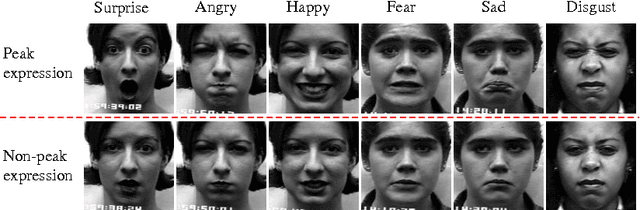
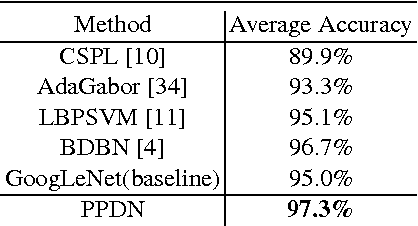
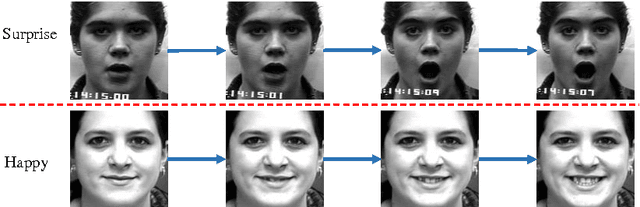
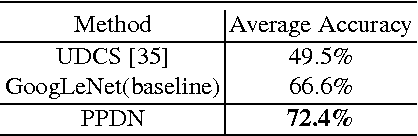
Objective functions for training of deep networks for face-related recognition tasks, such as facial expression recognition (FER), usually consider each sample independently. In this work, we present a novel peak-piloted deep network (PPDN) that uses a sample with peak expression (easy sample) to supervise the intermediate feature responses for a sample of non-peak expression (hard sample) of the same type and from the same subject. The expression evolving process from non-peak expression to peak expression can thus be implicitly embedded in the network to achieve the invariance to expression intensities. A special purpose back-propagation procedure, peak gradient suppression (PGS), is proposed for network training. It drives the intermediate-layer feature responses of non-peak expression samples towards those of the corresponding peak expression samples, while avoiding the inverse. This avoids degrading the recognition capability for samples of peak expression due to interference from their non-peak expression counterparts. Extensive comparisons on two popular FER datasets, Oulu-CASIA and CK+, demonstrate the superiority of the PPDN over state-ofthe-art FER methods, as well as the advantages of both the network structure and the optimization strategy. Moreover, it is shown that PPDN is a general architecture, extensible to other tasks by proper definition of peak and non-peak samples. This is validated by experiments that show state-of-the-art performance on pose-invariant face recognition, using the Multi-PIE dataset.