 Add to Chrome
 Add to Firefox
 Add to Edge
Beyond Chunk-Then-Embed: A Comprehensive Taxonomy and Evaluation of Document Chunking Strategies for Information Retrieval
Feb 19, 2026
Document chunking is a critical preprocessing step in dense retrieval systems, yet the design space of chunking strategies remains poorly understood. Recent research has proposed several concurrent approaches, including LLM-guided methods (e.g., DenseX and LumberChunker) and contextualized strategies(e.g., Late Chunking), which generate embeddings before segmentation to preserve contextual information. However, these methods emerged independently and were evaluated on benchmarks with minimal overlap, making direct comparisons difficult. This paper reproduces prior studies in document chunking and presents a systematic framework that unifies existing strategies along two key dimensions: (1) segmentation methods, including structure-based methods (fixed-size, sentence-based, and paragraph-based) as well as semantically-informed and LLM-guided methods; and (2) embedding paradigms, which determine the timing of chunking relative to embedding (pre-embedding chunking vs. contextualized chunking). Our reproduction evaluates these approaches in two distinct retrieval settings established in previous work: in-document retrieval (needle-in-a-haystack) and in-corpus retrieval (the standard information retrieval task). Our comprehensive evaluation reveals that optimal chunking strategies are task-dependent: simple structure-based methods outperform LLM-guided alternatives for in-corpus retrieval, while LumberChunker performs best for in-document retrieval. Contextualized chunking improves in-corpus effectiveness but degrades in-document retrieval. We also find that chunk size correlates moderately with in-document but weakly with in-corpus effectiveness, suggesting segmentation method differences are not purely driven by chunk size. Our code and evaluation benchmarks are publicly available at (Anonymoused).

NSSI-Net: Multi-Concept Generative Adversarial Network for Non-Suicidal Self-Injury Detection Using High-Dimensional EEG Signals in a Semi-Supervised Learning Framework
Oct 16, 2024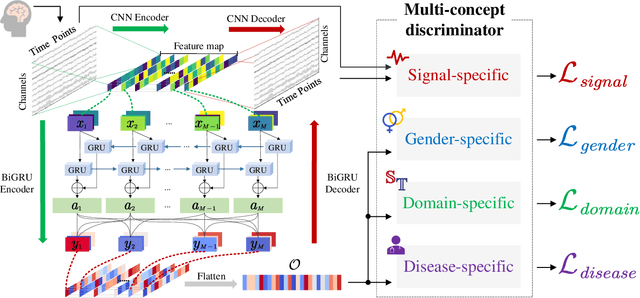

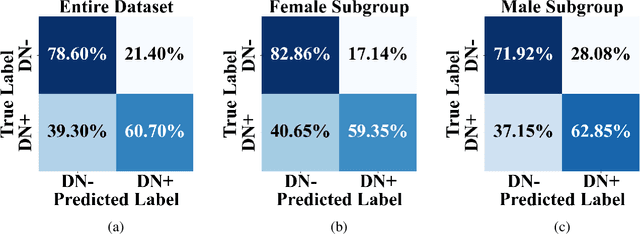
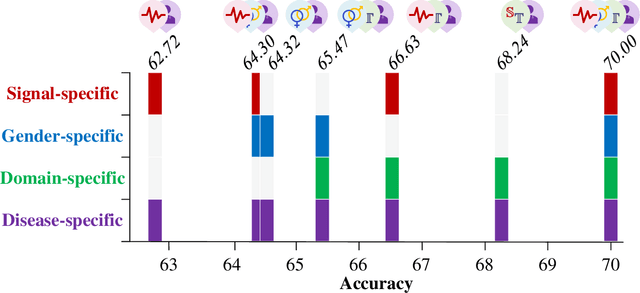
Non-suicidal self-injury (NSSI) is a serious threat to the physical and mental health of adolescents, significantly increasing the risk of suicide and attracting widespread public concern. Electroencephalography (EEG), as an objective tool for identifying brain disorders, holds great promise. However, extracting meaningful and reliable features from high-dimensional EEG data, especially by integrating spatiotemporal brain dynamics into informative representations, remains a major challenge. In this study, we introduce an advanced semi-supervised adversarial network, NSSI-Net, to effectively model EEG features related to NSSI. NSSI-Net consists of two key modules: a spatial-temporal feature extraction module and a multi-concept discriminator. In the spatial-temporal feature extraction module, an integrated 2D convolutional neural network (2D-CNN) and a bi-directional Gated Recurrent Unit (BiGRU) are used to capture both spatial and temporal dynamics in EEG data. In the multi-concept discriminator, signal, gender, domain, and disease levels are fully explored to extract meaningful EEG features, considering individual, demographic, disease variations across a diverse population. Based on self-collected NSSI data (n=114), the model's effectiveness and reliability are demonstrated, with a 7.44% improvement in performance compared to existing machine learning and deep learning methods. This study advances the understanding and early diagnosis of NSSI in adolescents with depression, enabling timely intervention. The source code is available at https://github.com/Vesan-yws/NSSINet.