 Add to Chrome
 Add to Firefox
 Add to Edge
Simple Baselines are Competitive with Code Evolution
Feb 18, 2026
Code evolution is a family of techniques that rely on large language models to search through possible computer programs by evolving or mutating existing code. Many proposed code evolution pipelines show impressive performance but are often not compared to simpler baselines. We test how well two simple baselines do over three domains: finding better mathematical bounds, designing agentic scaffolds, and machine learning competitions. We find that simple baselines match or exceed much more sophisticated methods in all three. By analyzing these results we find various shortcomings in how code evolution is both developed and used. For the mathematical bounds, a problem's search space and domain knowledge in the prompt are chiefly what dictate a search's performance ceiling and efficiency, with the code evolution pipeline being secondary. Thus, the primary challenge in finding improved bounds is designing good search spaces, which is done by domain experts, and not the search itself. When designing agentic scaffolds we find that high variance in the scaffolds coupled with small datasets leads to suboptimal scaffolds being selected, resulting in hand-designed majority vote scaffolds performing best. We propose better evaluation methods that reduce evaluation stochasticity while keeping the code evolution economically feasible. We finish with a discussion of avenues and best practices to enable more rigorous code evolution in future work.

Does Double Descent Occur in Self-Supervised Learning?
Jul 15, 2023
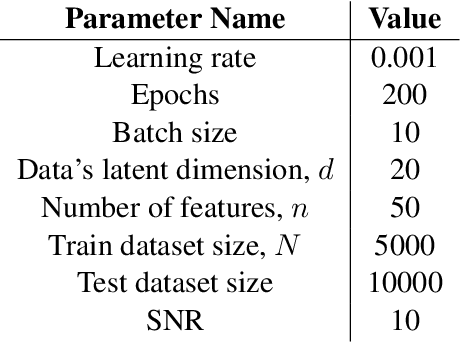
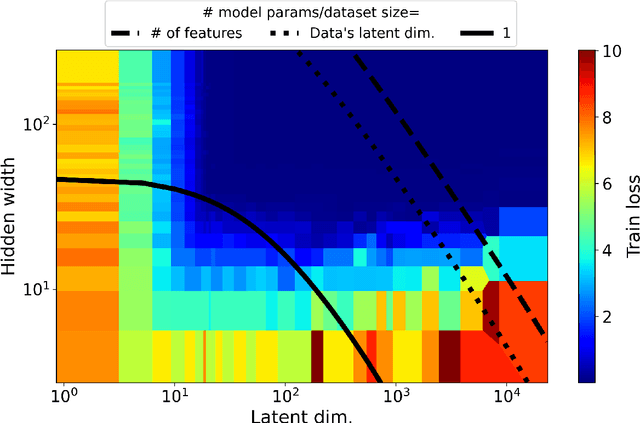
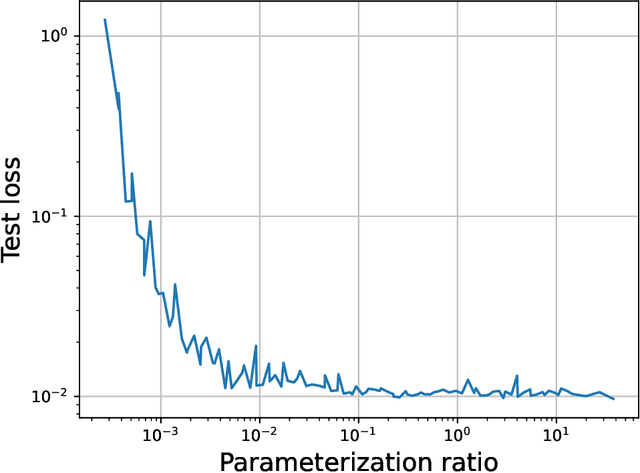
Most investigations into double descent have focused on supervised models while the few works studying self-supervised settings find a surprising lack of the phenomenon. These results imply that double descent may not exist in self-supervised models. We show this empirically using a standard and linear autoencoder, two previously unstudied settings. The test loss is found to have either a classical U-shape or to monotonically decrease instead of exhibiting a double-descent curve. We hope that further work on this will help elucidate the theoretical underpinnings of this phenomenon.
Group Invariant Global Pooling
May 30, 2023

Much work has been devoted to devising architectures that build group-equivariant representations, while invariance is often induced using simple global pooling mechanisms. Little work has been done on creating expressive layers that are invariant to given symmetries, despite the success of permutation invariant pooling in various molecular tasks. In this work, we present Group Invariant Global Pooling (GIGP), an invariant pooling layer that is provably sufficiently expressive to represent a large class of invariant functions. We validate GIGP on rotated MNIST and QM9, showing improvements for the latter while attaining identical results for the former. By making the pooling process group orbit-aware, this invariant aggregation method leads to improved performance, while performing well-principled group aggregation.