 Add to Chrome
 Add to Firefox
 Add to Edge
Order Matters: Rethinking Prompt Construction in In-Context Learning
Nov 12, 2025
In-context learning (ICL) enables large language models to perform new tasks by conditioning on a sequence of examples. Most prior work reasonably and intuitively assumes that which examples are chosen has a far greater effect on performance than how those examples are ordered, leading to a focus on example selection. We revisit this assumption and conduct a systematic comparison between the effect of selection and ordering. Through controlled experiments on both classification and generation tasks, using multiple open-source model families (0.5B to 27B parameters) and GPT-5, we find that the variance in performance due to different example orderings is comparable to that from using entirely different example sets. Furthermore, we show that strong orderings can be identified using only a development set, achieving performance close to an oracle that selects the best ordering based on test labels. Our findings highlight the equal and intertwined importance of example selection and ordering in prompt design, calling for a reexamination of the assumptions held in ICL.

Deep learning network to correct axial and coronal eye motion in 3D OCT retinal imaging
May 27, 2023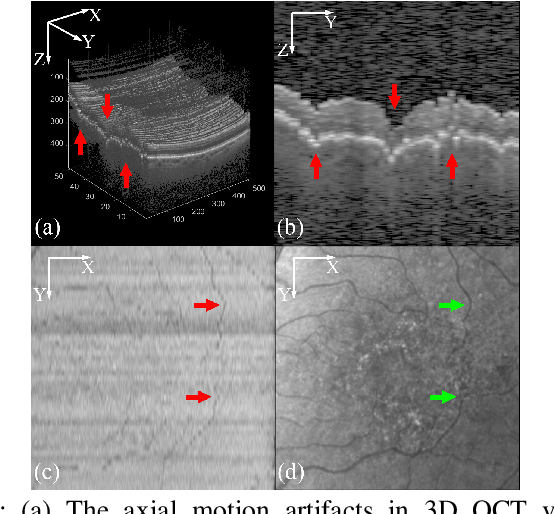
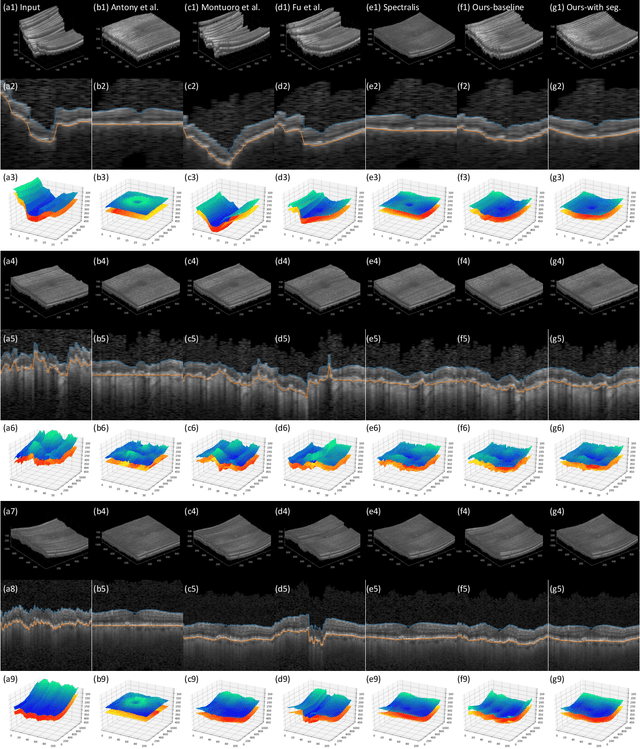
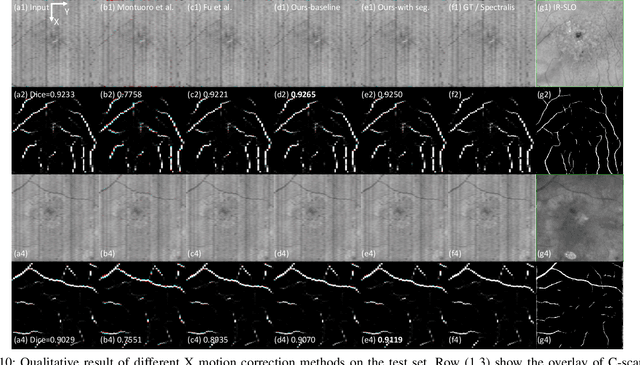
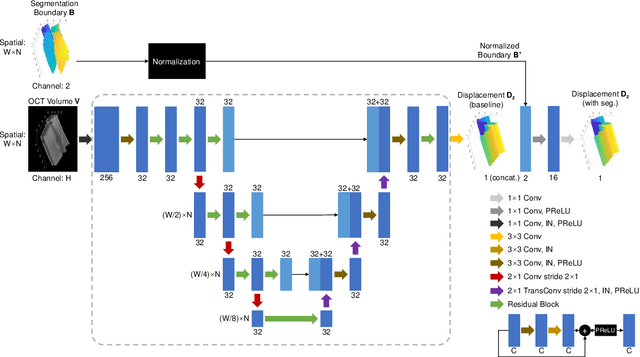
Optical Coherence Tomography (OCT) is one of the most important retinal imaging technique. However, involuntary motion artifacts still pose a major challenge in OCT imaging that compromises the quality of downstream analysis, such as retinal layer segmentation and OCT Angiography. We propose deep learning based neural networks to correct axial and coronal motion artifacts in OCT based on a single volumetric scan. The proposed method consists of two fully-convolutional neural networks that predict Z and X dimensional displacement maps sequentially in two stages. The experimental result shows that the proposed method can effectively correct motion artifacts and achieve smaller error than other methods. Specifically, the method can recover the overall curvature of the retina, and can be generalized well to various diseases and resolutions.