 Add to Chrome
 Add to Firefox
 Add to Edge
A Single Rewrite Suffices: Empirical Lessons from Production Skill Description Optimization
Jun 29, 2026
Enterprise AI agents route user queries to specialized skills by matching queries against natural language skill descriptions. When two skills share overlapping descriptions, the routing LLM misroutes queries, a failure we term skill collision. As agents scale to dozens of skills, manually tuning descriptions to maintain routing accuracy becomes a significant engineering bottleneck. We deploy an automated description optimization pipeline on a production enterprise group chat agent (9 skills, 372 regression cases). The pipeline produces descriptions averaging 79.2% F1, matching manually tuned descriptions at 79.4% F1 (average per-skill difference -0.20%, within the 0.78% multi-seed noise floor), while reducing per-skill engineering effort from 120 minutes to 3.8 minutes (32 times speedup). We then examine which pipeline components actually drive this match. Systematic ablation on both the production system and ToolBench (16k tools) reveals that a single LLM rewrite using any available false-positive and false-negative cases captures most of the available improvement. Other design choices we tested (iteration budget, feedback signal composition, dual editing of confused pairs, and training set size) each affect final F1 by less than 0.5%. Description optimization addresses skill collisions caused by overlapping descriptions but cannot resolve cases where two skills intended scopes genuinely overlap. We identify a diagnostic (a large train-validation F1 gap) that flags the latter cases for architectural rather than text-level intervention.

Electric Vehicle Driver Clustering using Statistical Model and Machine Learning
Feb 12, 2018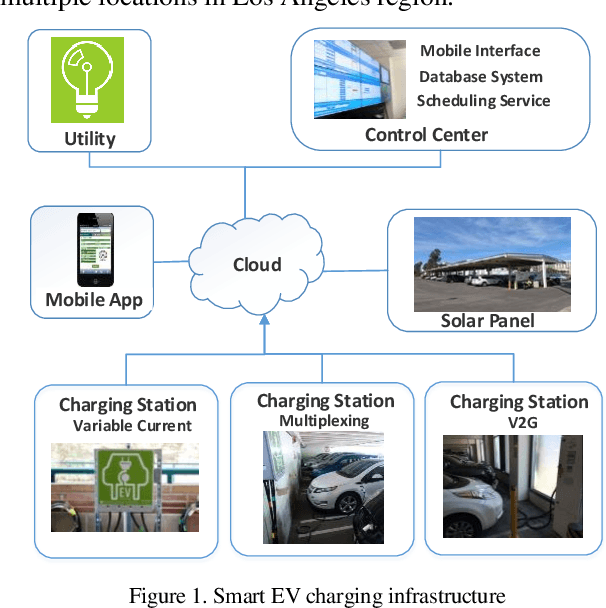
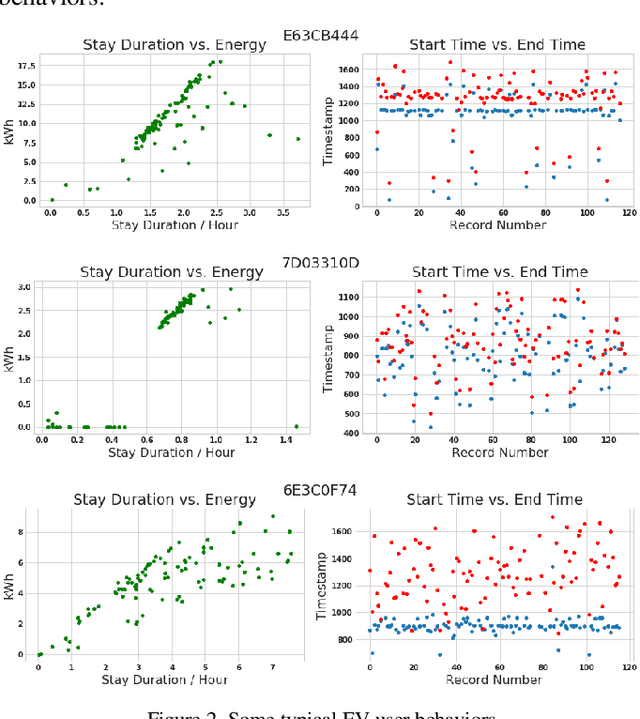
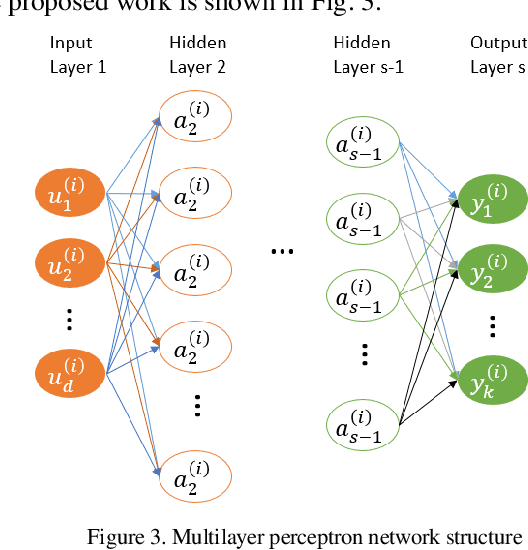

Electric Vehicle (EV) is playing a significant role in the distribution energy management systems since the power consumption level of the EVs is much higher than the other regular home appliances. The randomness of the EV driver behaviors make the optimal charging or discharging scheduling even more difficult due to the uncertain charging session parameters. To minimize the impact of behavioral uncertainties, it is critical to develop effective methods to predict EV load for smart EV energy management. Using the EV smart charging infrastructures on UCLA campus and city of Santa Monica as testbeds, we have collected real-world datasets of EV charging behaviors, based on which we proposed an EV user modeling technique which combines statistical analysis and machine learning approaches. Specifically, unsupervised clustering algorithm, and multilayer perceptron are applied to historical charging record to make the day-ahead EV parking and load prediction. Experimental results with cross-validation show that our model can achieve good performance for charging control scheduling and online EV load forecasting.