 Add to Chrome
 Add to Firefox
 Add to Edge
SARE: Sample-wise Adaptive Reasoning for Training-free Fine-grained Visual Recognition
Mar 18, 2026
Recent advances in Large Vision-Language Models (LVLMs) have enabled training-free Fine-Grained Visual Recognition (FGVR). However, effectively exploiting LVLMs for FGVR remains challenging due to the inherent visual ambiguity of subordinate-level categories. Existing methods predominantly adopt either retrieval-oriented or reasoning-oriented paradigms to tackle this challenge, but both are constrained by two fundamental limitations:(1) They apply the same inference pipeline to all samples without accounting for uneven recognition difficulty, thereby leading to suboptimal accuracy and efficiency; (2) The lack of mechanisms to consolidate and reuse error-specific experience causes repeated failures on similar challenging cases. To address these limitations, we propose SARE, a Sample-wise Adaptive textbfREasoning framework for training-free FGVR. Specifically, SARE adopts a cascaded design that combines fast candidate retrieval with fine-grained reasoning, invoking the latter only when necessary. In the reasoning process, SARE incorporates a self-reflective experience mechanism that leverages past failures to provide transferable discriminative guidance during inference, without any parameter updates. Extensive experiments across 14 datasets substantiate that SARE achieves state-of-the-art performance while substantially reducing computational overhead.

SELECT: Detecting Label Errors in Real-world Scene Text Data
Dec 16, 2025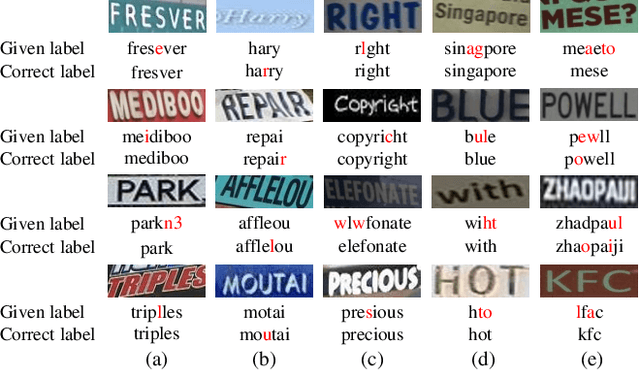
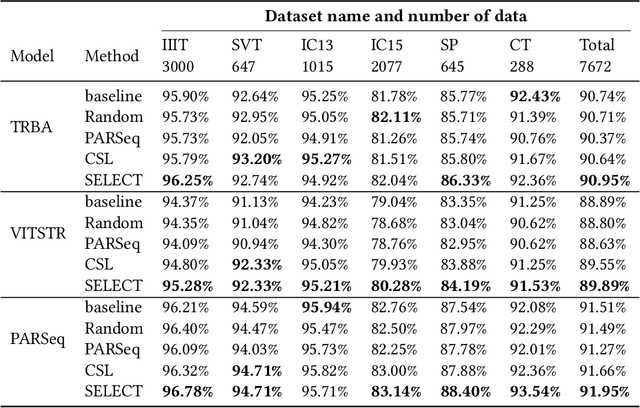
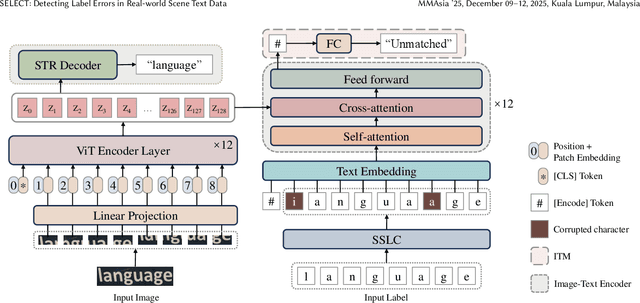
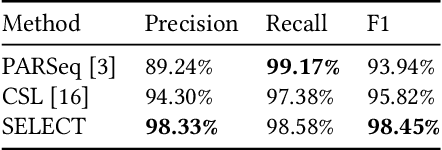
We introduce SELECT (Scene tExt Label Errors deteCTion), a novel approach that leverages multi-modal training to detect label errors in real-world scene text datasets. Utilizing an image-text encoder and a character-level tokenizer, SELECT addresses the issues of variable-length sequence labels, label sequence misalignment, and character-level errors, outperforming existing methods in accuracy and practical utility. In addition, we introduce Similarity-based Sequence Label Corruption (SSLC), a process that intentionally introduces errors into the training labels to mimic real-world error scenarios during training. SSLC not only can cause a change in the sequence length but also takes into account the visual similarity between characters during corruption. Our method is the first to detect label errors in real-world scene text datasets successfully accounting for variable-length labels. Experimental results demonstrate the effectiveness of SELECT in detecting label errors and improving STR accuracy on real-world text datasets, showcasing its practical utility.
BioMARS: A Multi-Agent Robotic System for Autonomous Biological Experiments
Jul 02, 2025Large language models (LLMs) and vision-language models (VLMs) have the potential to transform biological research by enabling autonomous experimentation. Yet, their application remains constrained by rigid protocol design, limited adaptability to dynamic lab conditions, inadequate error handling, and high operational complexity. Here we introduce BioMARS (Biological Multi-Agent Robotic System), an intelligent platform that integrates LLMs, VLMs, and modular robotics to autonomously design, plan, and execute biological experiments. BioMARS uses a hierarchical architecture: the Biologist Agent synthesizes protocols via retrieval-augmented generation; the Technician Agent translates them into executable robotic pseudo-code; and the Inspector Agent ensures procedural integrity through multimodal perception and anomaly detection. The system autonomously conducts cell passaging and culture tasks, matching or exceeding manual performance in viability, consistency, and morphological integrity. It also supports context-aware optimization, outperforming conventional strategies in differentiating retinal pigment epithelial cells. A web interface enables real-time human-AI collaboration, while a modular backend allows scalable integration with laboratory hardware. These results highlight the feasibility of generalizable, AI-driven laboratory automation and the transformative role of language-based reasoning in biological research.