 Add to Chrome
 Add to Firefox
 Add to Edge
Semantic Step Prediction: Multi-Step Latent Forecasting in LLM Reasoning Trajectories via Step Sampling
Apr 20, 2026
Semantic Tube Prediction (STP) leverages representation geometric to regularize LLM hidden-state trajectories toward locally linear geodesics during fine-tuning, thereby greatly improving data efficiency. The original STP recipe samples random token sub-spans, which is compatible with the base large language model (LLM) training architecture. Inspired by STP, we are interested to investigate whether the sampling position can further enhance the semantic structure of multi-step reasoning, and hence affect its geometric impact. We applied STP at consecutive semantic reasoning step boundaries and achieved 168x more accurate multi-step latent prediction than frozen baselines on ProcessBench (3,400 samples), compared to only 4x for the random-token STP. Probing the latent manifold with a learned non-linear predictor reveals that STP-shaped trajectories are smooth curves, not straight lines: a 3-layer MLP reduces prediction error by a further 3-12x over linear extrapolation on step-boundary models. Removing the language modeling loss yields trajectories that are 2x more MLP-predictable than the combined loss, revealing a tradeoff between generation quality and geometric purity. Our results identify sampling position as the critical variable in geometric regularization and establish multi-step latent prediction MSE as a new evaluation metric for this class of methods.

Enhancing Reasoning Capacity of SLM using Cognitive Enhancement
Apr 01, 2024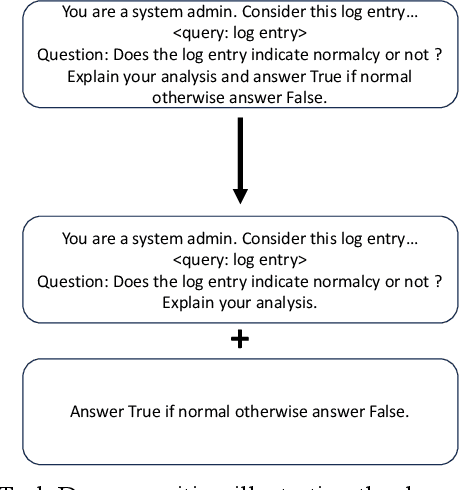
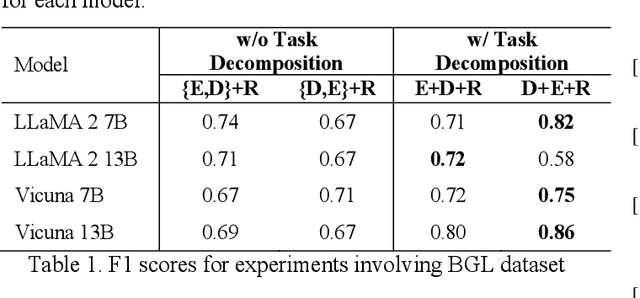
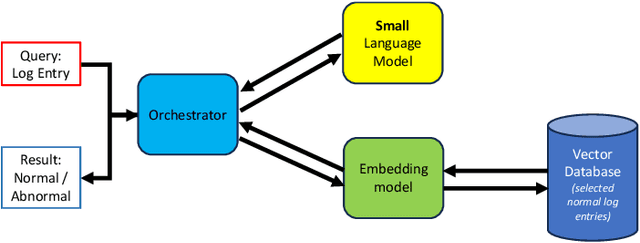
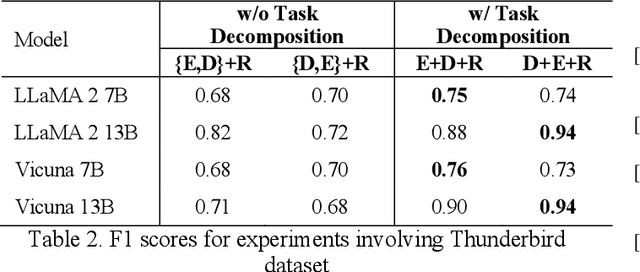
Large Language Models (LLMs) have been applied to automate cyber security activities and processes including cyber investigation and digital forensics. However, the use of such models for cyber investigation and digital forensics should address accountability and security considerations. Accountability ensures models have the means to provide explainable reasonings and outcomes. This information can be extracted through explicit prompt requests. For security considerations, it is crucial to address privacy and confidentiality of the involved data during data processing as well. One approach to deal with this consideration is to have the data processed locally using a local instance of the model. Due to limitations of locally available resources, namely memory and GPU capacities, a Smaller Large Language Model (SLM) will typically be used. These SLMs have significantly fewer parameters compared to the LLMs. However, such size reductions have notable performance reduction, especially when tasked to provide reasoning explanations. In this paper, we aim to mitigate performance reduction through the integration of cognitive strategies that humans use for problem-solving. We term this as cognitive enhancement through prompts. Our experiments showed significant improvement gains of the SLMs' performances when such enhancements were applied. We believe that our exploration study paves the way for further investigation into the use of cognitive enhancement to optimize SLM for cyber security applications.