 Add to Chrome
 Add to Firefox
 Add to Edge
Factorized Transport Alignment for Multimodal and Multiview E-commerce Representation Learning
Dec 19, 2025
The rapid growth of e-commerce requires robust multimodal representations that capture diverse signals from user-generated listings. Existing vision-language models (VLMs) typically align titles with primary images, i.e., single-view, but overlook non-primary images and auxiliary textual views that provide critical semantics in open marketplaces such as Etsy or Poshmark. To this end, we propose a framework that unifies multimodal and multi-view learning through Factorized Transport, a lightweight approximation of optimal transport, designed for scalability and deployment efficiency. During training, the method emphasizes primary views while stochastically sampling auxiliary ones, reducing training cost from quadratic in the number of views to constant per item. At inference, all views are fused into a single cached embedding, preserving the efficiency of two-tower retrieval with no additional online overhead. On an industrial dataset of 1M product listings and 0.3M interactions, our approach delivers consistent improvements in cross-view and query-to-item retrieval, achieving up to +7.9% Recall@500 over strong multimodal baselines. Overall, our framework bridges scalability with optimal transport-based learning, making multi-view pretraining practical for large-scale e-commerce search.

Generalized Weak Supervision for Neural Information Retrieval
Apr 18, 2023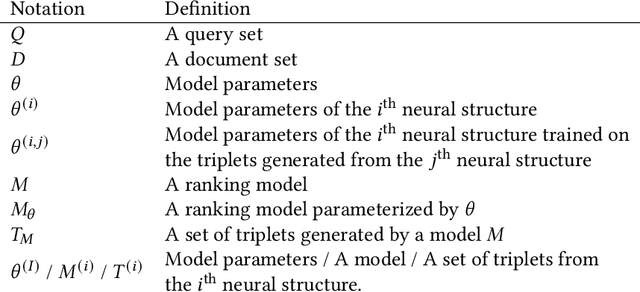
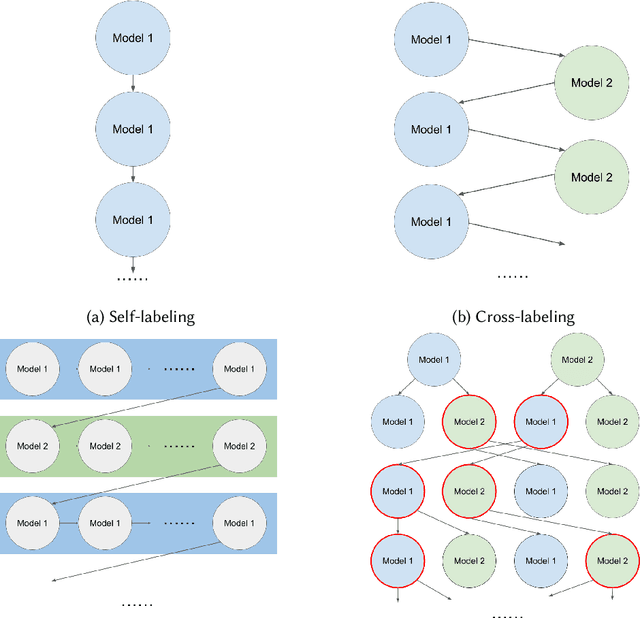
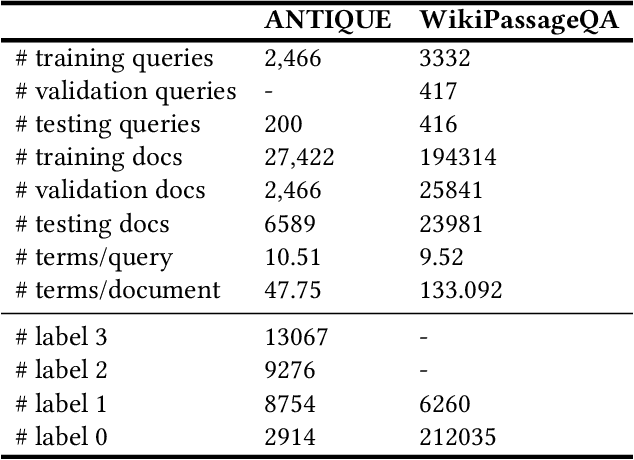
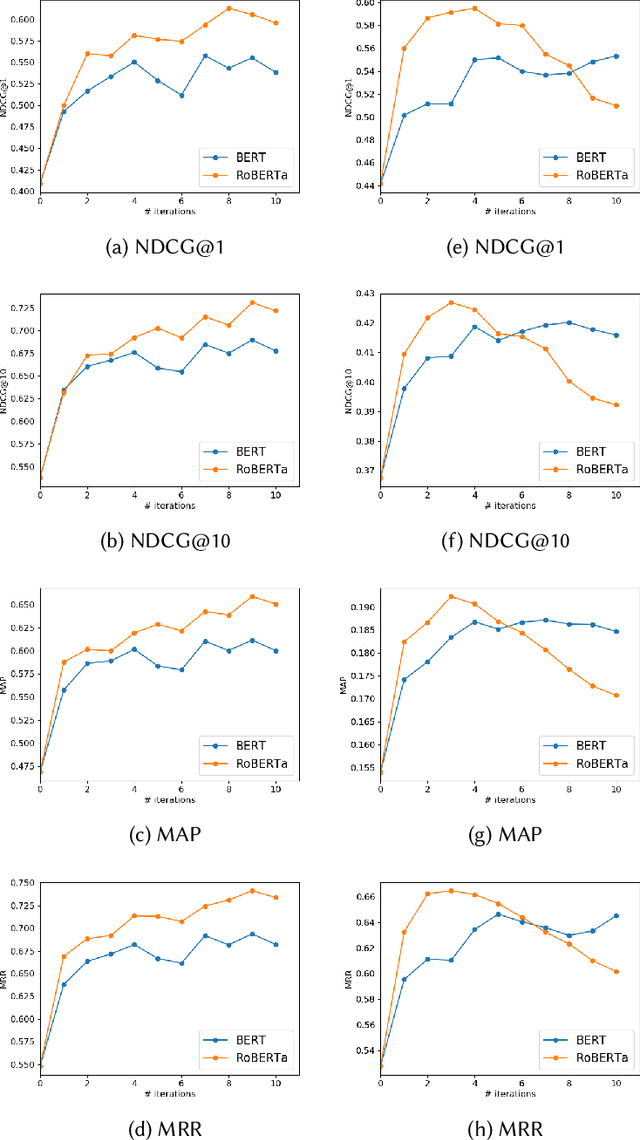
Neural ranking models (NRMs) have demonstrated effective performance in several information retrieval (IR) tasks. However, training NRMs often requires large-scale training data, which is difficult and expensive to obtain. To address this issue, one can train NRMs via weak supervision, where a large dataset is automatically generated using an existing ranking model (called the weak labeler) for training NRMs. Weakly supervised NRMs can generalize from the observed data and significantly outperform the weak labeler. This paper generalizes this idea through an iterative re-labeling process, demonstrating that weakly supervised models can iteratively play the role of weak labeler and significantly improve ranking performance without using manually labeled data. The proposed Generalized Weak Supervision (GWS) solution is generic and orthogonal to the ranking model architecture. This paper offers four implementations of GWS: self-labeling, cross-labeling, joint cross- and self-labeling, and greedy multi-labeling. GWS also benefits from a query importance weighting mechanism based on query performance prediction methods to reduce noise in the generated training data. We further draw a theoretical connection between self-labeling and Expectation-Maximization. Our experiments on two passage retrieval benchmarks suggest that all implementations of GWS lead to substantial improvements compared to weak supervision in all cases.