 Add to Chrome
 Add to Firefox
 Add to Edge
CHOP: Counterfactual Human Preference Labels Improve Obstacle Avoidance in Visuomotor Navigation Policies
Mar 02, 2026
Visuomotor navigation policies have shown strong perception-action coupling for embodied agents, yet they often struggle with safe navigation and dynamic obstacle avoidance in complex real-world environments. We introduce CHOP, a novel approach that leverages Counterfactual Human Preference Labels to align visuomotor navigation policies towards human intuition of safety and obstacle avoidance in navigation. In CHOP, for each visual observation, the robot's executed trajectory is included among a set of counterfactual navigation trajectories: alternative trajectories the robot could have followed under identical conditions. Human annotators provide pairwise preference labels over these trajectories based on anticipated outcomes such as collision risk and path efficiency. These aggregated preferences are then used to fine-tune visuomotor navigation policies, aligning their behavior with human preferences in navigation. Experiments on the SCAND dataset show that visuomotor navigation policies fine-tuned with CHOP reduce near-collision events by 49.7%, decrease deviation from human-preferred trajectories by 45.0%, and increase average obstacle clearance by 19.8% on average across multiple state-of-the-art models, compared to their pretrained baselines. These improvements transfer to real-world deployments on a Ghost Robotics Vision60 quadruped, where CHOP-aligned policies improve average goal success rates by 24.4%, increase minimum obstacle clearance by 6.8%, reduce collision and intervention events by 45.7%, and improve normalized path completion by 38.6% on average across navigation scenarios, compared to their pretrained baselines. Our results highlight the value of counterfactual preference supervision in bridging the gap between large-scale visuomotor policies and human-aligned, safety-aware embodied navigation.

A Comparative Study of U-Net Architectures for Change Detection in Satellite Images
Jun 09, 2025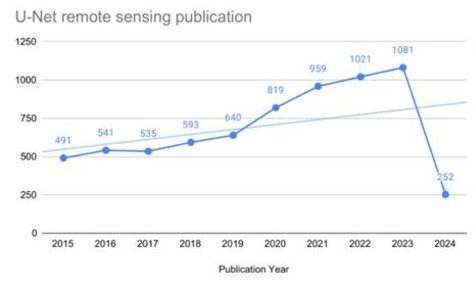
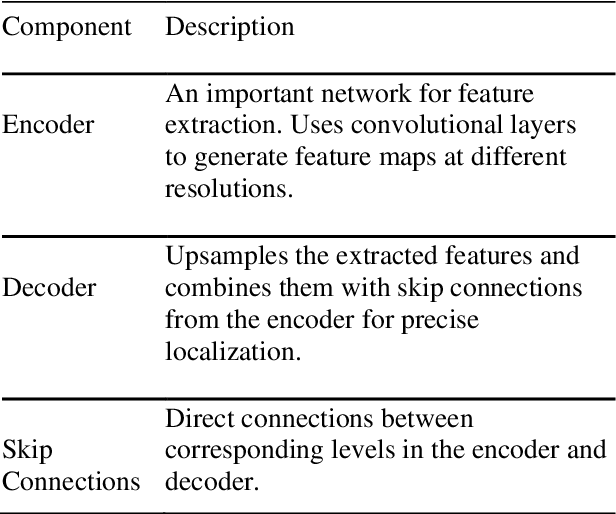
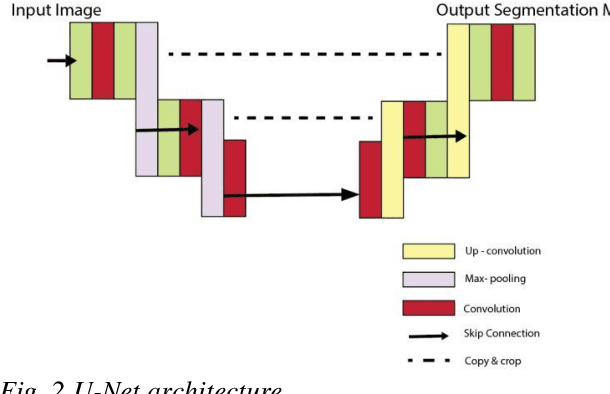
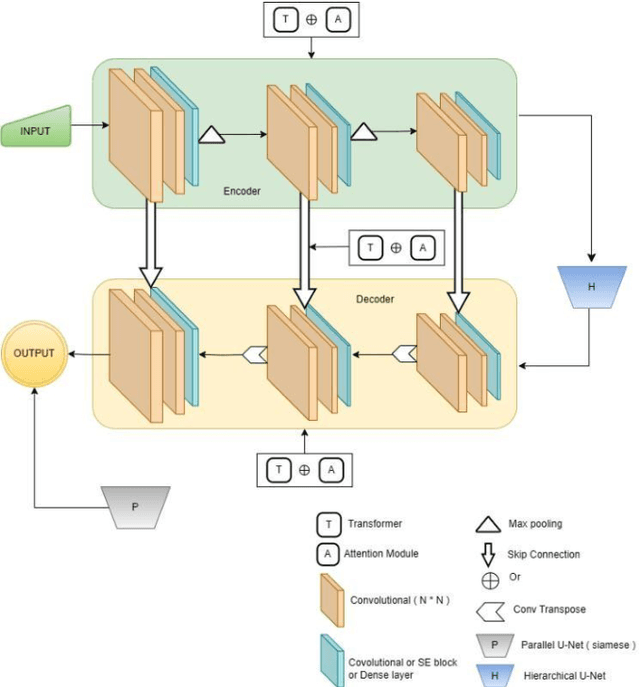
Remote sensing change detection is essential for monitoring the everchanging landscapes of the Earth. The U-Net architecture has gained popularity for its capability to capture spatial information and perform pixel-wise classification. However, their application in the Remote sensing field remains largely unexplored. Therefore, this paper fill the gap by conducting a comprehensive analysis of 34 papers. This study conducts a comparison and analysis of 18 different U-Net variations, assessing their potential for detecting changes in remote sensing. We evaluate both benefits along with drawbacks of each variation within the framework of this particular application. We emphasize variations that are explicitly built for change detection, such as Siamese Swin-U-Net, which utilizes a Siamese architecture. The analysis highlights the significance of aspects such as managing data from different time periods and collecting relationships over a long distance to enhance the precision of change detection. This study provides valuable insights for researchers and practitioners that choose U-Net versions for remote sensing change detection tasks.