 Add to Chrome
 Add to Firefox
 Add to Edge
Memorize When Needed: Decoupled Memory Control for Spatially Consistent Long-Horizon Video Generation
Apr 21, 2026
Spatially consistent long-horizon video generation aims to maintain temporal and spatial consistency along predefined camera trajectories. Existing methods mostly entangle memory modeling with video generation, leading to inconsistent content during scene revisits and diminished generative capacity when exploring novel regions, even trained on extensive annotated data. To address these limitations, we propose a decoupled framework that separates memory conditioning from generation. Our approach significantly reduces training costs while simultaneously enhancing spatial consistency and preserving the generative capacity for novel scene exploration. Specifically, we employ a lightweight, independent memory branch to learn precise spatial consistency from historical observation. We first introduce a hybrid memory representation to capture complementary temporal and spatial cues from generated frames, then leverage a per-frame cross-attention mechanism to ensure each frame is conditioned exclusively on the most spatially relevant historical information, which is injected into the generative model to ensure spatial consistency. When generating new scenes, a camera-aware gating mechanism is proposed to mediate the interaction between memory and generation modules, enabling memory conditioning only when meaningful historical references exist. Compared with the existing method, our method is highly data-efficient, yet the experiments demonstrate that our approach achieves state-of-the-art performance in terms of both visual quality and spatial consistency.

One2Scene: Geometric Consistent Explorable 3D Scene Generation from a Single Image
Feb 23, 2026Generating explorable 3D scenes from a single image is a highly challenging problem in 3D vision. Existing methods struggle to support free exploration, often producing severe geometric distortions and noisy artifacts when the viewpoint moves far from the original perspective. We introduce \textbf{One2Scene}, an effective framework that decomposes this ill-posed problem into three tractable sub-tasks to enable immersive explorable scene generation. We first use a panorama generator to produce anchor views from a single input image as initialization. Then, we lift these 2D anchors into an explicit 3D geometric scaffold via a generalizable, feed-forward Gaussian Splatting network. Instead of treating the panorama as a single image for reconstruction, we project it into multiple sparse anchor views and reformulate the reconstruction task as multi-view stereo matching, which allows us to leverage robust geometric priors learned from large-scale multi-view datasets. A bidirectional feature fusion module is used to enforce cross-view consistency, yielding an efficient and geometrically reliable scaffold. Finally, the scaffold serves as a strong prior for a novel view generator to produce photorealistic and geometrically accurate views at arbitrary cameras. By explicitly conditioning on a 3D-consistent scaffold to perform reconstruction, One2Scene works stably under large camera motions, supporting immersive scene exploration. Extensive experiments show that One2Scene substantially outperforms state-of-the-art methods in panorama depth estimation, feed-forward 360° reconstruction, and explorable 3D scene generation. Code and models will be released.
Photo3D: Advancing Photorealistic 3D Generation through Structure-Aligned Detail Enhancement
Dec 09, 2025Although recent 3D-native generators have made great progress in synthesizing reliable geometry, they still fall short in achieving realistic appearances. A key obstacle lies in the lack of diverse and high-quality real-world 3D assets with rich texture details, since capturing such data is intrinsically difficult due to the diverse scales of scenes, non-rigid motions of objects, and the limited precision of 3D scanners. We introduce Photo3D, a framework for advancing photorealistic 3D generation, which is driven by the image data generated by the GPT-4o-Image model. Considering that the generated images can distort 3D structures due to their lack of multi-view consistency, we design a structure-aligned multi-view synthesis pipeline and construct a detail-enhanced multi-view dataset paired with 3D geometry. Building on it, we present a realistic detail enhancement scheme that leverages perceptual feature adaptation and semantic structure matching to enforce appearance consistency with realistic details while preserving the structural consistency with the 3D-native geometry. Our scheme is general to different 3D-native generators, and we present dedicated training strategies to facilitate the optimization of geometry-texture coupled and decoupled 3D-native generation paradigms. Experiments demonstrate that Photo3D generalizes well across diverse 3D-native generation paradigms and achieves state-of-the-art photorealistic 3D generation performance.
FormalGeo: The First Step Toward Human-like IMO-level Geometric Automated Reasoning
Oct 30, 2023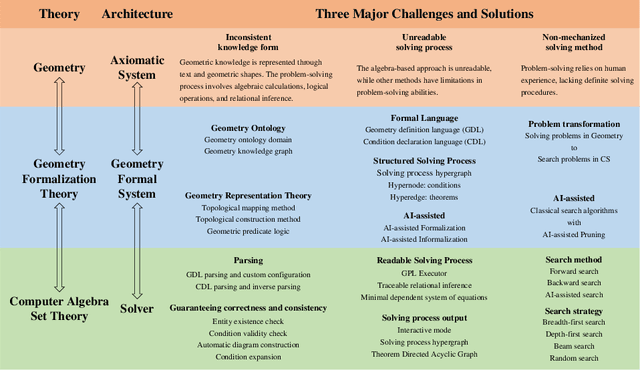


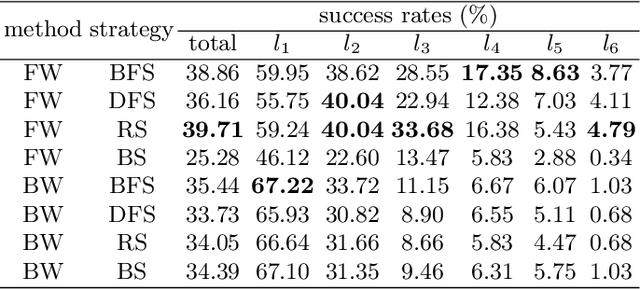
This is the first paper in a series of work we have accomplished over the past three years. In this paper, we have constructed a complete and compatible formal plane geometry system. This will serve as a crucial bridge between IMO-level plane geometry challenges and readable AI automated reasoning. With this formal system in place, we have been able to seamlessly integrate modern AI models with our formal system. Within this formal framework, AI is now capable of providing deductive reasoning solutions to IMO-level plane geometry problems, just like handling other natural languages, and these proofs are readable, traceable, and verifiable. We propose the geometry formalization theory (GFT) to guide the development of the geometry formal system. Based on the GFT, we have established the FormalGeo, which consists of 88 geometric predicates and 196 theorems. It can represent, validate, and solve IMO-level geometry problems. we also have crafted the FGPS (formal geometry problem solver) in Python. It serves as both an interactive assistant for verifying problem-solving processes and an automated problem solver, utilizing various methods such as forward search, backward search and AI-assisted search. We've annotated the FormalGeo7k dataset, containing 6,981 (expand to 186,832 through data augmentation) geometry problems with complete formal language annotations. Implementation of the formal system and experiments on the FormalGeo7k validate the correctness and utility of the GFT. The backward depth-first search method only yields a 2.42% problem-solving failure rate, and we can incorporate deep learning techniques to achieve lower one. The source code of FGPS and FormalGeo7k dataset are available at https://github.com/BitSecret/FormalGeo.
SNF: Filter Pruning via Searching the Proper Number of Filters
Dec 14, 2021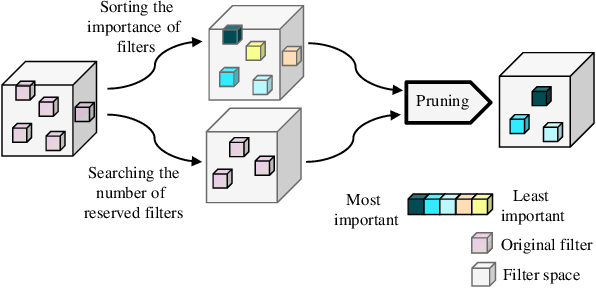
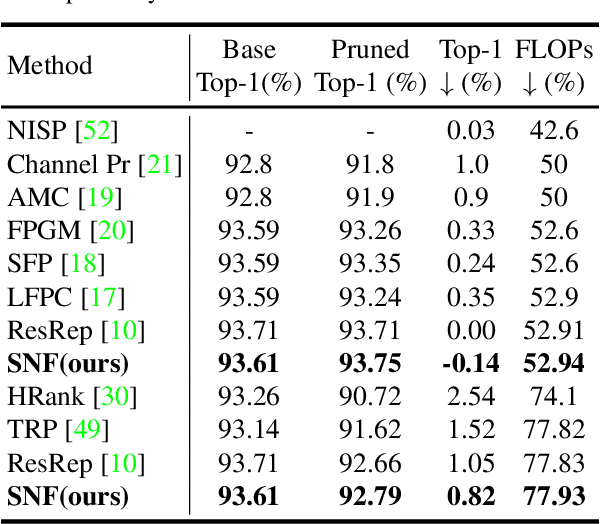
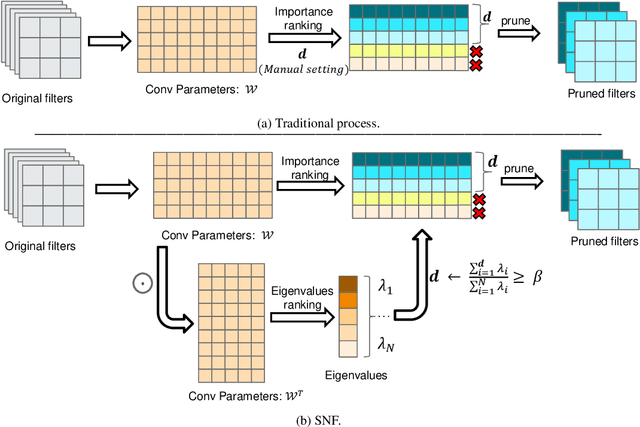
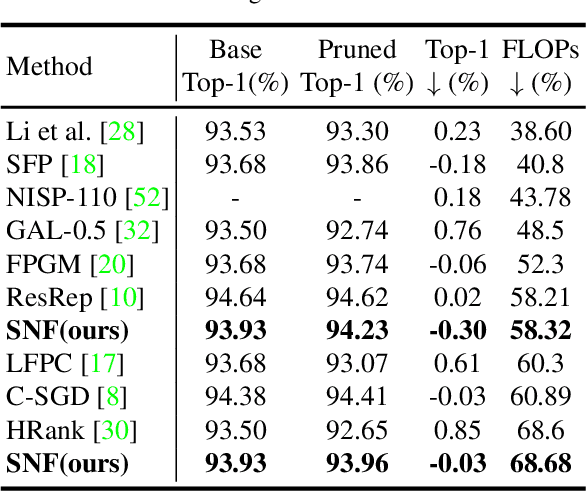
Convolutional Neural Network (CNN) has an amount of parameter redundancy, filter pruning aims to remove the redundant filters and provides the possibility for the application of CNN on terminal devices. However, previous works pay more attention to designing evaluation criteria of filter importance and then prune less important filters with a fixed pruning rate or a fixed number to reduce convolutional neural networks' redundancy. It does not consider how many filters to reserve for each layer is the most reasonable choice. From this perspective, we propose a new filter pruning method by searching the proper number of filters (SNF). SNF is dedicated to searching for the most reasonable number of reserved filters for each layer and then pruning filters with specific criteria. It can tailor the most suitable network structure at different FLOPs. Filter pruning with our method leads to the state-of-the-art (SOTA) accuracy on CIFAR-10 and achieves competitive performance on ImageNet ILSVRC-2012.SNF based on the ResNet-56 network achieves an increase of 0.14% in Top-1 accuracy at 52.94% FLOPs reduction on CIFAR-10. Pruning ResNet-110 on CIFAR-10 also improves the Top-1 accuracy of 0.03% when reducing 68.68% FLOPs. For ImageNet, we set the pruning rates as 52.10% FLOPs, and the Top-1 accuracy only has a drop of 0.74%. The codes can be available at https://github.com/pk-l/SNF.