 Add to Chrome
 Add to Firefox
 Add to Edge
Evaluation Cards: An Interpretive Layer for AI Evaluation Reporting
Jun 09, 2026
AI evaluation results are produced at scale but reported inconsistently across leaderboards, model cards, benchmark papers, and company blogs. The cost is interpretive: readers cannot reliably compare results across sources, identify what a report omits, or trace an aggregate claim to its underlying evidence. Recent efforts address isolated components but leave three gaps: they cover only narrow slices of the evaluation lifecycle and do not compose into a single interpretable record; they specify static representations that do not differentiate the questions different stakeholders bring to the same evidence; and they remain proposals on paper, lacking the extraction infrastructure required for adoption at scale. We present \EvalCards{}, an operational reporting layer that composes benchmark metadata, evaluation run data, and model metadata into a unified record. We (1) derive a reporting schema from a structured review of 52 papers and 10 stakeholder interviews, (2) implement four interpretive signals (reproducibility, documentation completeness, provenance and risk, and score comparability), rendered through reader modes calibrated to research and non-research audiences, and (3) deploy a monitoring tool that applies \EvalCards{} across 5,816 models, 635 benchmarks, and 101,843 results, surfacing systematic gaps in current reporting practice.

AI in Oncology: Transforming Cancer Detection through Machine Learning and Deep Learning Applications
Jan 26, 2025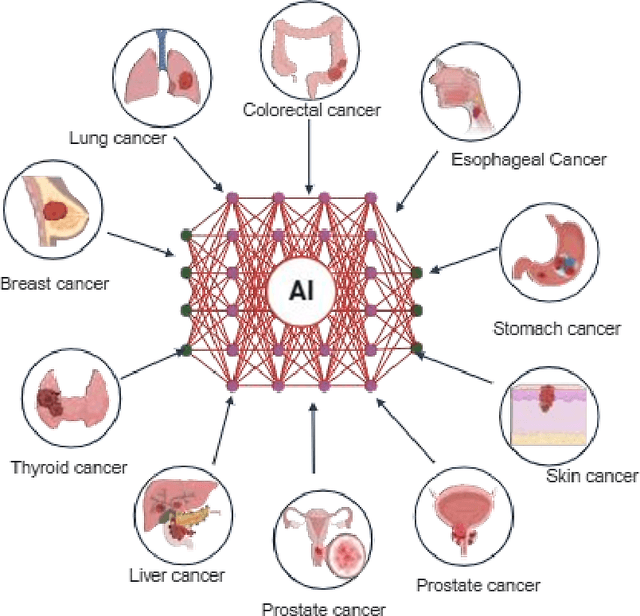
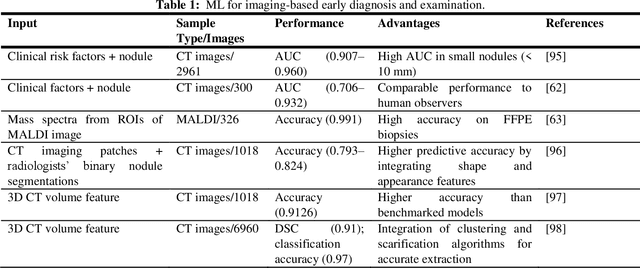
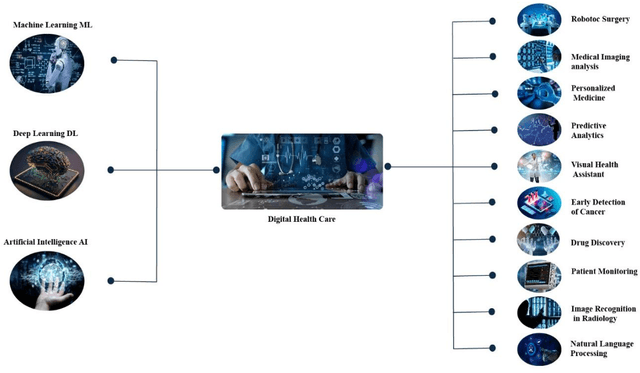
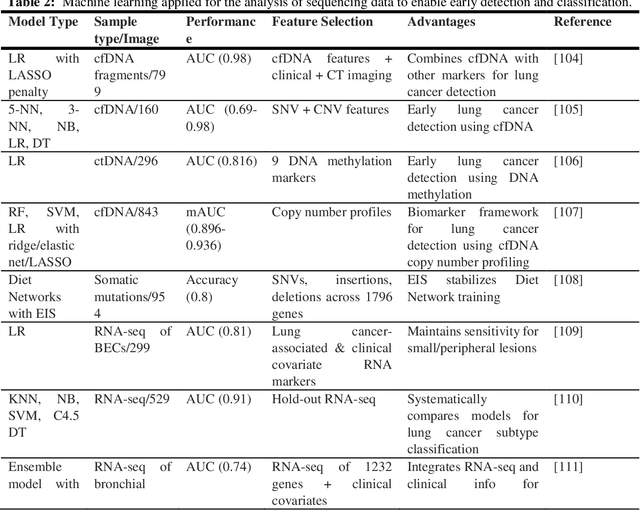
Artificial intelligence (AI) has potential to revolutionize the field of oncology by enhancing the precision of cancer diagnosis, optimizing treatment strategies, and personalizing therapies for a variety of cancers. This review examines the limitations of conventional diagnostic techniques and explores the transformative role of AI in diagnosing and treating cancers such as lung, breast, colorectal, liver, stomach, esophageal, cervical, thyroid, prostate, and skin cancers. The primary objective of this paper is to highlight the significant advancements that AI algorithms have brought to oncology within the medical industry. By enabling early cancer detection, improving diagnostic accuracy, and facilitating targeted treatment delivery, AI contributes to substantial improvements in patient outcomes. The integration of AI in medical imaging, genomic analysis, and pathology enhances diagnostic precision and introduces a novel, less invasive approach to cancer screening. This not only boosts the effectiveness of medical facilities but also reduces operational costs. The study delves into the application of AI in radiomics for detailed cancer characterization, predictive analytics for identifying associated risks, and the development of algorithm-driven robots for immediate diagnosis. Furthermore, it investigates the impact of AI on addressing healthcare challenges, particularly in underserved and remote regions. The overarching goal of this platform is to support the development of expert recommendations and to provide universal, efficient diagnostic procedures. By reviewing existing research and clinical studies, this paper underscores the pivotal role of AI in improving the overall cancer care system. It emphasizes how AI-enabled systems can enhance clinical decision-making and expand treatment options, thereby underscoring the importance of AI in advancing precision oncology