 Add to Chrome
 Add to Firefox
 Add to Edge
Signals of Success and Struggle: Early Prediction and Physiological Signatures of Human Performance across Task Complexity
Mar 19, 2026
User performance is crucial in interactive systems, capturing how effectively users engage with task execution. Prospectively predicting performance enables the timely identification of users struggling with task demands. While ocular and cardiac signals are widely used to characterise performance-relevant visual behaviour and physiological activation, their potential for early prediction and for revealing the physiological mechanisms underlying performance differences remains underexplored. We conducted a within-subject experiment in a game environment with naturally unfolding complexity, using early ocular and cardiac signals to predict later performance and to examine physiological and self-reported group differences. Results show that the ocular-cardiac fusion model achieves a balanced accuracy of 0.86, and the ocular-only model shows comparable predictive power. High performers exhibited targeted gaze and adjusted visual sampling, and sustained more stable cardiac activation as demands intensified, with a more positive affective experience. These findings demonstrate the feasibility of cross-session prediction from early physiology, providing interpretable insights into performance variation and facilitating future proactive intervention.

A Genetic Feature Selection Based Two-stream Neural Network for Anger Veracity Recognition
Sep 12, 2020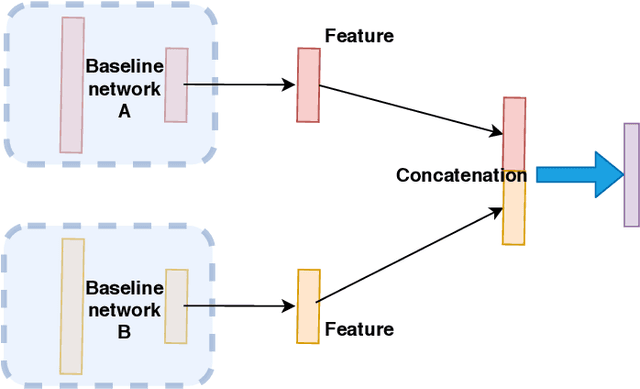
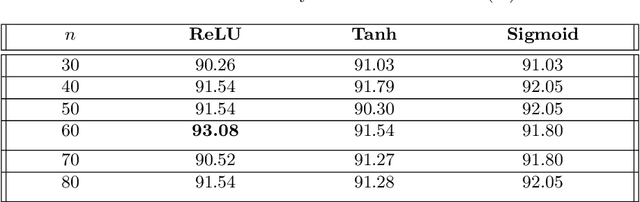
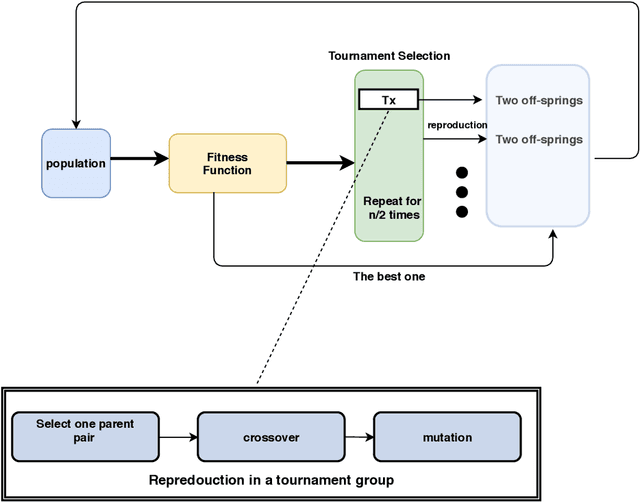

People can manipulate emotion expressions when interacting with others. For example, acted anger can be expressed when stimuli is not genuinely angry with an aim to manipulate the observer. In this paper, we aim to examine if the veracity of anger can be recognized with observers' pupillary data with computational approaches. We use Genetic-based Feature Selection (GFS) methods to select time-series pupillary features of of observers who observe acted and genuine anger of the video stimuli. We then use the selected features to train a simple fully connected neural work and a two-stream neural network. Our results show that the two-stream architecture is able to achieve a promising recognition result with an accuracy of 93.58% when the pupillary responses from both eyes are available. It also shows that genetic algorithm based feature selection method can effectively improve the classification accuracy by 3.07%. We hope our work could help daily research such as human machine interaction and psychology studies that require emotion recognition .