 Add to Chrome
 Add to Firefox
 Add to Edge
Kimi K3: Open Frontier Intelligence
Jul 27, 2026
We introduce Kimi K3, a 2.8T parameter Mixture-of-Experts model with 104 billion activated parameters, native vision capabilities, and a 1-million-token context window. Kimi K3 is built on Kimi Delta Attention and Attention Residuals, which improve information flow across sequence length and model depth. Together with Stable LatentMoE, which effectively activates 16 of 896 routed experts per token, and refined training and data recipes, these advances yield an approximately 2.5x improvement in overall scaling efficiency over Kimi K2. Post-training highlights reinforcement learning across general, agentic, and coding domains and multiple reasoning-effort levels, enabling compositional generalization and robust long-horizon execution. At 2.8T scale, Kimi K3 is supported by infrastructure advances in multiple areas: algorithm-system co-design for KDA, perfectly balanced expert-parallel training with efficient memory management, million-token agentic RL with persistent rollout and sandbox states, and deployment innovations. Extensive evaluations show that Kimi K3 achieves frontier-level performance across long-horizon coding, agentic, knowledge, reasoning, and vision tasks. While its overall performance still trails the most powerful proprietary models, namely Claude Fable 5 and GPT-5.6 Sol, Kimi K3 consistently outperforms other open and proprietary models evaluated in our suite. We release the full Kimi K3 model weights to facilitate future research and accelerate the broader deployment and adoption of frontier intelligence.

CI-Net: Contextual Information for Joint Semantic Segmentation and Depth Estimation
Jul 29, 2021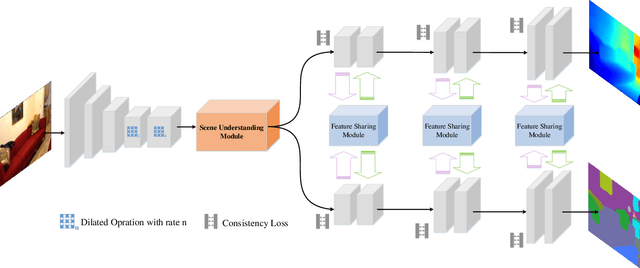
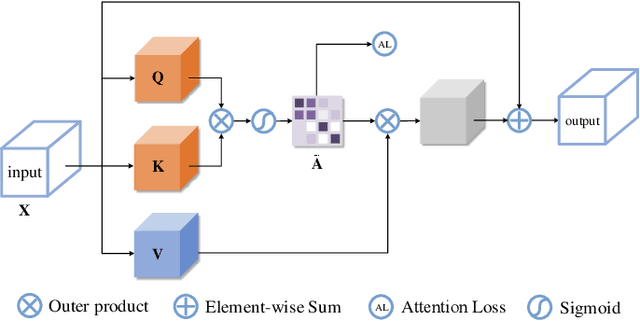
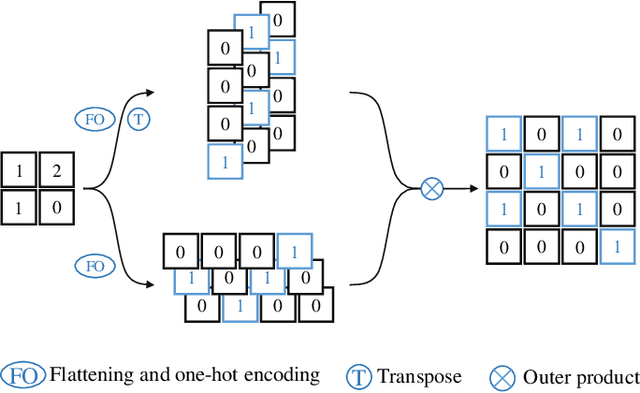
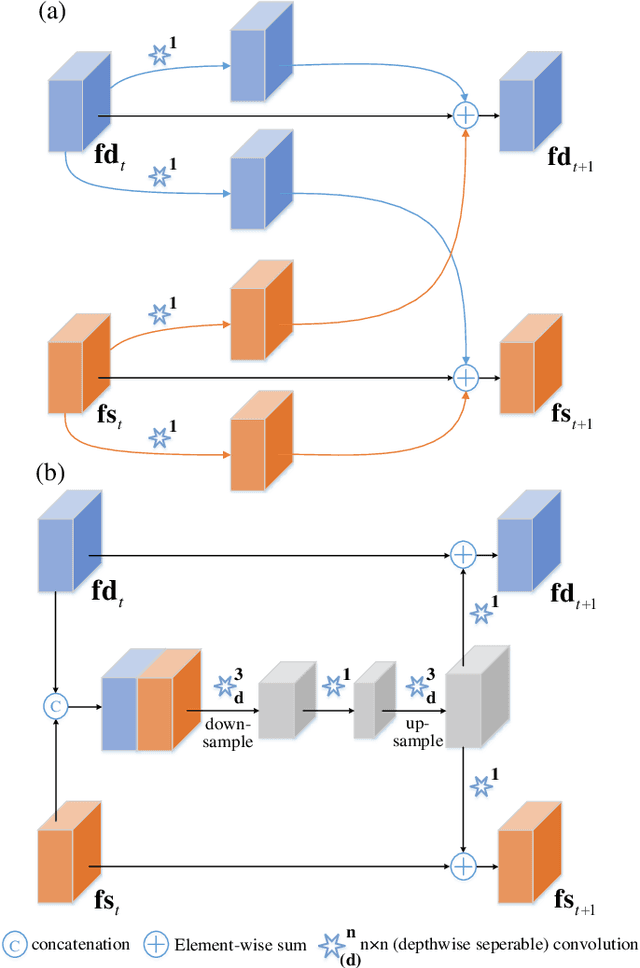
Monocular depth estimation and semantic segmentation are two fundamental goals of scene understanding. Due to the advantages of task interaction, many works study the joint task learning algorithm. However, most existing methods fail to fully leverage the semantic labels, ignoring the provided context structures and only using them to supervise the prediction of segmentation split. In this paper, we propose a network injected with contextual information (CI-Net) to solve the problem. Specifically, we introduce self-attention block in the encoder to generate attention map. With supervision from the ground truth created by semantic labels, the network is embedded with contextual information so that it could understand the scene better, utilizing dependent features to make accurate prediction. Besides, a feature sharing module is constructed to make the task-specific features deeply fused and a consistency loss is devised to make the features mutually guided. We evaluate the proposed CI-Net on the NYU-Depth-v2 and SUN-RGBD datasets. The experimental results validate that our proposed CI-Net is competitive with the state-of-the-arts.