 Add to Chrome
 Add to Firefox
 Add to Edge
Reverso: Efficient Time Series Foundation Models for Zero-shot Forecasting
Feb 19, 2026
Learning time series foundation models has been shown to be a promising approach for zero-shot time series forecasting across diverse time series domains. Insofar as scaling has been a critical driver of performance of foundation models in other modalities such as language and vision, much recent work on time series foundation modeling has focused on scaling. This has resulted in time series foundation models with hundreds of millions of parameters that are, while performant, inefficient and expensive to use in practice. This paper describes a simple recipe for learning efficient foundation models for zero-shot time series forecasting that are orders of magnitude smaller. We show that large-scale transformers are not necessary: small hybrid models that interleave long convolution and linear RNN layers (in particular DeltaNet layers) can match the performance of larger transformer-based models while being more than a hundred times smaller. We also describe several data augmentation and inference strategies that further improve performance. This recipe results in Reverso, a family of efficient time series foundation models for zero-shot forecasting that significantly push the performance-efficiency Pareto frontier.

Fast KV Compaction via Attention Matching
Feb 18, 2026Scaling language models to long contexts is often bottlenecked by the size of the key-value (KV) cache. In deployed settings, long contexts are typically managed through compaction in token space via summarization. However, summarization can be highly lossy, substantially harming downstream performance. Recent work on Cartridges has shown that it is possible to train highly compact KV caches in latent space that closely match full-context performance, but at the cost of slow and expensive end-to-end optimization. This work describes an approach for fast context compaction in latent space through Attention Matching, which constructs compact keys and values to reproduce attention outputs and preserve attention mass at a per-KV-head level. We show that this formulation naturally decomposes into simple subproblems, some of which admit efficient closed-form solutions. Within this framework, we develop a family of methods that significantly push the Pareto frontier of compaction time versus quality, achieving up to 50x compaction in seconds on some datasets with little quality loss.
Do Two AI Scientists Agree?
Apr 03, 2025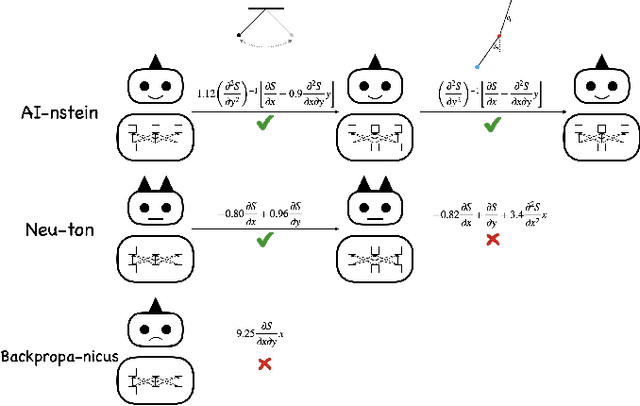
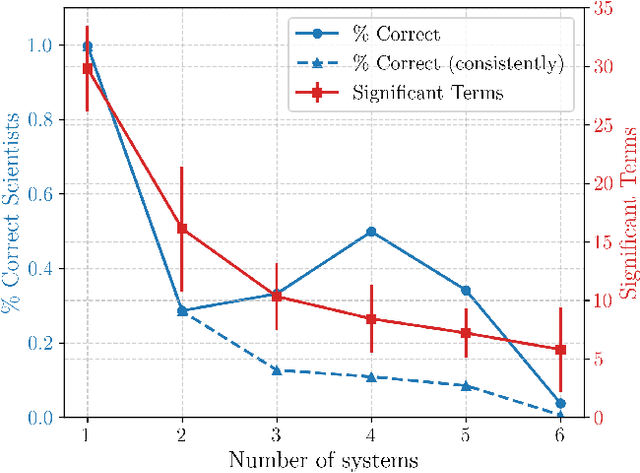
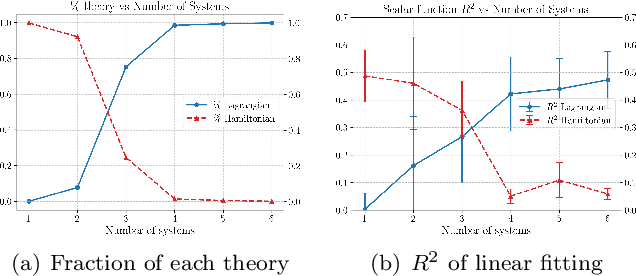
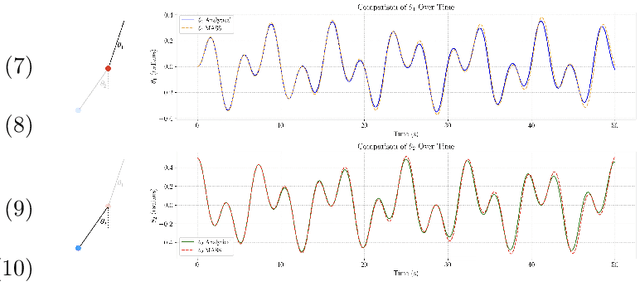
When two AI models are trained on the same scientific task, do they learn the same theory or two different theories? Throughout history of science, we have witnessed the rise and fall of theories driven by experimental validation or falsification: many theories may co-exist when experimental data is lacking, but the space of survived theories become more constrained with more experimental data becoming available. We show the same story is true for AI scientists. With increasingly more systems provided in training data, AI scientists tend to converge in the theories they learned, although sometimes they form distinct groups corresponding to different theories. To mechanistically interpret what theories AI scientists learn and quantify their agreement, we propose MASS, Hamiltonian-Lagrangian neural networks as AI Scientists, trained on standard problems in physics, aggregating training results across many seeds simulating the different configurations of AI scientists. Our findings suggests for AI scientists switch from learning a Hamiltonian theory in simple setups to a Lagrangian formulation when more complex systems are introduced. We also observe strong seed dependence of the training dynamics and final learned weights, controlling the rise and fall of relevant theories. We finally demonstrate that not only can our neural networks aid interpretability, it can also be applied to higher dimensional problems.
Financial Fine-tuning a Large Time Series Model
Dec 13, 2024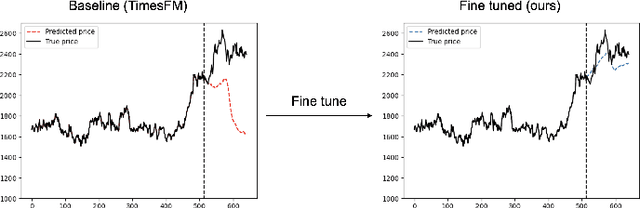
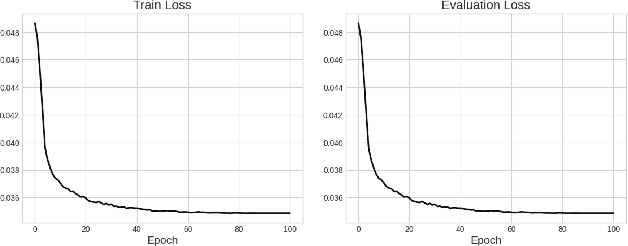
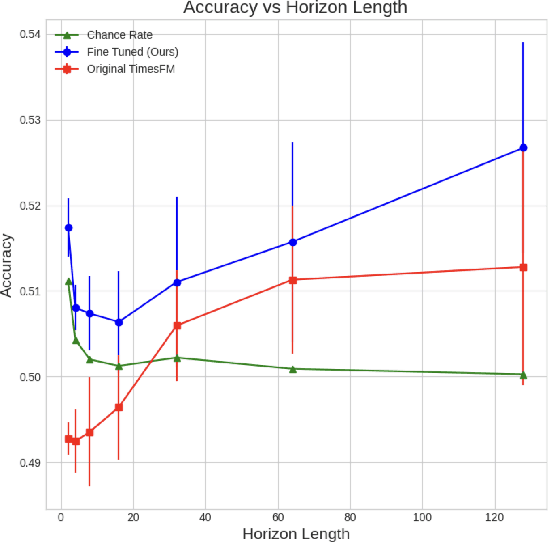

Large models have shown unprecedented capabilities in natural language processing, image generation, and most recently, time series forecasting. This leads us to ask the question: treating market prices as a time series, can large models be used to predict the market? In this paper, we answer this by evaluating the performance of the latest time series foundation model TimesFM on price prediction. We find that due to the irregular nature of price data, directly applying TimesFM gives unsatisfactory results and propose to fine-tune TimeFM on financial data for the task of price prediction. This is done by continual pre-training of the latest time series foundation model TimesFM on price data containing 100 million time points, spanning a range of financial instruments spanning hourly and daily granularities. The fine-tuned model demonstrates higher price prediction accuracy than the baseline model. We conduct mock trading for our model in various financial markets and show that it outperforms various benchmarks in terms of returns, sharpe ratio, max drawdown and trading cost.