 Add to Chrome
 Add to Firefox
 Add to Edge
Measuring Semantic Abstractness of SAE Features via Nonlocality
Aug 11, 2026
Sparse autoencoders (SAEs) have helped uncover mechanistic explanations for LLM behaviours such as reasoning, jailbreaking etc., via understanding the corresponding task-relevant and causally effective features. To evaluate such mechanistic explanations, downstream studies must distinguish surface lexical features from genuinely high-level ones. However, neither an autointerp-based semantic description nor causal steering utility fully resolves the abstraction level of a feature. To this end, we introduce \emph{Feature Nonlocality} (FNL), defined as the entropy of the normalized per-position influence on an SAE feature's activation. We report that FNL correlates with existing LLM-based proxy metrics of feature semantic abstractness, and successfully distinguishes context-dependent reasoning features from token-driven ones, correctly assigning the higher FNL to the contextual feature in $73$--$84\%$ of randomly drawn pairs that consist of one contextual and one token-level feature. We demonstrate two downstream applications. We audit SAE-based features used for jailbreak mitigation and find surprisingly that most effective features are positional features with low FNL rather than genuinely recognizing harmful intents. We report that steering high-FNL features in DeepSeek-R1-Distill-Llama-8B improves MATH-500 accuracy by $4.6$ points over the unsteered model and outperforms steering low-FNL features, though the gains are model-specific. We conclude that FNL provides an LLM-independent, label-free, correlational witness of the abstraction level of an SAE feature, with applications in evaluating mechanistic explanations as well as selecting features for downstream interventions.

The Agentification of Scientific Research: A Physicist's Perspective
Apr 16, 2026This article argues that the most important significance of the AI revolution, especially the rise of large language models, lies not simply in automation, but in a fundamental change in how complex information and human know-how are carried, replicated, and shared. From this perspective, AI for Science is especially important because it may transform not only the efficiency of research, but also the structure of scientific collaboration, discovery, publishing, and evaluation. The article outlines a gradual path from AI as a research tool to AI as a scientific collaborator, and discusses how AI is likely to fundamentally reshape scientific publication. It also argues that continuous learning and diversity of ideas are essential if AI is to play a meaningful role in original scientific discovery.
QMBench: A Research Level Benchmark for Quantum Materials Research
Dec 19, 2025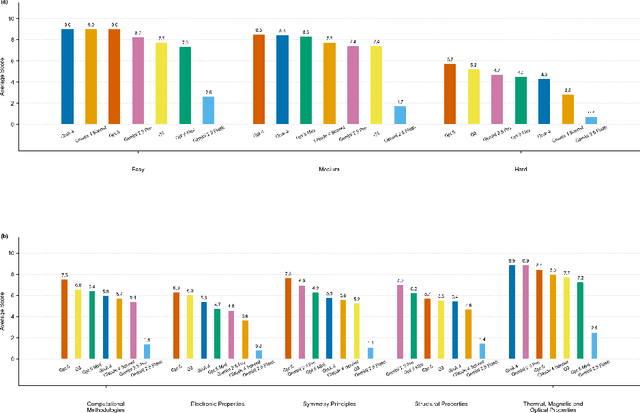
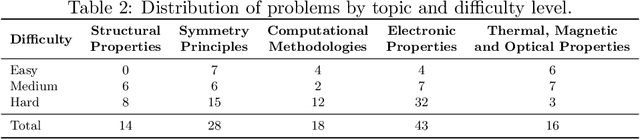
We introduce QMBench, a comprehensive benchmark designed to evaluate the capability of large language model agents in quantum materials research. This specialized benchmark assesses the model's ability to apply condensed matter physics knowledge and computational techniques such as density functional theory to solve research problems in quantum materials science. QMBench encompasses different domains of the quantum material research, including structural properties, electronic properties, thermodynamic and other properties, symmetry principle and computational methodologies. By providing a standardized evaluation framework, QMBench aims to accelerate the development of an AI scientist capable of making creative contributions to quantum materials research. We expect QMBench to be developed and constantly improved by the research community.
Geometric Dynamics of Signal Propagation Predict Trainability of Transformers
Mar 05, 2024We investigate forward signal propagation and gradient back propagation in deep, randomly initialized transformers, yielding simple necessary and sufficient conditions on initialization hyperparameters that ensure trainability of deep transformers. Our approach treats the evolution of the representations of $n$ tokens as they propagate through the transformer layers in terms of a discrete time dynamical system of $n$ interacting particles. We derive simple update equations for the evolving geometry of this particle system, starting from a permutation symmetric simplex. Our update equations show that without MLP layers, this system will collapse to a line, consistent with prior work on rank collapse in transformers. However, unlike prior work, our evolution equations can quantitatively track particle geometry in the additional presence of nonlinear MLP layers, and it reveals an order-chaos phase transition as a function of initialization hyperparameters, like the strength of attentional and MLP residual connections and weight variances. In the ordered phase the particles are attractive and collapse to a line, while in the chaotic phase the particles are repulsive and converge to a regular $n$-simplex. We analytically derive two Lyapunov exponents: an angle exponent that governs departures from the edge of chaos in this particle system, and a gradient exponent that governs the rate of exponential growth or decay of backpropagated gradients. We show through experiments that, remarkably, the final test loss at the end of training is well predicted just by these two exponents at the beginning of training, and that the simultaneous vanishing of these two exponents yields a simple necessary and sufficient condition to achieve minimal test loss.