 Add to Chrome
 Add to Firefox
 Add to Edge
Every Wrong Answer Counts: Option-Level Psychometrics for LLM Multiple-Choice Benchmarks
Aug 03, 2026
Most multiple-choice question (MCQ) benchmarks evaluate Large Language Models (LLMs) only by whether they select the correct answers. This binary scoring treats all incorrect responses alike, even though an LLM's preferences among incorrect options may contain systematic and useful information about its behavior and ability. We introduce the LLM Nominal Response Model (LLM-NRM), an option-aware psychometric framework that models the full distribution over answer choices to jointly estimate LLM ability and option-level item characteristics, while separating model-specific response calibration sharpness, positional preference, and difficulty-dependent fallback behavior. Across 189 LLMs and 31,554 items from 14 benchmarks, LLM-NRM predicts held-out LLM-item interactions more accurately than binary Item Response models and conventional nominal-response baselines, and its ability estimates achieve the strongest Spearman correlation of 0.920 with the external human-preference Arena.ai Elo leaderboard. Distractor identity contributes +101% additional Fisher Information per item beyond correctness, and incorrect responses alone recover full-information ability estimates with Spearman 0.943. The learned item parameters also enable efficient benchmarking, where 41 selected items preserve the full-bank ranking with Kendall's correlation 0.85, corresponding to a 770 times reduction. In conclusion, we show that incorrect answers carry distinct and useful measurement information rather than representing equivalent mistakes.

The Masked Advantage: Uncovering Local-Language Access to Cultural Knowledge in LLMs
Jun 05, 2026Large language models are increasingly used to answer culturally grounded questions across languages, yet it remains unclear whether local cultural knowledge is better accessed through English or the local language. Existing evaluations face two key limitations: many rely on parallel template-based questions that may not reflect how cultural knowledge naturally appears, and raw accuracy conflates general language proficiency with language-conditioned knowledge access. We address these issues with a controlled framework built on real-world cultural questions collected from regional benchmarks and local sources. By crossing question type (culture-agnostic vs. culture-specific) with query language (English vs. local language), and estimating ability with a shared 1PL item response theory model, we separate proficiency from localized knowledge access. Across 13 locales and roughly 80 models, we find a consistent English advantage on culture-agnostic questions, indicating stronger English proficiency. However, after accounting for this proficiency gap, local languages show a positive knowledge-access advantage in nearly all locale-model settings. This advantage is often masked in raw accuracy but becomes more visible for frontier, regionally aligned, or language-adapted models. Our results suggest that weaker local-language performance does not necessarily imply weaker cultural knowledge; rather, local cultural knowledge may be more accessible through the local language but hidden by limited language proficiency.
CARTE: A Benchmark for Mapping Language Model Knowledge Across France
Jun 01, 2026We introduce CARTE 1 (Culturally Anchored Regional-Territorial Evaluation), a multiplechoice benchmark for evaluating the ability of large language models (LLMs) to perform fine-grained reasoning over geographically grounded and regionally differentiated knowledge within France. While prior benchmarks focus on national-level cultural understanding, they largely overlook intra-country variation and the need to distinguish between closely related regional contexts. CARTE addresses this gap by introducing 2,431 questions spanning the 13 metropolitan regions of France and covering 14 thematic domains, including culture, language, demographics, economy, environment, and mobility. We further introduce CARTE-LV, a subset targeting Linguistic Variation across French regions, enabling focused evaluation of language-related differences. We evaluate 27 LLMs ranging from 1B to 12B parameters under few-shot settings. Our experiments reveal performance disparities across regions and model scales, suggesting systematic gaps in pretraining coverage and limited robustness to intra-national variation.
Graph Linearization Methods for Reasoning on Graphs with Large Language Models
Oct 25, 2024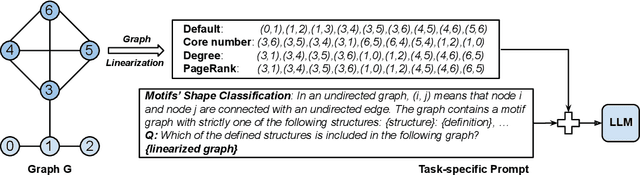
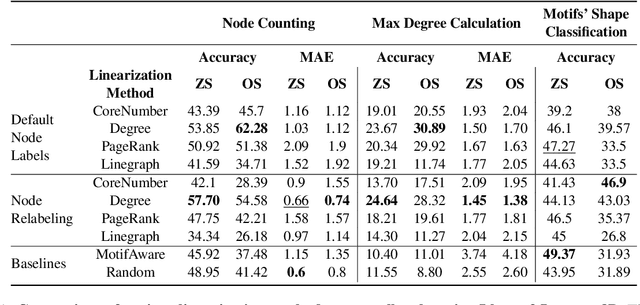
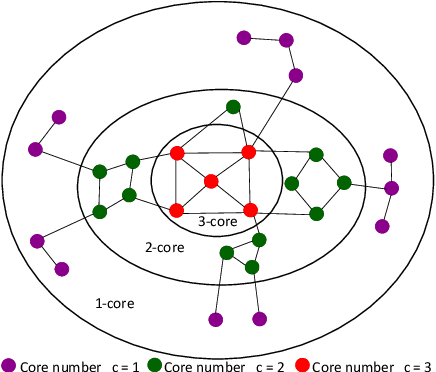
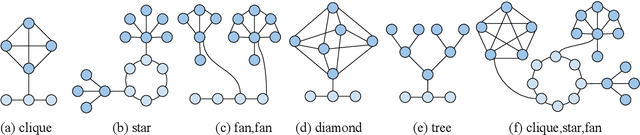
Large language models have evolved to process multiple modalities beyond text, such as images and audio, which motivates us to explore how to effectively leverage them for graph machine learning tasks. The key question, therefore, is how to transform graphs into linear sequences of tokens, a process we term graph linearization, so that LLMs can handle graphs naturally. We consider that graphs should be linearized meaningfully to reflect certain properties of natural language text, such as local dependency and global alignment, in order to ease contemporary LLMs, trained on trillions of textual tokens, better understand graphs. To achieve this, we developed several graph linearization methods based on graph centrality, degeneracy, and node relabeling schemes. We then investigated their effect on LLM performance in graph reasoning tasks. Experimental results on synthetic graphs demonstrate the effectiveness of our methods compared to random linearization baselines. Our work introduces novel graph representations suitable for LLMs, contributing to the potential integration of graph machine learning with the trend of multi-modal processing using a unified transformer model.
Real-time Traffic Classification for 5G NSA Encrypted Data Flows With Physical Channel Records
Jul 15, 2023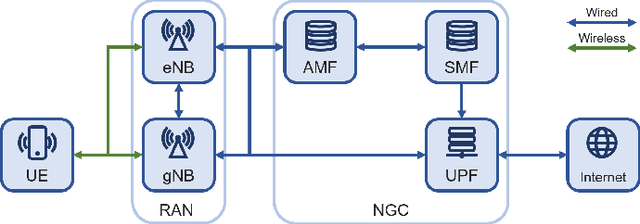
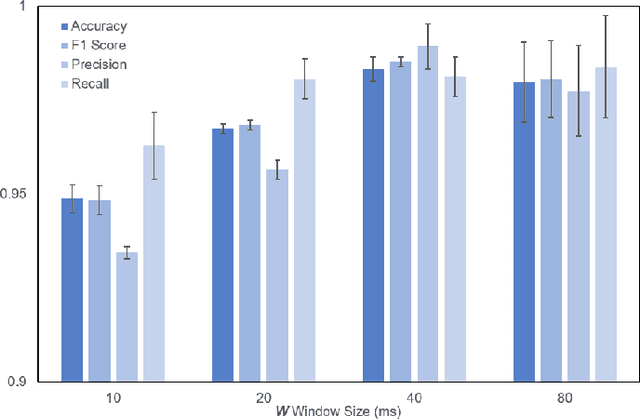
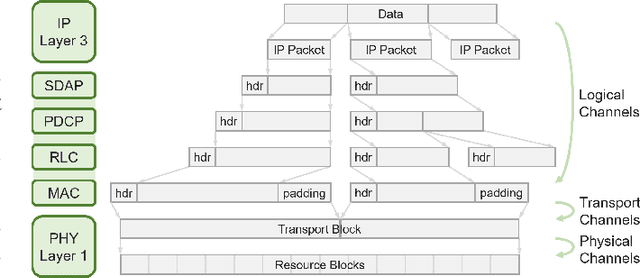
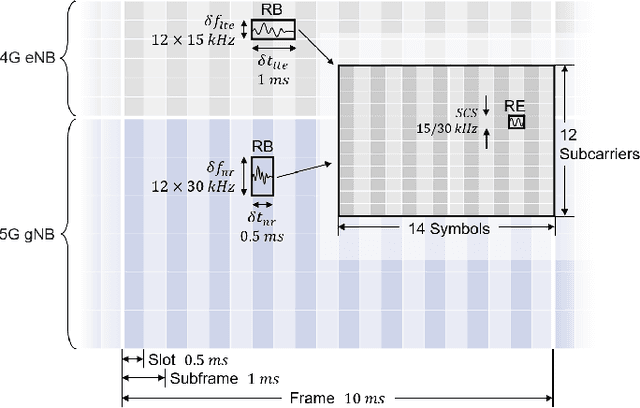
The classification of fifth-generation New-Radio (5G-NR) mobile network traffic is an emerging topic in the field of telecommunications. It can be utilized for quality of service (QoS) management and dynamic resource allocation. However, traditional approaches such as Deep Packet Inspection (DPI) can not be directly applied to encrypted data flows. Therefore, new real-time encrypted traffic classification algorithms need to be investigated to handle dynamic transmission. In this study, we examine the real-time encrypted 5G Non-Standalone (NSA) application-level traffic classification using physical channel records. Due to the vastness of their features, decision-tree-based gradient boosting algorithms are a viable approach for classification. We generate a noise-limited 5G NSA trace dataset with traffic from multiple applications. We develop a new pipeline to convert sequences of physical channel records into numerical vectors. A set of machine learning models are tested, and we propose our solution based on Light Gradient Boosting Machine (LGBM) due to its advantages in fast parallel training and low computational burden in practical scenarios. Our experiments demonstrate that our algorithm can achieve 95% accuracy on the classification task with a state-of-the-art response time as quick as 10ms.