 Add to Chrome
 Add to Firefox
 Add to Edge
Measurement-Based Ultra-Massive MIMO Statistical Channel Characterization and System Performance Evaluation for UMi Environments at 15 GHz FR3 Spectrum
Apr 09, 2026
This paper presents a detailed measurement campaign and a comprehensive analysis of 15 GHz ultra-massive multiple-input multiple-output (UM-MIMO) channels tailored for the urban microcell (UMi) environment. Channel sounding is performed over 14.875-15.125 GHz using a time-domain platform comprising a 128-element L-shaped transmit array and a 64-element square receive array. Four representative scenarios are investigated, namely near-field line-of-sight (LoS), near-field foliage-shaded, far-field foliage-shaded, and far-field LoS street canyon scenarios, resulting in 81 distinct transmit-receive links. Based on the measured data, conventional channel characteristics, including path loss, power delay angle profiles, delay spread, and angular spread, are characterized, while UM-MIMO-specific phenomena associated with near-field effects, spatial non-stationarity (SNS), and channel hardening (CHD) are quantitatively analyzed. Channel capacity is further evaluated to reveal the effects of different UMi propagation conditions on system performance. The reported results provide empirical support for the new mid-band spectrum (6-24 GHz, including Frequency Range 3 (FR3)) UM-MIMO channel modeling and offer practical guidance for the design and deployment of future sixth-generation (6G) microcell networks.

Truncated Beam Sweeping for Spatial Covariance Matrix Reconstruction in Hybrid Massive MIMO
Mar 27, 2022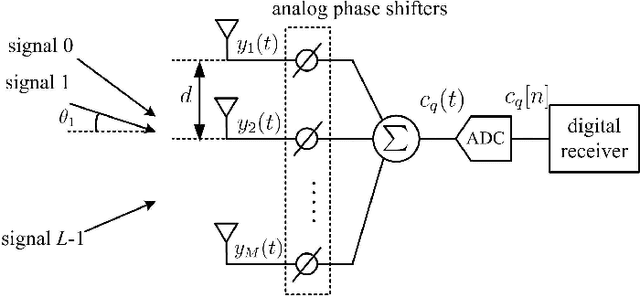
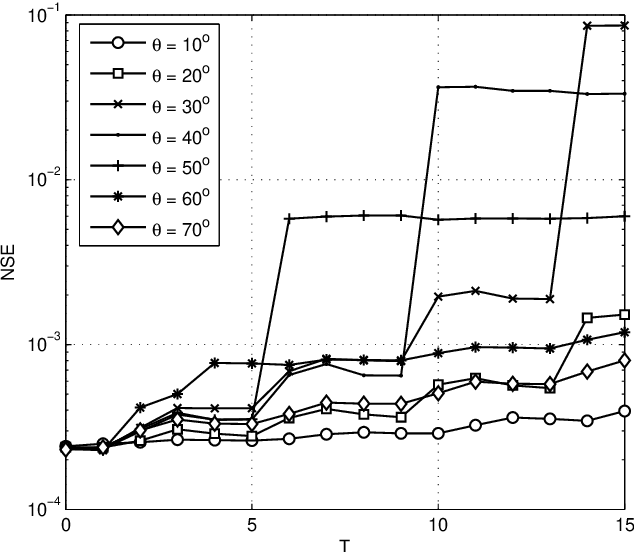
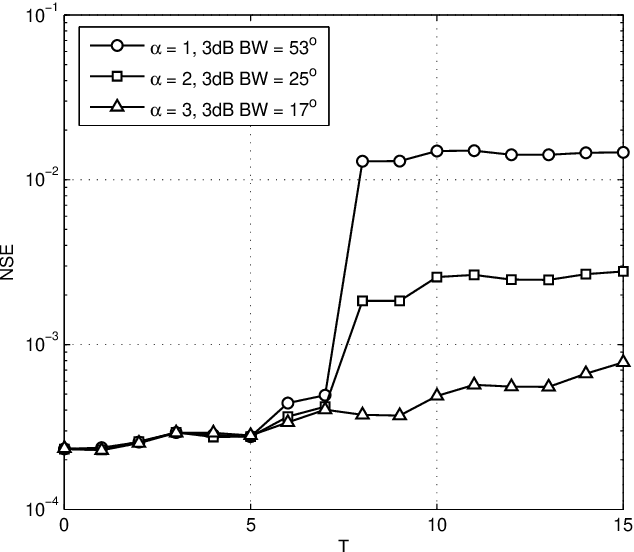
Spatial covariance matrix (SCM) is essential in many applications of multi-antenna systems such as massive multiple-input multiple-output (MIMO). For massive MIMO operating at millimeter-wave bands, hybrid analog-digital structure has been adopted to reduce the cost of radio frequency (RF) chains. In this situation, signals received at the antennas are unavailable to the digital receiver, and as a consequence, traditional sample average approach cannot be used for SCM reconstruction in hybrid massive MIMO. To address this issue, beam sweeping algorithm (BSA), which can reconstruct SCM effectively in hybrid massive MIMO, has been proposed in our previous work. In this paper, a truncated BSA is further proposed for SCM reconstruction by taking into account the patterns of antenna elements in the array. Due to the directive antenna pattern, sweeping results corresponding to predetermined direction-of-angles (DOA) far from the normal direction are small and thus can be replaced by predetermined constants. At the cost of negligible performance reduction, SCM can be reconstructed efficiently by sweeping only the predetermined DOAs that are close to the normal direction. In this way, BSA can be conducted much faster than its traditional counterpart. Insightful analysis will be also included to show the impact of truncation on the performance.