 Add to Chrome
 Add to Firefox
 Add to Edge
Strategic Advice in the Age of Personal AI
Mar 02, 2026
Personal AI assistants have changed how people use institutional and professional advice. We study this new strategic setting in which individuals may stochastically consult a personal AI whose recommendation is predictable to the focal advisor. Personal AI enters this strategic environment along two dimensions: how often it is consulted and how much weight it receives in the human's decision when consulted. Anticipating this, the advisor responds by counteracting the personal AI recommendation. Counteraction becomes more aggressive as personal AI is consulted more often. Yet advisor performance is non-monotone: equilibrium loss is highest at intermediate levels of adoption and vanishes when personal AI is never used or always used. Trust affects performance through a single relative influence index, and greater relative influence of personal AI increases advisor vulnerability. Extending the framework to costly credibility building, we characterize how personal AI adoption reshapes incentives to invest in trust.

Improving Human Decision-Making with Machine Learning
Aug 31, 2021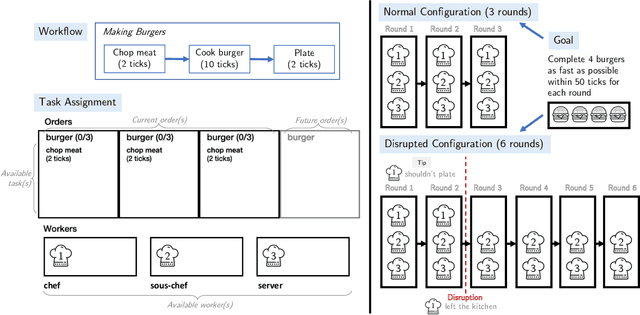
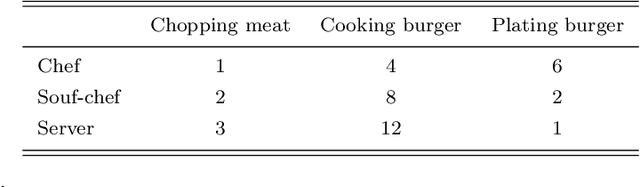
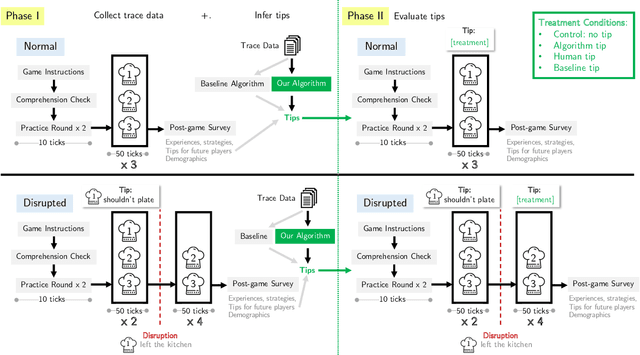

A key aspect of human intelligence is their ability to convey their knowledge to others in succinct forms. However, despite their predictive power, current machine learning models are largely blackboxes, making it difficult for humans to extract useful insights. Focusing on sequential decision-making, we design a novel machine learning algorithm that conveys its insights to humans in the form of interpretable "tips". Our algorithm selects the tip that best bridges the gap in performance between human users and the optimal policy. We evaluate our approach through a series of randomized controlled user studies where participants manage a virtual kitchen. Our experiments show that the tips generated by our algorithm can significantly improve human performance relative to intuitive baselines. In addition, we discuss a number of empirical insights that can help inform the design of algorithms intended for human-AI interfaces. For instance, we find evidence that participants do not simply blindly follow our tips; instead, they combine them with their own experience to discover additional strategies for improving performance.