 Add to Chrome
 Add to Firefox
 Add to Edge
Meta-Aligner: Bidirectional Preference-Policy Optimization for Multi-Objective LLMs Alignment
Apr 27, 2026
Multi-Objective Alignment aims to align Large Language Models (LLMs) with diverse and often conflicting human values by optimizing multiple objectives simultaneously. Existing methods predominantly rely on static preference weight construction strategies. However, rigidly aligning to fixed targets discards valuable intermediate information, as training responses inherently embody valid preference trade-offs even when deviating from the target. To address this limitation, we propose Meal, i.e., MEta ALigner, a bi-level meta-learning framework enabling bidirectional optimization between preferences and policy responses, generating instructive dynamic preferences for steadier training. Specifically, we introduce a preference-weight-net as a meta-learner to generate adaptive preference weights based on input prompts and update the preference weights as learnable parameters, while the LLM policy acts as a base-learner optimizing response generation conditioned on these preferences with rejection sampling strategy. Extensive empirical results demonstrate that our method achieves superior performance on several multi-objective benchmarks, validating the effectiveness of the dynamic bidirectional preference-policy optimization framework.

Fast Community Detection based on Graph Autoencoder Reconstruction
Mar 07, 2022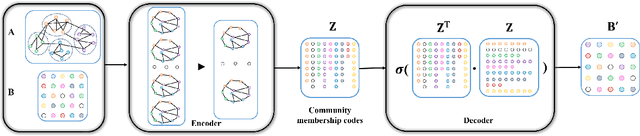
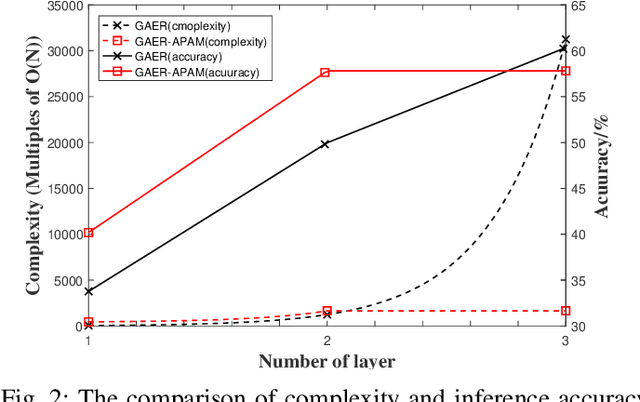
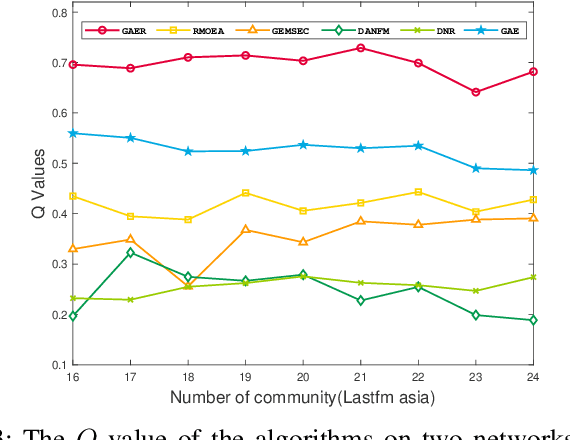
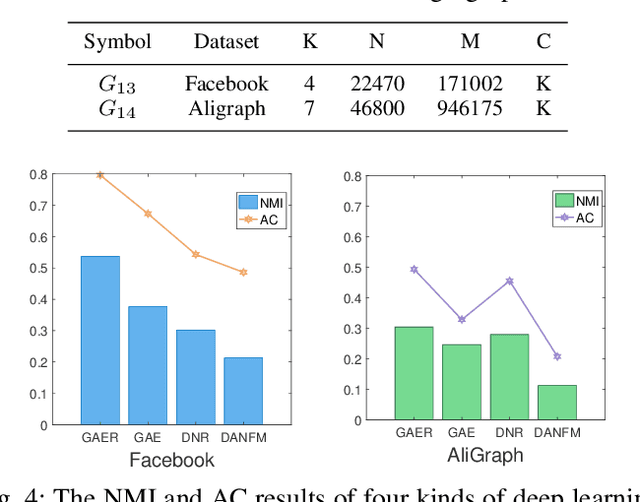
With the rapid development of big data, how to efficiently and accurately discover tight community structures in large-scale networks for knowledge discovery has attracted more and more attention. In this paper, a community detection framework based on Graph AutoEncoder Reconstruction (noted as GAER) is proposed for the first time. GAER is a highly scalable framework which does not require any prior information. We decompose the graph autoencoder-based one-step encoding into the two-stage encoding framework to adapt to the real-world big data system by reducing complexity from the original O(N^2) to O(N). At the same time, based on the advantages of GAER support module plug-and-play configuration and incremental community detection, we further propose a peer awareness based module for real-time large graphs, which can realize the new nodes community detection at a faster speed, and accelerate model inference with the 6.15 times - 14.03 times speed. Finally, we apply the GAER on multiple real-world datasets, including some large-scale networks. The experimental result verified that GAER has achieved the superior performance on almost all networks.
VGAER: graph neural network reconstruction based community detection
Jan 29, 2022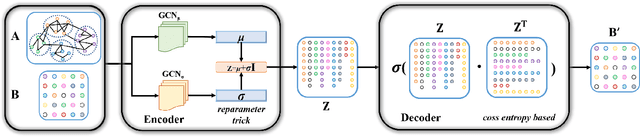
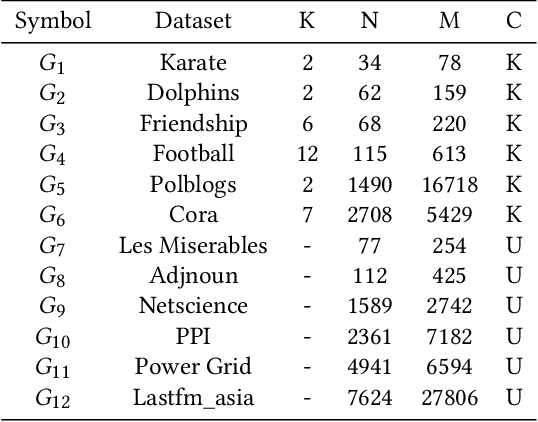
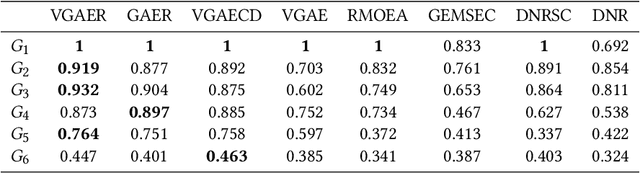
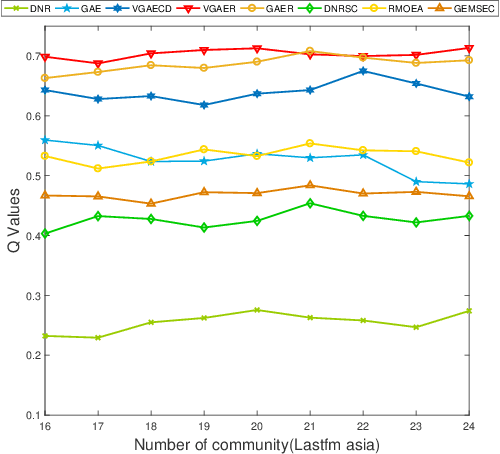
Community detection is a fundamental and important issue in network science, but there are only a few community detection algorithms based on graph neural networks, among which unsupervised algorithms are almost blank. By fusing the high-order modularity information with network features, this paper proposes a Variational Graph AutoEncoder Reconstruction based community detection VGAER for the first time, and gives its non-probabilistic version. They do not need any prior information. We have carefully designed corresponding input features, decoder, and downstream tasks based on the community detection task and these designs are concise, natural, and perform well (NMI values under our design are improved by 59.1% - 565.9%). Based on a series of experiments with wide range of datasets and advanced methods, VGAER has achieved superior performance and shows strong competitiveness and potential with a simpler design. Finally, we report the results of algorithm convergence analysis and t-SNE visualization, which clearly depicted the stable performance and powerful network modularity ability of VGAER. Our codes are available at https://github.com/qcydm/VGAER.