 Add to Chrome
 Add to Firefox
 Add to Edge
Flying over The Uncertain Nature (FORTUNE): Intelligent and Humanistic 3D Path Planning for Low-Altitude Collaboration
Aug 04, 2026
The proliferation of low-altitude intelligent agents is increasing the demand for timely and socially responsible collaborative sensing in dynamic urban environments. However, jointly addressing heterogeneous spatiotemporal demands, environmental uncertainty, and human-centered operational constraints remains challenging. This paper studies 3D multi-UAV path planning and task assignment under uncertain ground PoI demands. Unlike existing work assuming static and fully known PoIs, we model persistent, temporally predictable, and emergent demands within a unified framework. We further incorporate altitude-dependent societal and environmental costs, including noise exposure and public safety risks, to balance sensing performance with socially compliant operations. To solve the resulting large-scale mixed-integer nonlinear problem, we propose FORTUNE, a hierarchical offline-online framework. Offline, a Transformer predicts Type-II PoI activation windows, while an enhanced sparrow search algorithm generates coordinated flight plans through priority-aware decoding and danger-aware evolution. Online, a lightweight refinement module accommodates emerging Type-III PoIs while preserving global mission coherence. Experiments on real-world traffic data and synthetic scenarios show that FORTUNE consistently outperforms state-of-the-art methods in effectiveness, scalability, and practical applicability.

Language Models as Science Tutors
Feb 16, 2024

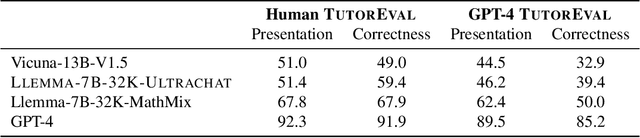
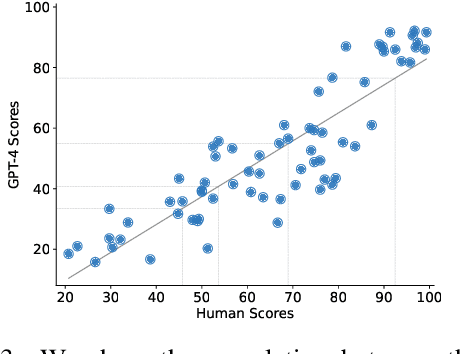
NLP has recently made exciting progress toward training language models (LMs) with strong scientific problem-solving skills. However, model development has not focused on real-life use-cases of LMs for science, including applications in education that require processing long scientific documents. To address this, we introduce TutorEval and TutorChat. TutorEval is a diverse question-answering benchmark consisting of questions about long chapters from STEM textbooks, written by experts. TutorEval helps measure real-life usability of LMs as scientific assistants, and it is the first benchmark combining long contexts, free-form generation, and multi-disciplinary scientific knowledge. Moreover, we show that fine-tuning base models with existing dialogue datasets leads to poor performance on TutorEval. Therefore, we create TutorChat, a dataset of 80,000 long synthetic dialogues about textbooks. We use TutorChat to fine-tune Llemma models with 7B and 34B parameters. These LM tutors specialized in math have a 32K-token context window, and they excel at TutorEval while performing strongly on GSM8K and MATH. Our datasets build on open-source materials, and we release our models, data, and evaluations.