 Add to Chrome
 Add to Firefox
 Add to Edge
Plug, Play, and Fortify: A Low-Cost Module for Robust Multimodal Image Understanding Models
Feb 26, 2026
Missing modalities present a fundamental challenge in multimodal models, often causing catastrophic performance degradation. Our observations suggest that this fragility stems from an imbalanced learning process, where the model develops an implicit preference for certain modalities, leading to the under-optimization of others. We propose a simple yet efficient method to address this challenge. The central insight of our work is that the dominance relationship between modalities can be effectively discerned and quantified in the frequency domain. To leverage this principle, we first introduce a Frequency Ratio Metric (FRM) to quantify modality preference by analyzing features in the frequency domain. Guided by FRM, we then propose a Multimodal Weight Allocation Module, a plug-and-play component that dynamically re-balances the contribution of each branch during training, promoting a more holistic learning paradigm. Extensive experiments demonstrate that MWAM can be seamlessly integrated into diverse architectural backbones, such as those based on CNNs and ViTs. Furthermore, MWAM delivers consistent performance gains across a wide range of tasks and modality combinations. This advancement extends beyond merely optimizing the performance of the base model; it also manifests as further performance improvements to state-of-the-art methods addressing the missing modality problem.

Metric-aligned Sample Selection and Critical Feature Sampling for Oriented Object Detection
Jul 10, 2023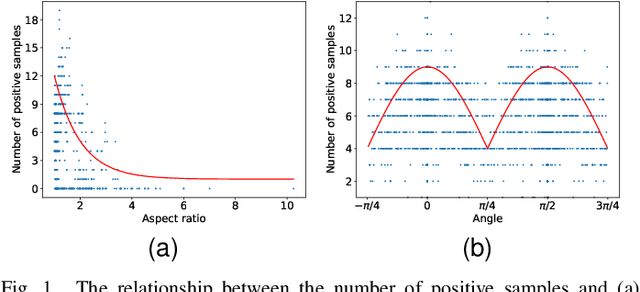
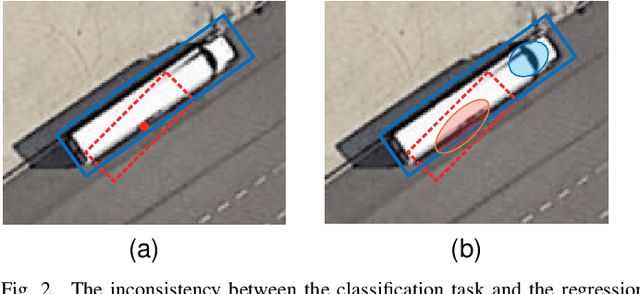
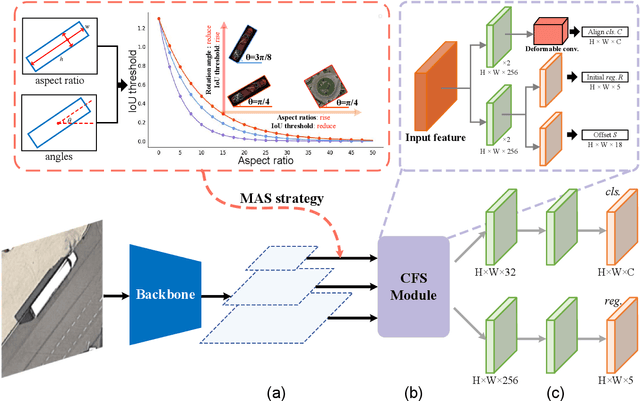
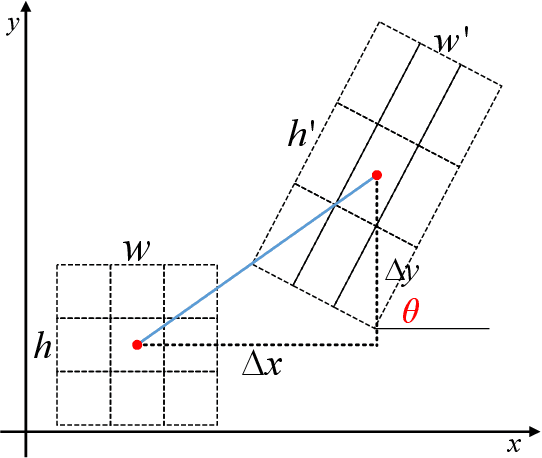
Arbitrary-oriented object detection is a relatively emerging but challenging task. Although remarkable progress has been made, there still remain many unsolved issues due to the large diversity of patterns in orientation, scale, aspect ratio, and visual appearance of objects in aerial images. Most of the existing methods adopt a coarse-grained fixed label assignment strategy and suffer from the inconsistency between the classification score and localization accuracy. First, to align the metric inconsistency between sample selection and regression loss calculation caused by fixed IoU strategy, we introduce affine transformation to evaluate the quality of samples and propose a distance-based label assignment strategy. The proposed metric-aligned selection (MAS) strategy can dynamically select samples according to the shape and rotation characteristic of objects. Second, to further address the inconsistency between classification and localization, we propose a critical feature sampling (CFS) module, which performs localization refinement on the sampling location for classification task to extract critical features accurately. Third, we present a scale-controlled smooth $L_1$ loss (SC-Loss) to adaptively select high quality samples by changing the form of regression loss function based on the statistics of proposals during training. Extensive experiments are conducted on four challenging rotated object detection datasets DOTA, FAIR1M-1.0, HRSC2016, and UCAS-AOD. The results show the state-of-the-art accuracy of the proposed detector.