 Add to Chrome
 Add to Firefox
 Add to Edge
Latent-Regime Bias Auditing for Volatility Forecasting
Aug 03, 2026
Volatility forecasts are commonly evaluated with aggregate accuracy metrics such as RMSE and MAE, but these metrics can hide conditional failures that matter for risk management. This paper proposes a model-agnostic audit framework for evaluating whether volatility forecasts remain reliable across latent market regimes. We learn time-series representations of market-state windows, cluster them into regimes using only training information, assign regimes out of sample, and compare aggregate forecast behavior with regime-conditional bias, tail-underprediction, and underprediction-sensitive economic losses. Applied to daily volatility forecasting across cryptocurrency and ETF assets, the audit shows that models with competitive aggregate accuracy can still exhibit substantial regime-specific bias and severe tail underprediction. The results suggest that volatility forecasting should be evaluated not only by average error, but also by where and how forecasts become unreliable. Our framework shifts forecast evaluation from asking which model is most accurate on average to identifying the market regimes in which apparently accurate forecasts fail conditionally. Reproducibility: https://github.com/arthurchagas1/Latent-Regime-Bias-Auditing-for-Volatility-Forecasting

Inference-Time Decision Calibration for Temporal Classification
Jun 14, 2026Temporal classification errors are often treated as representation failures, but they can also arise from how available evidence is converted into decisions. This paper proposes a representation--calibration decomposition for temporal classification. We keep a trained native classifier frozen and separate two inference-time interventions: a conservative residual multi-scale branch that adds auxiliary logits to the native prediction, and a post-hoc branch-aware calibrator that recombines native and residual evidence at decision time. This design distinguishes missing temporal evidence from underused decision-level evidence without retraining the backbone. Across FI-2010, PTB-XL, UCI-HAR, MHEALTH, and HARTH, we find that gains are strongly regime-dependent. Residual multi-scale evidence is most useful in noisy or representation-limited settings, especially short-horizon FI-2010 and weaker recurrent backbones, while branch-aware calibration helps when native and auxiliary logits contain complementary evidence not fully exploited by the raw decision rule. Near-saturated settings show limited gains from either intervention. These results suggest that temporal classification should be understood not only as representation learning, but also as the problem of trusting, combining, and calibrating evidence from multiple views.
Beyond Patient Invariance: Learning Cardiac Dynamics via Action-Conditioned JEPAs
Apr 24, 2026Self-supervised learning in healthcare has largely relied on invariance-based objectives, which maximize similarity between different views of the same patient. While effective for static anatomy, this paradigm is fundamentally misaligned with clinical diagnosis, as it mathematically compels the model to suppress the transient pathological changes it is intended to detect. We propose a shift towards Action-Conditioned World Models that learn to simulate the dynamics of disease progression, or Event-Conditioned. Adapting the LeJEPA framework to physiological time-series, we define pathology not as a static label, but as a transition vector acting on a patient's latent state. By predicting the future electrophysiological state of the heart given a disease onset, our model explicitly disentangles stable anatomical features from dynamic pathological forces. Evaluated on the MIMIC-IV-ECG dataset, our approach outperforms fully supervised baselines on the critical triage task. Crucially, we demonstrate superior sample efficiency: in low-resource regimes, our world model outperforms supervised learning by over 0.05 AUROC. These results suggest that modeling biological dynamics provides a dense supervision signal that is far more robust than static classification. Source code is available at https://github.com/cljosegfer/lesaude-dynamics
Mapping the Political Discourse in the Brazilian Chamber of Deputies: A Multi-Faceted Computational Approach
Apr 23, 2026Analyses of legislative behavior often rely on voting records, overlooking the rich semantic and rhetorical content of political speech. In this paper, we ask three complementary questions about parliamentary discourse: how things are said, what is being said, and who is speaking in discursively similar ways. To answer these questions, we introduce a scalable and generalizable computational framework that combines diachronic stylometric analysis, contextual topic modeling, and semantic clustering of deputies' speeches. We apply this framework to a large-scale case study of the Brazilian Chamber of Deputies, using a corpus of over 450,000 speeches from 2003 to 2025. Our results show a long-term stylistic shift toward shorter and more direct speeches, a legislative agenda that reorients sharply in response to national crises, and a granular map of discursive alignments in which regional and gender identities often prove more salient than formal party affiliation. More broadly, this work offers a robust methodology for analyzing parliamentary discourse as a multidimensional phenomenon that complements traditional vote-based approaches.
Mining Biclusters of Similar Values with Triadic Concept Analysis
Nov 14, 2011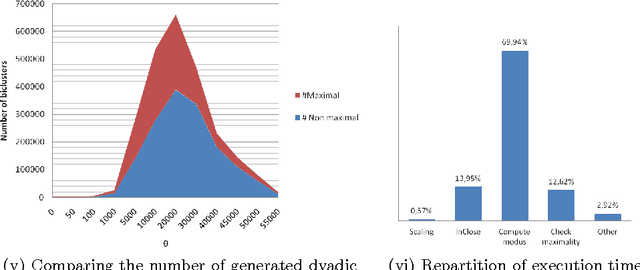
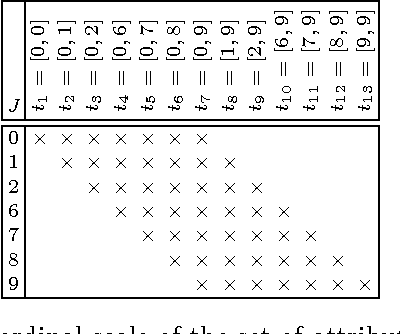
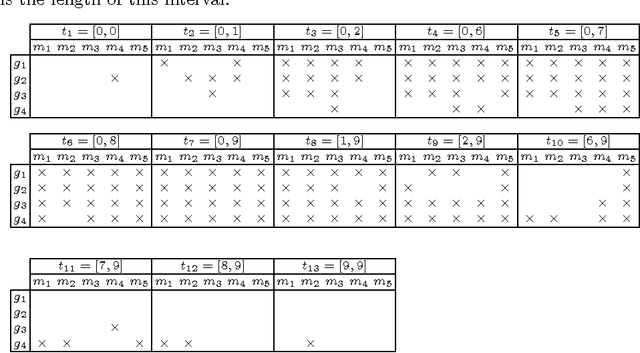
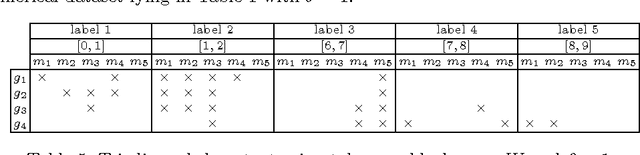
Biclustering numerical data became a popular data-mining task in the beginning of 2000's, especially for analysing gene expression data. A bicluster reflects a strong association between a subset of objects and a subset of attributes in a numerical object/attribute data-table. So called biclusters of similar values can be thought as maximal sub-tables with close values. Only few methods address a complete, correct and non redundant enumeration of such patterns, which is a well-known intractable problem, while no formal framework exists. In this paper, we introduce important links between biclustering and formal concept analysis. More specifically, we originally show that Triadic Concept Analysis (TCA), provides a nice mathematical framework for biclustering. Interestingly, existing algorithms of TCA, that usually apply on binary data, can be used (directly or with slight modifications) after a preprocessing step for extracting maximal biclusters of similar values.