 Add to Chrome
 Add to Firefox
 Add to Edge
Beyond Patient Invariance: Learning Cardiac Dynamics via Action-Conditioned JEPAs
Apr 24, 2026
Self-supervised learning in healthcare has largely relied on invariance-based objectives, which maximize similarity between different views of the same patient. While effective for static anatomy, this paradigm is fundamentally misaligned with clinical diagnosis, as it mathematically compels the model to suppress the transient pathological changes it is intended to detect. We propose a shift towards Action-Conditioned World Models that learn to simulate the dynamics of disease progression, or Event-Conditioned. Adapting the LeJEPA framework to physiological time-series, we define pathology not as a static label, but as a transition vector acting on a patient's latent state. By predicting the future electrophysiological state of the heart given a disease onset, our model explicitly disentangles stable anatomical features from dynamic pathological forces. Evaluated on the MIMIC-IV-ECG dataset, our approach outperforms fully supervised baselines on the critical triage task. Crucially, we demonstrate superior sample efficiency: in low-resource regimes, our world model outperforms supervised learning by over 0.05 AUROC. These results suggest that modeling biological dynamics provides a dense supervision signal that is far more robust than static classification. Source code is available at https://github.com/cljosegfer/lesaude-dynamics

A Comprehensive Review and Taxonomy of Audio-Visual Synchronization Techniques for Realistic Speech Animation
Jul 24, 2024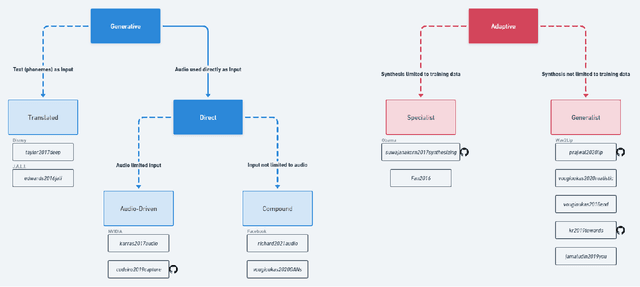
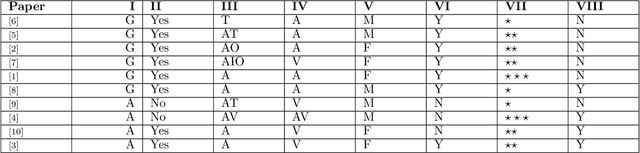
In many applications, synchronizing audio with visuals is crucial, such as in creating graphic animations for films or games, translating movie audio into different languages, and developing metaverse applications. This review explores various methodologies for achieving realistic facial animations from audio inputs, highlighting generative and adaptive models. Addressing challenges like model training costs, dataset availability, and silent moment distributions in audio data, it presents innovative solutions to enhance performance and realism. The research also introduces a new taxonomy to categorize audio-visual synchronization methods based on logistical aspects, advancing the capabilities of virtual assistants, gaming, and interactive digital media.