 Add to Chrome
 Add to Firefox
 Add to Edge
AI-Generated PowerShell Malware: An Experimental Framework and Dataset
Jun 29, 2026
Generative AI has emerged as a significant cybersecurity threat, with several recent attack campaigns leveraging LLMs to generate code for malicious purposes via scripting languages such as PowerShell. Consequently, for cybersecurity analysts, it is imperative to investigate the offensive capabilities of AI code generators. In this paper, we propose an experimental framework to assess LLM-generated PowerShell malware, which comprises a novel sandbox approach for dynamic analysis of AI-generated malware. Furthermore, we present a novel, manually curated dataset of real-world PowerShell malware, annotated in natural language to assist the training and evaluation of LLMs. Finally, this study evaluates permissive, open-weight LLMs adapted to PowerShell malware generation. Our results reveal a high degree of similarity between real malware and LLM-generated ones in terms of triggered OS malicious events, with a median Jaccard index of 84.5% and 48.4% of instances achieving complete overlap.

Automatic Mapping of Unstructured Cyber Threat Intelligence: An Experimental Study
Aug 25, 2022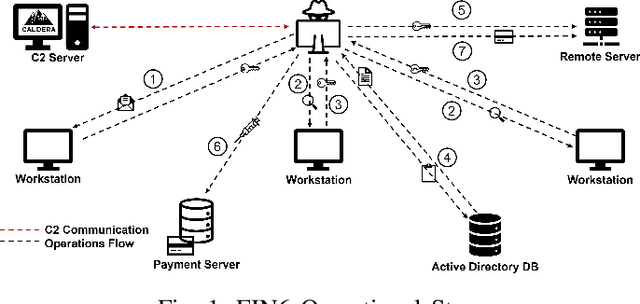
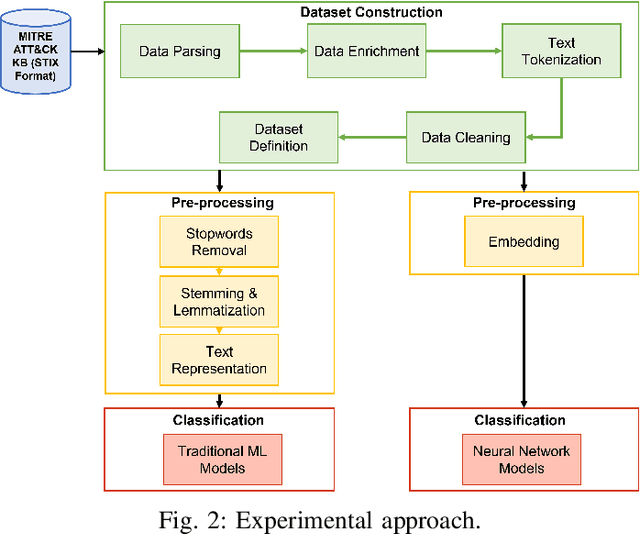
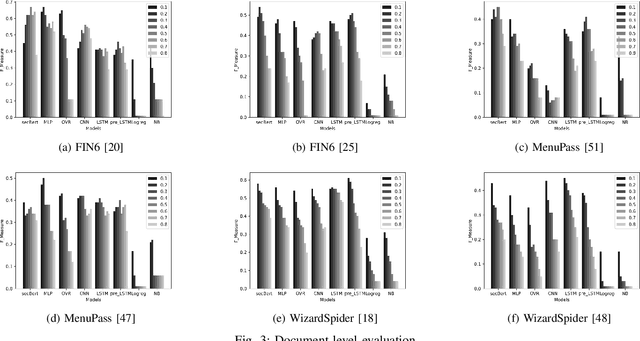
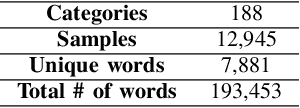
Proactive approaches to security, such as adversary emulation, leverage information about threat actors and their techniques (Cyber Threat Intelligence, CTI). However, most CTI still comes in unstructured forms (i.e., natural language), such as incident reports and leaked documents. To support proactive security efforts, we present an experimental study on the automatic classification of unstructured CTI into attack techniques using machine learning (ML). We contribute with two new datasets for CTI analysis, and we evaluate several ML models, including both traditional and deep learning-based ones. We present several lessons learned about how ML can perform at this task, which classifiers perform best and under which conditions, which are the main causes of classification errors, and the challenges ahead for CTI analysis.
A next-generation platform for Cyber Range-as-a-Service
Dec 21, 2021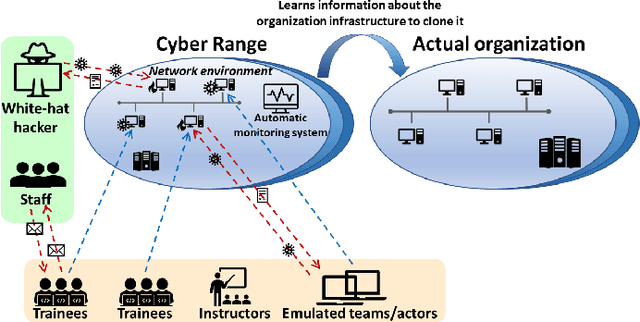
In the last years, Cyber Ranges have become a widespread solution to train professionals for responding to cyber threats and attacks. Cloud computing plays a key role in this context since it enables the creation of virtual infrastructures on which Cyber Ranges are based. However, the setup and management of Cyber Ranges are expensive and time-consuming activities. In this paper, we highlight the novel features for the next-generation Cyber Range platforms. In particular, these features include the creation of a virtual clone for an actual corporate infrastructure, relieving the security managers from the setup of the training scenarios and sessions, the automatic monitoring of the participants' activities, and the emulation of their behavior.