 Add to Chrome
 Add to Firefox
 Add to Edge
Which Pairs to Compare for LLM Post-Training?
Jun 17, 2026
Preference-based post-training has become a central paradigm for aligning language models. A common data-collection strategy is to generate a small set of completions for each prompt and label the resulting comparison pairs. However, human preference labels are often much more expensive than generating additional completions, suggesting a different use of the same labeling budget: generate a larger pool of completions, but label only the most informative comparison pairs. This paper studies which pairs should be compared in preference-based post-training. We formulate comparison curation as a sampling-design problem and evaluate designs by the quality of the final policy under the preference-based post-training objective. We instantiate this framework for Direct Preference Optimization (DPO), analyzing how the choice of labeled pairs propagates through DPO training to downstream policy performance. Our main results provide matching upper and lower bounds on the post-training optimality gap of the DPO-trained policy. The bounds show that comparison selection affects downstream performance through a single design-dependent information matrix, which links label allocation to parameter estimation error and policy suboptimality. This yields an explicit optimization criterion for budgeted comparison curation and motivates practical sampling designs for selecting informative pairs from large generated completion pools. Experiments on synthetic settings and language-model post-training benchmarks show that the proposed designs consistently improve sample efficiency over common comparison-selection heuristics.

PREFER: Personalized Review Summarization with Online Preference Learning
May 07, 2026Product reviews significantly influence purchasing decisions on e-commerce platforms. However, the sheer volume of reviews can overwhelm users, obscuring the information most relevant to their specific needs. Current e-commerce summarization systems typically produce generic, static summaries that fail to account for the fact that (i) different users care about different product characteristics, and (ii) these preferences may evolve with interactions. To address the challenge of unknown latent preferences, we propose an online learning framework that generates personalized summaries for each user. Our system iteratively refines its understanding of user preferences by incorporating feedback directly from the generated summaries over time. We provide a case study using the Amazon Reviews'23 dataset, showing in controlled simulations that online preference learning improves alignment with target user interests while maintaining summary quality.
Collaborative Min-Max Regret in Grouped Multi-Armed Bandits
Jun 12, 2025We study the impact of sharing exploration in multi-armed bandits in a grouped setting where a set of groups have overlapping feasible action sets [Baek and Farias '24]. In this grouped bandit setting, groups share reward observations, and the objective is to minimize the collaborative regret, defined as the maximum regret across groups. This naturally captures applications in which one aims to balance the exploration burden between groups or populations -- it is known that standard algorithms can lead to significantly imbalanced exploration cost between groups. We address this problem by introducing an algorithm Col-UCB that dynamically coordinates exploration across groups. We show that Col-UCB achieves both optimal minimax and instance-dependent collaborative regret up to logarithmic factors. These bounds are adaptive to the structure of shared action sets between groups, providing insights into when collaboration yields significant benefits over each group learning their best action independently.
Last Switch Dependent Bandits with Monotone Payoff Functions
Jun 01, 2023In a recent work, Laforgue et al. introduce the model of last switch dependent (LSD) bandits, in an attempt to capture nonstationary phenomena induced by the interaction between the player and the environment. Examples include satiation, where consecutive plays of the same action lead to decreased performance, or deprivation, where the payoff of an action increases after an interval of inactivity. In this work, we take a step towards understanding the approximability of planning LSD bandits, namely, the (NP-hard) problem of computing an optimal arm-pulling strategy under complete knowledge of the model. In particular, we design the first efficient constant approximation algorithm for the problem and show that, under a natural monotonicity assumption on the payoffs, its approximation guarantee (almost) matches the state-of-the-art for the special and well-studied class of recharging bandits (also known as delay-dependent). In this attempt, we develop new tools and insights for this class of problems, including a novel higher-dimensional relaxation and the technique of mirroring the evolution of virtual states. We believe that these novel elements could potentially be used for approaching richer classes of action-induced nonstationary bandits (e.g., special instances of restless bandits). In the case where the model parameters are initially unknown, we develop an online learning adaptation of our algorithm for which we provide sublinear regret guarantees against its full-information counterpart.
MNL-Bandit in non-stationary environments
Mar 04, 2023In this paper, we study the MNL-Bandit problem in a non-stationary environment and present an algorithm with worst-case dynamic regret of $\tilde{O}\left( \min \left\{ \sqrt{NTL}\;,\; N^{\frac{1}{3}}(\Delta_{\infty}^{K})^{\frac{1}{3}} T^{\frac{2}{3}} + \sqrt{NT}\right\}\right)$. Here $N$ is the number of arms, $L$ is the number of switches and $\Delta_{\infty}^K$ is a variation measure of the unknown parameters. We also show that our algorithm is near-optimal (up to logarithmic factors). Our algorithm builds upon the epoch-based algorithm for stationary MNL-Bandit in Agrawal et al. 2016. However, non-stationarity poses several challenges and we introduce new techniques and ideas to address these. In particular, we give a tight characterization for the bias introduced in the estimators due to non stationarity and derive new concentration bounds.
Interpretable Machine Learning for Resource Allocation with Application to Ventilator Triage
Oct 21, 2021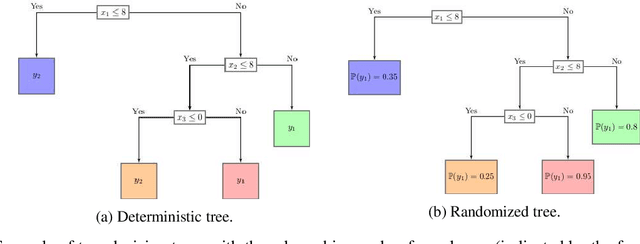
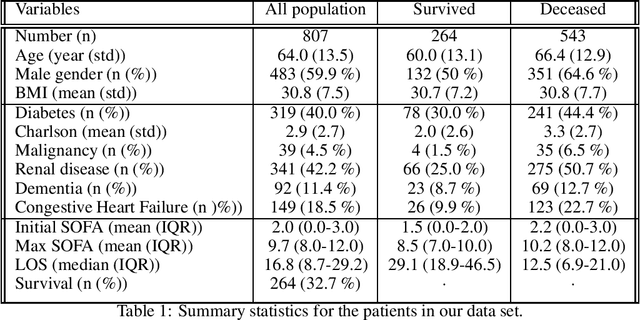
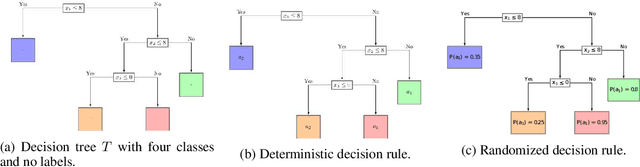
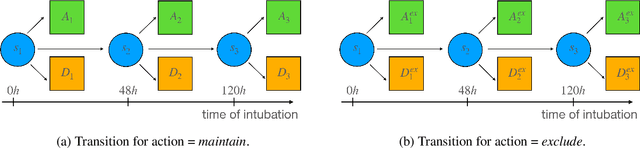
Rationing of healthcare resources is a challenging decision that policy makers and providers may be forced to make during a pandemic, natural disaster, or mass casualty event. Well-defined guidelines to triage scarce life-saving resources must be designed to promote transparency, trust, and consistency. To facilitate buy-in and use during high-stress situations, these guidelines need to be interpretable and operational. We propose a novel data-driven model to compute interpretable triage guidelines based on policies for Markov Decision Process that can be represented as simple sequences of decision trees ("tree policies"). In particular, we characterize the properties of optimal tree policies and present an algorithm based on dynamic programming recursions to compute good tree policies. We utilize this methodology to obtain simple, novel triage guidelines for ventilator allocations for COVID-19 patients, based on real patient data from Montefiore hospitals. We also compare the performance of our guidelines to the official New York State guidelines that were developed in 2015 (well before the COVID-19 pandemic). Our empirical study shows that the number of excess deaths associated with ventilator shortages could be reduced significantly using our policy. Our work highlights the limitations of the existing official triage guidelines, which need to be adapted specifically to COVID-19 before being successfully deployed.
Dynamic pricing and assortment under a contextual MNL demand
Oct 19, 2021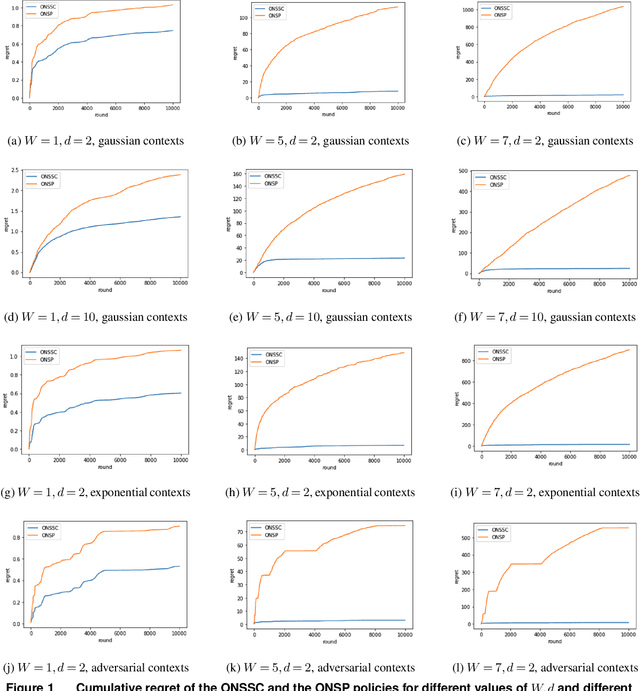
We consider dynamic multi-product pricing and assortment problems under an unknown demand over T periods, where in each period, the seller decides on the price for each product or the assortment of products to offer to a customer who chooses according to an unknown Multinomial Logit Model (MNL). Such problems arise in many applications, including online retail and advertising. We propose a randomized dynamic pricing policy based on a variant of the Online Newton Step algorithm (ONS) that achieves a $O(d\sqrt{T}\log(T))$ regret guarantee under an adversarial arrival model. We also present a new optimistic algorithm for the adversarial MNL contextual bandits problem, which achieves a better dependency than the state-of-the-art algorithms in a problem-dependent constant $\kappa$ (potentially exponentially small). Our regret upper bounds scale as $\tilde{O}(d\sqrt{\kappa T}+ \log(T)/\kappa)$, which gives a significantly stronger bound than the existing $\tilde{O}(d\sqrt{T}/\kappa)$ guarantees.
MNL-Bandit with Knapsacks
Jun 02, 2021We consider a dynamic assortment selection problem where a seller has a fixed inventory of $N$ substitutable products and faces an unknown demand that arrives sequentially over $T$ periods. In each period, the seller needs to decide on the assortment of products (of cardinality at most $K$) to offer to the customers. The customer's response follows an unknown multinomial logit model (MNL) with parameters $v$. The goal of the seller is to maximize the total expected revenue given the fixed initial inventory of $N$ products. We give a policy that achieves a regret of $\tilde O\left(K \sqrt{K N T}\left(1 + \frac{\sqrt{v_{\max}}}{q_{\min}}\text{OPT}\right) \right)$ under a mild assumption on the model parameters. In particular, our policy achieves a near-optimal $\tilde O(\sqrt{T})$ regret in the large inventory setting. Our policy builds upon the UCB-based approach for MNL-bandit without inventory constraints in [1] and addresses the inventory constraints through an exponentially sized LP for which we present a tractable approximation while keeping the $\tilde O(\sqrt{T})$ regret bound.
Robust Policies For Proactive ICU Transfers
Feb 14, 2020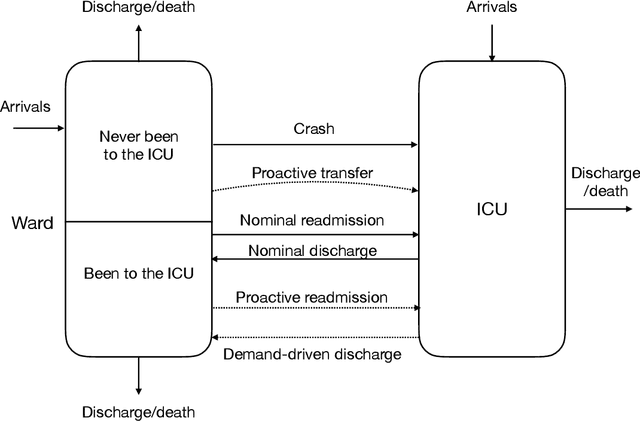

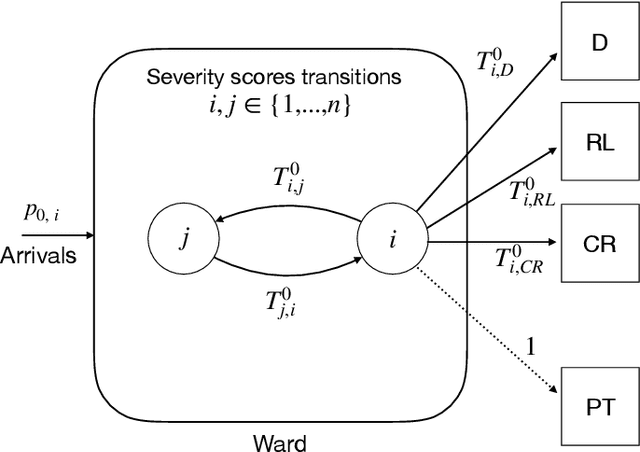
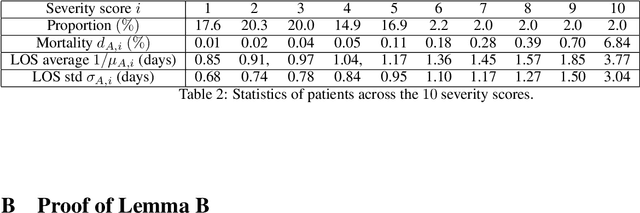
Patients whose transfer to the Intensive Care Unit (ICU) is unplanned are prone to higher mortality rates than those who were admitted directly to the ICU. Recent advances in machine learning to predict patient deterioration have introduced the possibility of \emph{proactive transfer} from the ward to the ICU. In this work, we study the problem of finding \emph{robust} patient transfer policies which account for uncertainty in statistical estimates due to data limitations when optimizing to improve overall patient care. We propose a Markov Decision Process model to capture the evolution of patient health, where the states represent a measure of patient severity. Under fairly general assumptions, we show that an optimal transfer policy has a threshold structure, i.e., that it transfers all patients above a certain severity level to the ICU (subject to available capacity). As model parameters are typically determined based on statistical estimations from real-world data, they are inherently subject to misspecification and estimation errors. We account for this parameter uncertainty by deriving a robust policy that optimizes the worst-case reward across all plausible values of the model parameters. We show that the robust policy also has a threshold structure under fairly general assumptions. Moreover, it is more aggressive in transferring patients than the optimal nominal policy, which does not take into account parameter uncertainty. We present computational experiments using a dataset of hospitalizations at 21 KNPC hospitals, and present empirical evidence of the sensitivity of various hospital metrics (mortality, length-of-stay, average ICU occupancy) to small changes in the parameters. Our work provides useful insights into the impact of parameter uncertainty on deriving simple policies for proactive ICU transfer that have strong empirical performance and theoretical guarantees.
A Generalized Markov Chain Model to Capture Dynamic Preferences and Choice Overload
Nov 19, 2019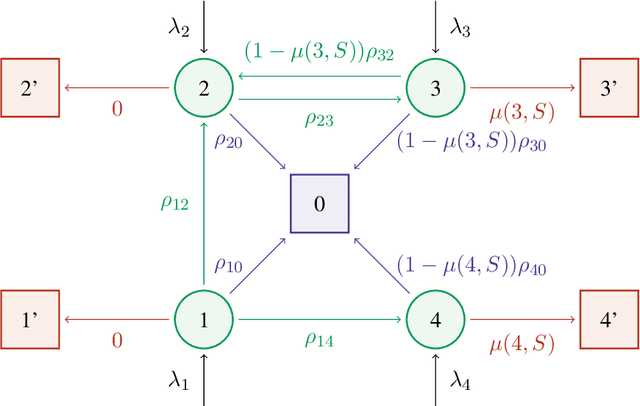
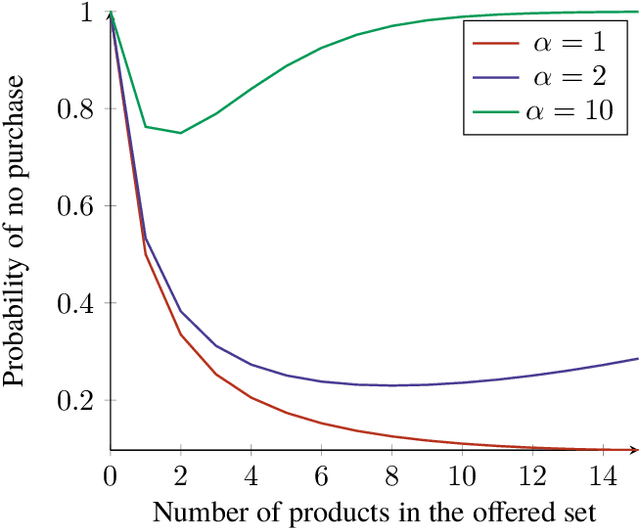
Assortment optimization is an important problem that arises in many practical applications such as retailing and online advertising where the goal is to find a subset of products from a universe of substitutable products that maximize a seller's expected revenue. The demand and the revenue depend on the substitution behavior of the customers that is captured by a choice model. One of the key challenges is to find the right model for the customer substitution behavior. Many parametric random utility based models have been considered in the literature to capture substitution. However, in all these models, the probability of purchase increases as we add more options to the assortment. This is not true in general and in many settings, the probability of purchase may decrease if we add more products to the assortment, referred to as the choice overload. In this paper we attempt to address these serious limitations and propose a generalization of the Markov chain based choice model considered in Blanchet et al. In particular, we handle dynamic preferences and the choice overload phenomenon using a Markovian comparison model that is a generalization of the Markovian substitution framework of Blanchet et al. The Markovian comparison framework allows us to implicitly model the search cost in the choice process and thereby, modeling both dynamic preferences as well as the choice overload phenomenon. We consider the assortment optimization problem for the special case of our generalized Markov chain model where the underlying Markov chain is rank-1 (this is a generalization of the Multinomial Logit model). We show that the assortment optimization problem under this model is NP-hard and present a fully polynomial-time approximation scheme (FPTAS) for this problem.