 Add to Chrome
 Add to Firefox
 Add to Edge
PREFER: Personalized Review Summarization with Online Preference Learning
May 07, 2026
Product reviews significantly influence purchasing decisions on e-commerce platforms. However, the sheer volume of reviews can overwhelm users, obscuring the information most relevant to their specific needs. Current e-commerce summarization systems typically produce generic, static summaries that fail to account for the fact that (i) different users care about different product characteristics, and (ii) these preferences may evolve with interactions. To address the challenge of unknown latent preferences, we propose an online learning framework that generates personalized summaries for each user. Our system iteratively refines its understanding of user preferences by incorporating feedback directly from the generated summaries over time. We provide a case study using the Amazon Reviews'23 dataset, showing in controlled simulations that online preference learning improves alignment with target user interests while maintaining summary quality.

IISE PG&E Energy Analytics Challenge 2025: Hourly-Binned Regression Models Beat Transformers in Load Forecasting
May 16, 2025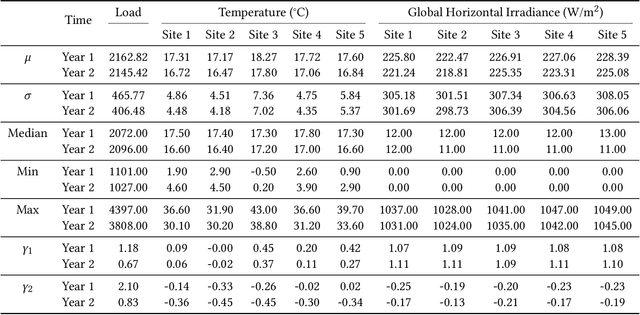
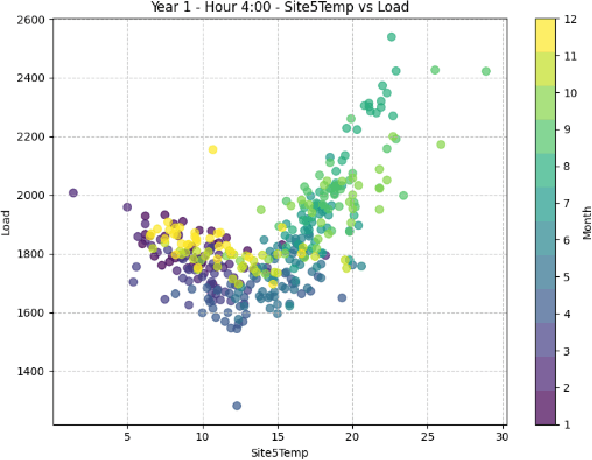
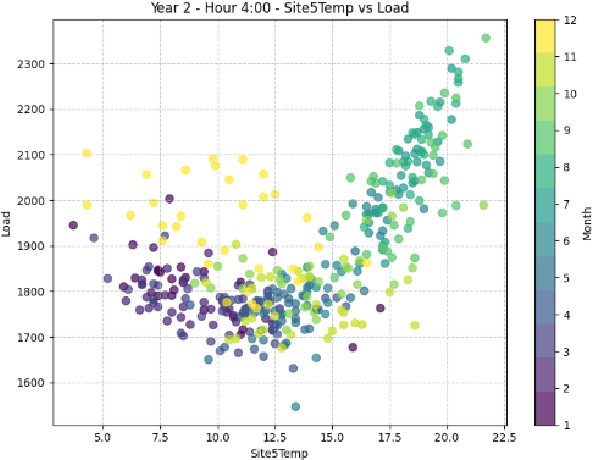
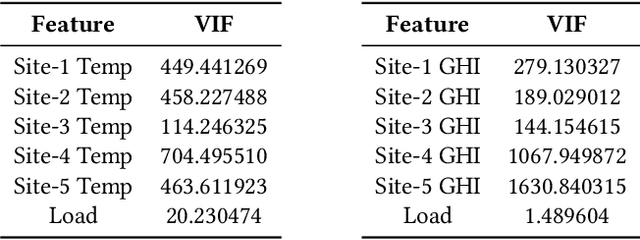
Accurate electricity load forecasting is essential for grid stability, resource optimization, and renewable energy integration. While transformer-based deep learning models like TimeGPT have gained traction in time-series forecasting, their effectiveness in long-term electricity load prediction remains uncertain. This study evaluates forecasting models ranging from classical regression techniques to advanced deep learning architectures using data from the ESD 2025 competition. The dataset includes two years of historical electricity load data, alongside temperature and global horizontal irradiance (GHI) across five sites, with a one-day-ahead forecasting horizon. Since actual test set load values remain undisclosed, leveraging predicted values would accumulate errors, making this a long-term forecasting challenge. We employ (i) Principal Component Analysis (PCA) for dimensionality reduction and (ii) frame the task as a regression problem, using temperature and GHI as covariates to predict load for each hour, (iii) ultimately stacking 24 models to generate yearly forecasts. Our results reveal that deep learning models, including TimeGPT, fail to consistently outperform simpler statistical and machine learning approaches due to the limited availability of training data and exogenous variables. In contrast, XGBoost, with minimal feature engineering, delivers the lowest error rates across all test cases while maintaining computational efficiency. This highlights the limitations of deep learning in long-term electricity forecasting and reinforces the importance of model selection based on dataset characteristics rather than complexity. Our study provides insights into practical forecasting applications and contributes to the ongoing discussion on the trade-offs between traditional and modern forecasting methods.