 Add to Chrome
 Add to Firefox
 Add to Edge
MerLin: A Discovery Engine for Photonic and Hybrid Quantum Machine Learning
Feb 11, 2026
Identifying where quantum models may offer practical benefits in near term quantum machine learning (QML) requires moving beyond isolated algorithmic proposals toward systematic and empirical exploration across models, datasets, and hardware constraints. We introduce MerLin, an open source framework designed as a discovery engine for photonic and hybrid quantum machine learning. MerLin integrates optimized strong simulation of linear optical circuits into standard PyTorch and scikit learn workflows, enabling end to end differentiable training of quantum layers. MerLin is designed around systematic benchmarking and reproducibility. As an initial contribution, we reproduce eighteen state of the art photonic and hybrid QML works spanning kernel methods, reservoir computing, convolutional and recurrent architectures, generative models, and modern training paradigms. These reproductions are released as reusable, modular experiments that can be directly extended and adapted, establishing a shared experimental baseline consistent with empirical benchmarking methodologies widely adopted in modern artificial intelligence. By embedding photonic quantum models within established machine learning ecosystems, MerLin allows practitioners to leverage existing tooling for ablation studies, cross modality comparisons, and hybrid classical quantum workflows. The framework already implements hardware aware features, allowing tests on available quantum hardware while enabling exploration beyond its current capabilities, positioning MerLin as a future proof co design tool linking algorithms, benchmarks, and hardware.

Overview of PlantCLEF 2024: multi-species plant identification in vegetation plot images
Sep 19, 2025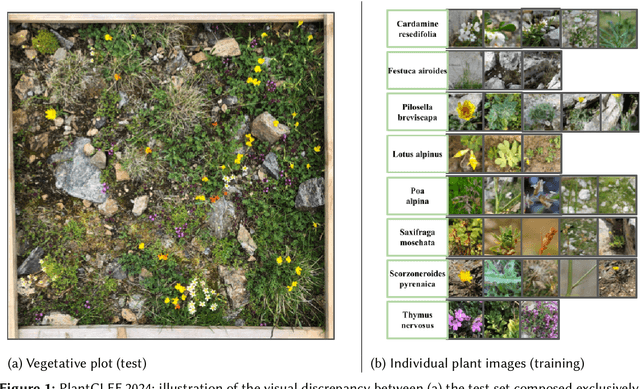
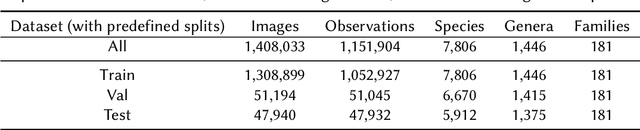
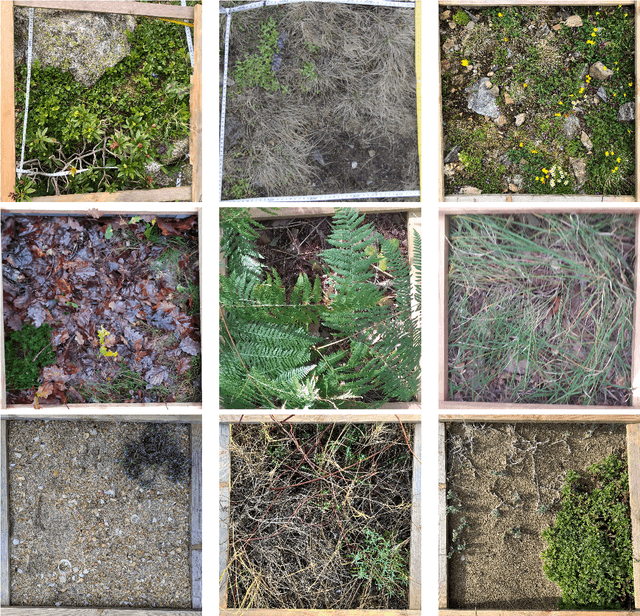

Plot images are essential for ecological studies, enabling standardized sampling, biodiversity assessment, long-term monitoring and remote, large-scale surveys. Plot images are typically fifty centimetres or one square meter in size, and botanists meticulously identify all the species found there. The integration of AI could significantly improve the efficiency of specialists, helping them to extend the scope and coverage of ecological studies. To evaluate advances in this regard, the PlantCLEF 2024 challenge leverages a new test set of thousands of multi-label images annotated by experts and covering over 800 species. In addition, it provides a large training set of 1.7 million individual plant images as well as state-of-the-art vision transformer models pre-trained on this data. The task is evaluated as a (weakly-labeled) multi-label classification task where the aim is to predict all the plant species present on a high-resolution plot image (using the single-label training data). In this paper, we provide an detailed description of the data, the evaluation methodology, the methods and models employed by the participants and the results achieved.