 Add to Chrome
 Add to Firefox
 Add to Edge
EVA: Towards a universal model of the immune system
Feb 12, 2026
The effective application of foundation models to translational research in immune-mediated diseases requires multimodal patient-level representations that can capture complex phenotypes emerging from multicellular interactions. Yet most current biological foundation models focus only on single-cell resolution and are evaluated on technical metrics often disconnected from actual drug development tasks and challenges. Here, we introduce EVA, the first cross-species, multimodal foundation model of immunology and inflammation, a therapeutic area where shared pathogenic mechanisms create unique opportunities for transfer learning. EVA harmonizes transcriptomics data across species, platforms, and resolutions, and integrates histology data to produce rich, unified patient representations. We establish clear scaling laws, demonstrating that increasing model size and compute translates to improvements in both pretraining and downstream tasks performance. We introduce a comprehensive evaluation suite of 39 tasks spanning the drug development pipeline: zero-shot target efficacy and gene function prediction for discovery, cross-species or cross-diseases molecular perturbations for preclinical development, and patient stratification with treatment response prediction or disease activity prediction for clinical trials applications. We benchmark EVA against several state-of-the-art biological foundation models and baselines on these tasks, and demonstrate state-of-the-art results on each task category. Using mechanistic interpretability, we further identify biological meaningful features, revealing intertwined representations across species and technologies. We release an open version of EVA for transcriptomics to accelerate research on immune-mediated diseases.

Fusion of rain radar images and wind forecasts in a deep learning model applied to rain nowcasting
Jan 12, 2021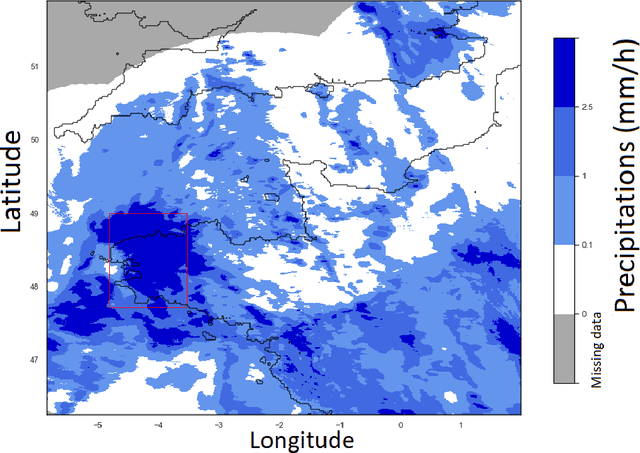
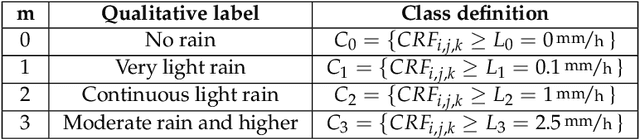
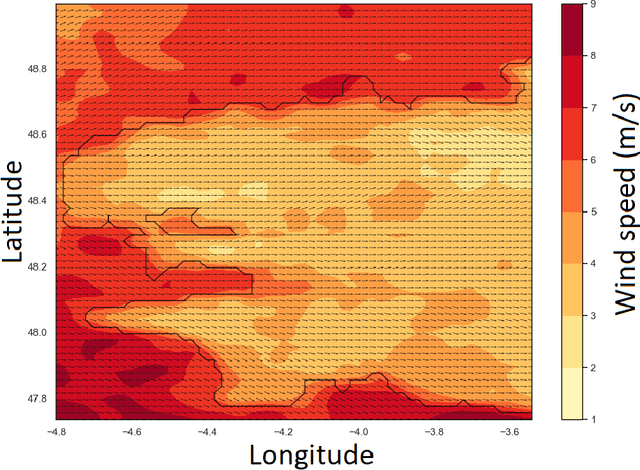
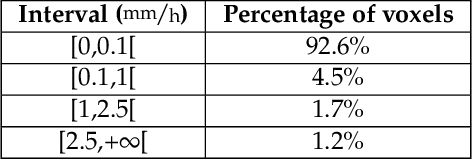
Short- or mid-term rainfall forecasting is a major task with several environmental applications such as agricultural management or flood risk monitoring. Existing data-driven approaches, especially deep learning models, have shown significant skill at this task, using only rainfall radar images as inputs. In order to determine whether using other meteorological parameters such as wind would improve forecasts, we trained a deep learning model on a fusion of rainfall radar images and wind velocity produced by a weather forecast model. The network was compared to a similar architecture trained only on radar data, to a basic persistence model and to an approach based on optical flow. Our network outperforms by 8% the F1-score calculated for the optical flow on moderate and higher rain events for forecasts at a horizon time of 30 min. Furthermore, it outperforms by 7% the same architecture trained using only rainfall radar images. Merging rain and wind data has also proven to stabilize the training process and enabled significant improvement especially on the difficult-to-predict high precipitation rainfalls.