 Add to Chrome
 Add to Firefox
 Add to Edge
ADORN: Adaptive Drift handling for Open RAN using Reinforcement Learning
Jul 09, 2026
Dynamic traffic variations in Open Radio Access Networks (O-RAN) lead to drift, which degrades the performance of Artificial Intelligence/Machine Learning (AI/ML) models. Traditional retraining approaches maintain forecasting accuracy but incur high computational cost and may lead to violations of Service Level Agreements (SLAs). This work proposes a Q-learning-based adaptive retraining approach that formulates the retraining decision as a Markov Decision Process (MDP), where a Reinforcement Learning (RL) agent learns a policy that balances forecasting accuracy and retraining cost. The proposed approach incorporates a multi-expert Long Short-Term Memory (LSTM) ensemble to mitigate catastrophic forgetting and improve robustness across diverse traffic conditions. Experimental results show that the proposed approach effectively reduces retraining overhead compared to greedy and random baselines, while maintaining system performance within predefined limits.

Generative-AI for AI/ML Model Adaptive Retraining in Beyond 5G Networks
Aug 27, 2024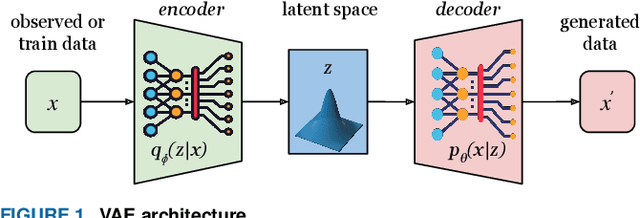
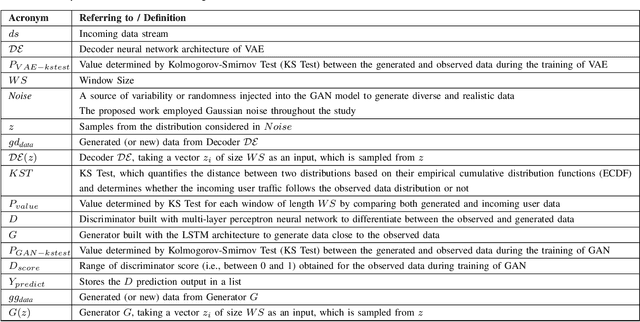
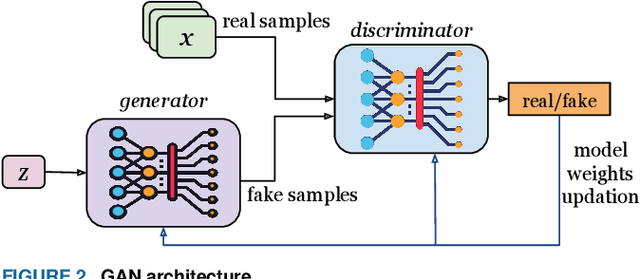
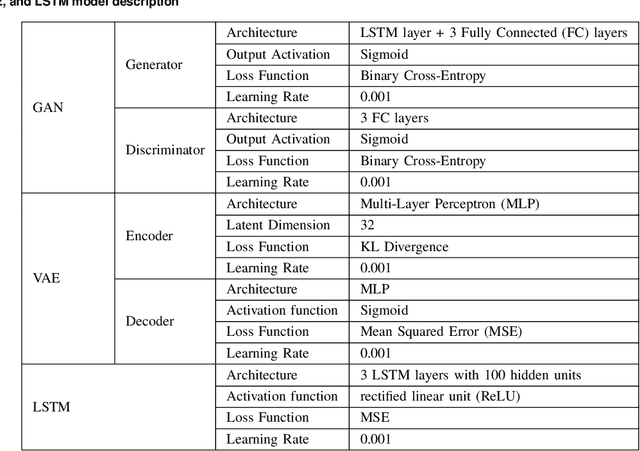
Beyond fifth-generation (B5G) networks aim to support high data rates, low-latency applications, and massive machine communications. Artificial Intelligence/Machine Learning (AI/ML) can help to improve B5G network performance and efficiency. However, dynamic service demands of B5G use cases cause AI/ML model performance degradation, resulting in Service Level Agreements (SLA) violations, over- or under-provisioning of resources, etc. Retraining is essential to address the performance degradation of the AI/ML models. Existing threshold and periodic retraining approaches have potential disadvantages, such as SLA violations and inefficient resource utilization for setting a threshold parameter in a dynamic environment. This paper proposes a novel approach that predicts when to retrain AI/ML models using Generative Artificial Intelligence. The proposed predictive approach is evaluated for a Quality of Service Prediction use case on the Open Radio Access Network (O-RAN) Software Community platform and compared to the predictive approach based on the classifier and a threshold approach. Also, a realtime dataset from the Colosseum testbed is considered to evaluate Network Slicing (NS) use case with the proposed predictive approach. The results show that the proposed predictive approach outperforms both the classifier-based predictive and threshold approaches.