 Add to Chrome
 Add to Firefox
 Add to Edge
SEED: Semi-supervised Continual MalwarE Detection for Tackling ConcEpt Drift on a BuDget
May 24, 2026
Machine learning based malware detectors become obsolete over time due to concept drift in benign and malware applications. Recent methods rely on fully labeled data and use hierarchical contrastive loss (HCL) with active learning to improve robustness against drift by exploiting semantic structure in malware representations. However, obtaining labeled data in the security domain is difficult. Under partially labeled settings, HCL suffers significant performance degradation in detecting unseen malware, especially on datasets such as BODMAS where strong semantic structure may not exist. In this paper, we propose SEED, a semantic-structure-agnostic method for malware detection under limited supervision. SEED combines a tailored binary cross-entropy objective with semi-supervised continual learning and active learning. For partially labeled seen tasks, unlabeled samples are projected into a representation space constructed from previously seen data using singular value decomposition, and paired with suitable labeled samples to encourage representation consistency. For unseen tasks with fully unlabeled data, uncertainty is quantified using cosine distance in representation space, and the most uncertain samples are selected for analyst labeling. We evaluate SEED on both Windows and Android malware datasets. Using only 20% labeled data on seen tasks, SEED achieves average AUT improvements of 40% on BODMAS and 14% on AndroZoo for unseen malware detection compared to HCL* (the semi-supervised adaptation of HCL), while remaining competitive on APIGraph. Finally, we introduce a delayed buffer update strategy to reduce label noise propagation during replay and improve learning stability.

Generative-AI for AI/ML Model Adaptive Retraining in Beyond 5G Networks
Aug 27, 2024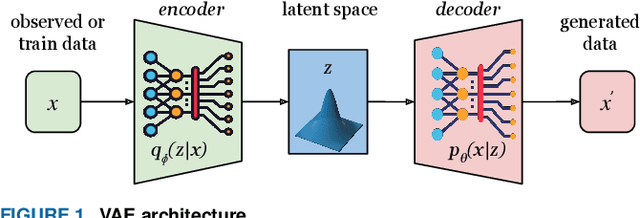
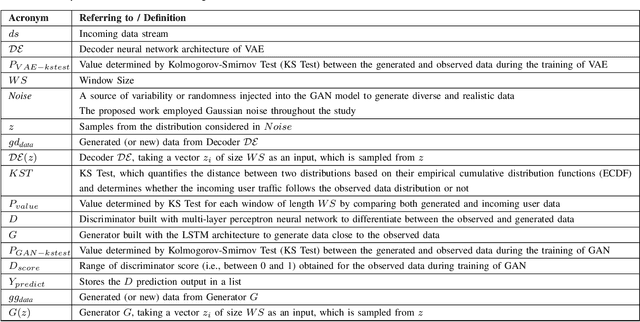
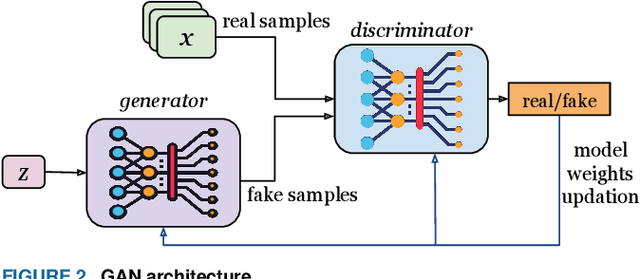
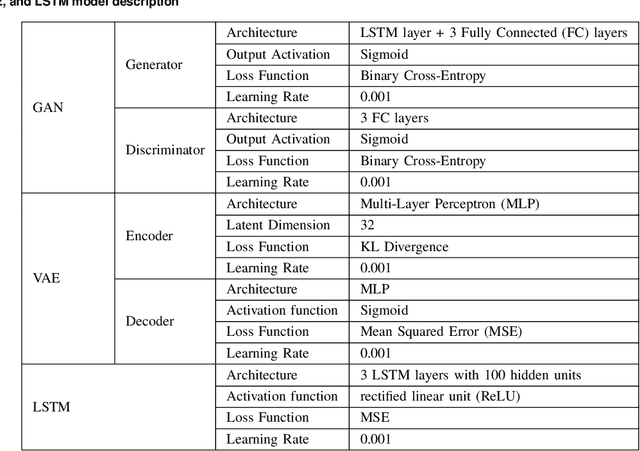
Beyond fifth-generation (B5G) networks aim to support high data rates, low-latency applications, and massive machine communications. Artificial Intelligence/Machine Learning (AI/ML) can help to improve B5G network performance and efficiency. However, dynamic service demands of B5G use cases cause AI/ML model performance degradation, resulting in Service Level Agreements (SLA) violations, over- or under-provisioning of resources, etc. Retraining is essential to address the performance degradation of the AI/ML models. Existing threshold and periodic retraining approaches have potential disadvantages, such as SLA violations and inefficient resource utilization for setting a threshold parameter in a dynamic environment. This paper proposes a novel approach that predicts when to retrain AI/ML models using Generative Artificial Intelligence. The proposed predictive approach is evaluated for a Quality of Service Prediction use case on the Open Radio Access Network (O-RAN) Software Community platform and compared to the predictive approach based on the classifier and a threshold approach. Also, a realtime dataset from the Colosseum testbed is considered to evaluate Network Slicing (NS) use case with the proposed predictive approach. The results show that the proposed predictive approach outperforms both the classifier-based predictive and threshold approaches.