 Add to Chrome
 Add to Firefox
 Add to Edge
RIS Beamforming under Element-Level Variations: Statistical Characterization and Robust Design
Jul 15, 2026
In this paper, a novel analytical framework to characterize the impact of element-level variations on the radiation characteristics of reconfigurable intelligent surfaces (RISs) is introduced. Specifically, a statistical model is proposed to capture the effects of varactor capacitance fluctuations on the RIS reflection coefficients, and, subsequently, on the resulting power radiation pattern; both low- and large-variance independent perturbation scenarios, are investigated. Leveraging the proposed statistical model, a low complexity greedy optimization methodology is presented, having the goal to optimize the expected RIS radiation power, thereby, generating inherently robust configurations. Furthermore, the analytical proposed model serves as an efficient alternative to computationally expensive Monte Carlo simulations, enabling the quantification of element sensitivity to manufacturing and operational tolerances. As demonstrated, optimizing the mean power pattern significantly enhances system performance under element-level variations. For typical RIS sizes (e.g., 32x32 or 64x64), a main lobe gain exceeding 2 dB and a sidelobe suppression of approximately 10 dB are achieved.

Deep Learning for Joint Narrowband Interference Cancellation and Soft Demodulation in OFDM Systems
Jul 09, 2026Narrowband interference (NBI) severely degrades orthogonal frequency-division multiplexing (OFDM) systems by corrupting subcarriers and rendering classical soft demodulation ineffective. Conventional compressed-sensing (CS) mitigation exhibits high sequential latency and leaves structured, non-Gaussian residuals that cause log-likelihood ratio (LLR) unreliability, decoder saturation, and severe error floors when employing classical Gaussian demappers. We resolve this pipeline mismatch using a unified deep learning framework for joint NBI cancellation and robust soft demodulation. First, NBI-CNet employs a physics-informed convolutional architecture to estimate NBI parameters and remove multi-tone interference in a single forward pass. Without requiring prior knowledge of the active interferer count, NBI-CNet reduces computational complexity by up to 60% ($N{=}2048, Q{=}64$) compared to the state-of-the-art EOMP-IDS algorithm. Second, LLR-CNet acts as a structural whitener by mapping non-Gaussian post-mitigation residuals onto well-calibrated soft metrics. Simulations demonstrate that this joint framework eliminates the error floors inherent to traditional baselines across dense grids. Under severe interference ($\text{SIR}{=}{-}10$ dB), the pipeline operates within a $0.2$ to $0.5$ dB SNR margin of the optimal iterative baseline at a target block error rate (BLER) of $10^{-4}$. Under mild interference ($\text{SIR}{=}10$ dB) with heavy spectral overlap ($Q{=}12$), where classical greedy algorithms erroneously subtract valid data components and corrupt the payload, NBI-CNet avoids signal-peak confusion to deliver a coding gain exceeding $3$ dB. Finally, the architecture circumvents the $2{\times}10^{-4}$ error floor triggered by interferer-estimation errors, while its scale-invariant design enables robust generalization across arbitrary FFT sizes without retraining.
Threat Detection and Resilience Techniques in PRS-Assisted OTDOA 5G Positioning Systems
Apr 22, 2026Precise positioning is a key enabler for emerging 5G applications, from autonomous transport to industrial automation. Yet the open physical layer (PL) leaves standard positioning reference signals (PRSs) vulnerable to manipulation. This work addresses the security of downlink observed time difference of arrival positioning (DL-OTDOA) through three contributions. First, we introduce VeriLoc, an open-source system-level simulator designed for realistic channel modeling and PL threat injection. Second, we propose three novel security techniques to enhance resilience and threat detection: encrypted PRS to prevent adversarial waveform synthesis, angular-based source authentication (ABSA), and a cross-layer downlink-uplink handshaking protocol to detect attacks that cannot be mitigated by encryption. Third, utilizing VeriLoc, we evaluate the proposed techniques alongside position tracking and a PRS authentication scheme, which extends the original hash-based message authentication code (HMAC) scheme design to support digital signatures. Simulation results demonstrate that while encryption, authentication schemes, and tracking robustly counter selective PRS spoofing and jamming, the proposed spatial and cross-layer mechanisms are essential for detecting meaconing, collectively maintaining attack detection rates in excess of 90% while keeping false alarm rates minimal.
Theoretical and Experimental Evaluation of AoA Estimation in Single-Anchor 5G Uplink Positioning
Jun 08, 2025As we move towards 6G, the demand for high-precision, cost-effective positioning solutions becomes increasingly critical. Single-anchor positioning offers a promising alternative to traditional multi-anchor approaches, particularly in complex propagation environments where infrastructure costs and deployment constraints present significant challenges. This paper provides a comprehensive evaluation of key algorithmic choices in the development of a single-anchor 5G uplink positioning testbed. Our developed testbed uses angle of arrival (AoA) estimation combined with range measurements from an ultra-wideband pair, to derive the position. The simulations conducted assess the impact of the selected algorithms on channel order and AoA estimation, while the influence of antenna calibration errors on AoA estimation is also examined. Finally, we compare simulations and results obtained from our developed platform.
USRP-Based Single Anchor Positioning: AoA with 5G Uplink Signals, and UWB Ranging
Nov 25, 2024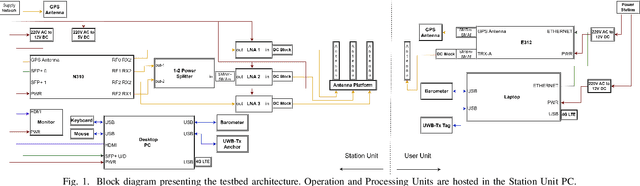
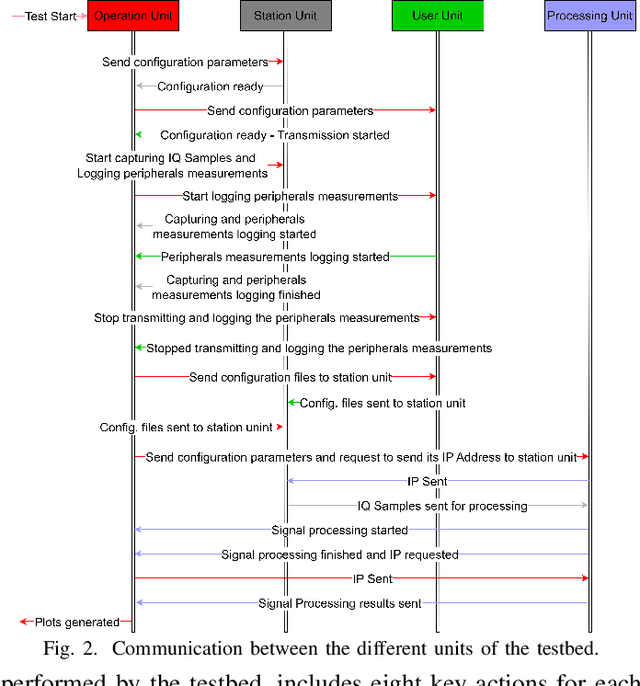
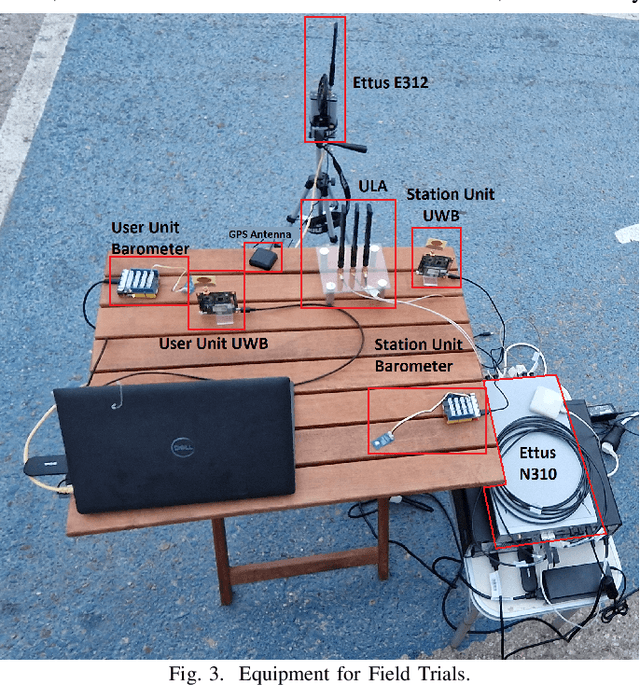
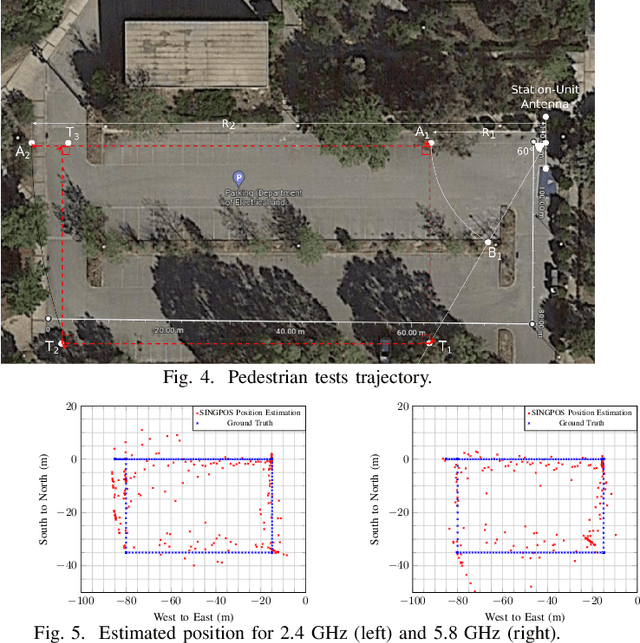
This paper presents a novel testbed designed for 5th-Generation (5G) positioning using Universal Software Radio Peripherals (USRPs). The testbed integrates multiple units: an Operation Unit for test management, a User Unit equipped with an Ettus E312 USRP, and a Station Unit featuring an Ettus N310 USRP equipped with a three-element Uniform Linear Array for Angle of Arrival estimation. Alongside ultra wideband ranging, the testbed estimates the user's position relative to the base station. Signal processing algorithms are executed in a dedicated processing unit. Key challenges addressed include phase misalignment between RX channel pairs due to different Local Oscillators in the Ettus N310, necessitating real-time calibration for precise signal alignment. High sampling rates (up to 61.44 MSps) result in large IQ sample files, managed efficiently using a snapshot technique to optimize storage without compromising testbed positioning capabilities. The testbed synchronizes angular measurements with ranging estimates allowing consistent performance evaluation for real-life cases of dynamic users (e.g. pedestrian). Experimental results demonstrate the testbed's effectiveness in achieving accurate pedestrian user localization.
Angle of Arrival Estimation Using SRS in 5G NR Uplink Scenarios
Nov 25, 2024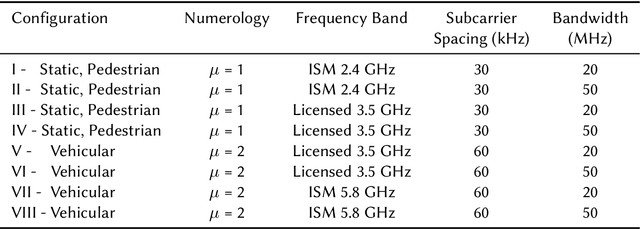
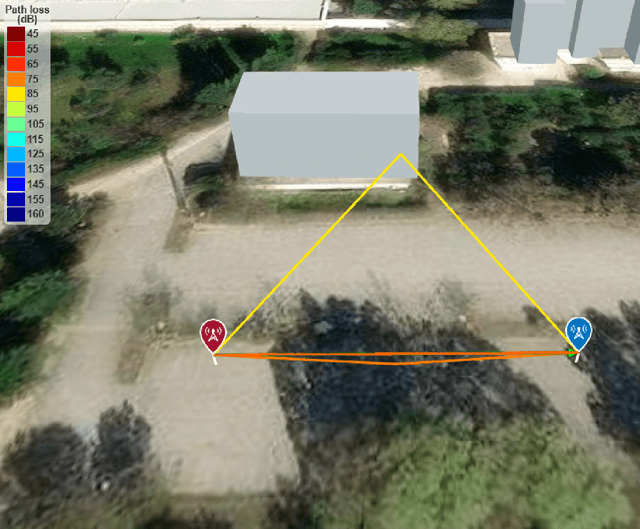
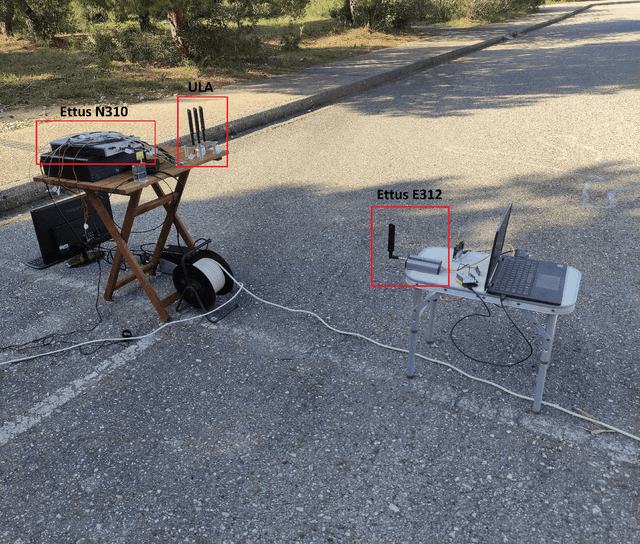
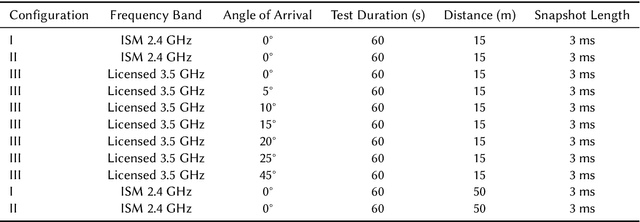
This paper presents a comprehensive exploration of Angle of Arrival (AoA) estimation techniques in 5G environments, using the Sounding Reference Signal (SRS) in Uplink scenarios both in simulations and with actual measurements. Leveraging 5G capabilities, we investigate AoA algorithms for single-base station positioning. The study includes simulations and practical tests on a developed dedicated testbed featuring a base station equipped with a three-element Uniform Linear Array (ULA), considering Line of Sight conditions in an open environment. The testbed, employing Ettus E312 as the transmitter and Ettus N310 as the receiver, details waveform structures and reception processes. Additionally, our study examines the performance of Angle of Arrival (AoA) estimation algorithms, such as Multiple Signal Classification (MUSIC), Estimation of Signal Parameters via Rotational Invariant Techniques (ESPRIT), and Joint Angle and Delay Estimation (JADE) ESPRIT. A MATLAB ray tracing propagation model of the environment where the measurements are conducted, has been constructed. Simulation results using this model are presented, along with the actual measurements. The obtained results affirm the effectiveness of our implementation.
Evaluation of RIS-Enabled B5G/6G Indoor Positioning and Mapping using Ray Tracing Models
Nov 14, 2024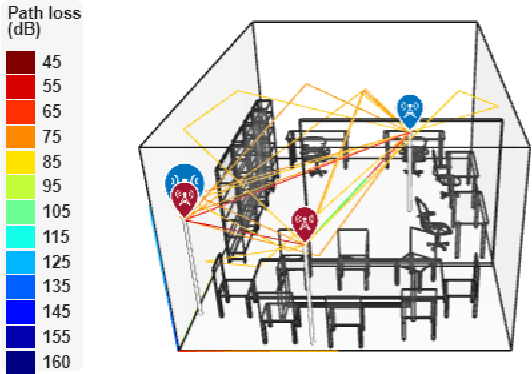
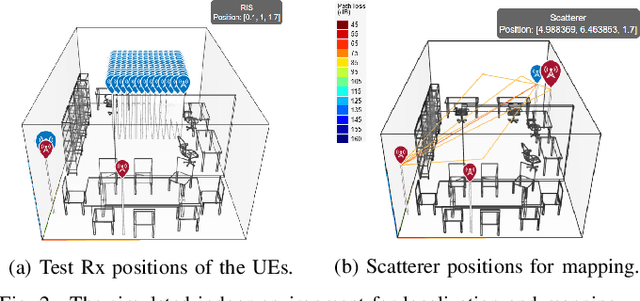
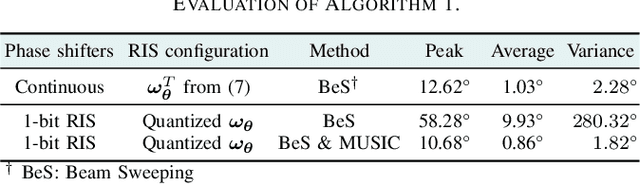
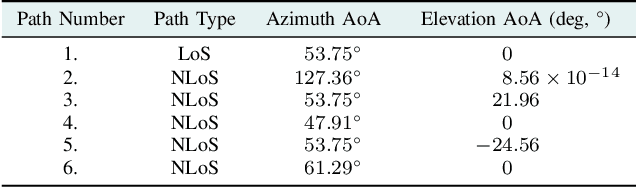
A Reconfigurable Intelligent Surface (RIS) can significantly enhance network positioning and mapping, acting as an additional anchor point in the reference system and improving signal strength and measurement diversity through the generation of favorable scattering conditions and virtual line-of-sight paths. In this paper, we present a comprehensive framework aimed at user localization and scatterer position estimation in an indoor environment with multipath effects. Our approach leverages beam sweeping through codebook-based beamforming at an 1-bit RIS to scan the environment, applies signal component extraction mechanisms, and utilizes a super-resolution algorithm for angle-based positioning of both connected users and scatterers. To validate the system's effectiveness, accurate 3D ray tracing models are employed, ensuring the robustness and effectiveness of the proposed approach in practical scenarios.