 Add to Chrome
 Add to Firefox
 Add to Edge
Learning POMDP World Models from Observations with Language-Model Priors
May 13, 2026
Whether navigating a building, operating a robot, or playing a game, an agent that acts effectively in an environment must first learn an internal model of how that environment works. Partially-observable Markov decision processes (POMDPs) provide a flexible modeling class for such internal world models, but learning them from observation-action trajectories alone is challenging and typically requires extensive environment interaction. We ask whether language-model priors can reduce costly interaction by leveraging prior knowledge, and introduce \emph{Pinductor} (POMDP-inductor): an LLM proposes candidate POMDP models from a few observation-action trajectories and iteratively refines them to optimize a belief-based likelihood score. Despite using strictly less information, \emph{Pinductor} matches the performance and sample efficiency of LLM-based POMDP learning methods that assume privileged access to the hidden state, while significantly surpassing the sample efficiency of tabular POMDP baselines. Further results show that performance scales with LLM capability and degrades gracefully as semantic information about the environment is withheld. Together, these results position language-model priors as a practical tool for sample-efficient world-model learning under partial observability, and a step toward generalist agents in real-world environments. Code is available at https://github.com/atomresearch/pinductor.

Decompositional Reasoning for Graph Retrieval with Large Language Models
Jun 16, 2025
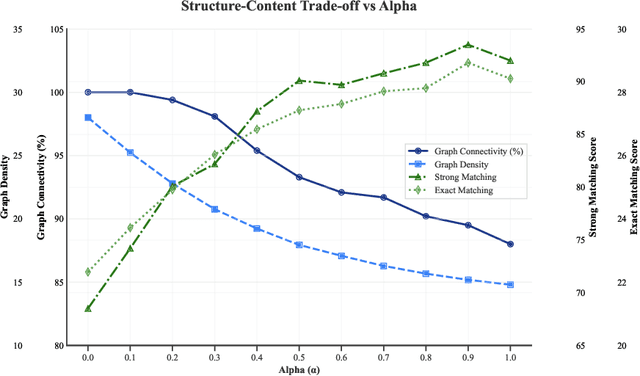
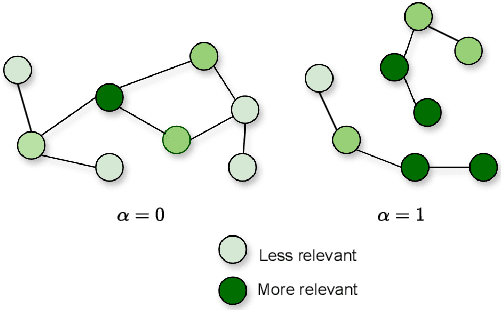
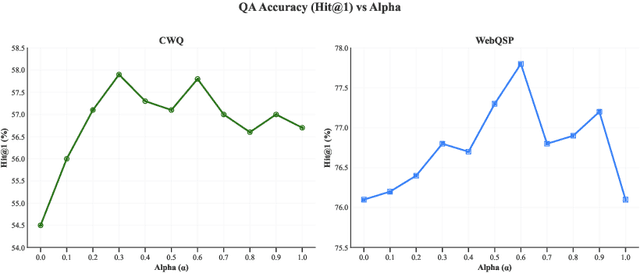
Large Language Models (LLMs) excel at many NLP tasks, but struggle with multi-hop reasoning and factual consistency, limiting their effectiveness on knowledge-intensive tasks like complex question answering (QA). Linking Knowledge Graphs (KG) and LLMs has shown promising results, but LLMs generally lack the ability to reason efficiently over graph-structured information. To tackle this problem, we propose a novel retrieval approach that integrates textual knowledge graphs into the LLM reasoning process via query decomposition. Our method decomposes complex questions into sub-questions, retrieves relevant textual subgraphs, and composes a question-specific knowledge graph to guide answer generation. For that, we use a weighted similarity function that focuses on both the complex question and the generated subquestions to extract a relevant subgraph, which allows efficient and precise retrieval for complex questions and improves the performance of LLMs on multi-hop QA tasks. This structured reasoning pipeline enhances factual grounding and interpretability while leveraging the generative strengths of LLMs. We evaluate our method on standard multi-hop QA benchmarks and show that it achieves comparable or superior performance to competitive existing methods, using smaller models and fewer LLM calls.