 Add to Chrome
 Add to Firefox
 Add to Edge
Prompting-MammAlps: Fine-Grained Text-to-Video Retrieval for Camera-Trap Data
Jul 10, 2026
Automatically retrieving videos from large camera-trap datasets remains challenging. Text-to-Video retrieval (TVR) methods based on large video-language models (VLMs) have potential to retrieve events of interest by describing them with simple text queries. However, current methods often lack spatiotemporal understanding and do not generalize well to ecological data. In this work, we introduce Prompting-MammAlps, the first camera-trap TVR benchmark, and propose a fine-grained and interpretable TVR method. Specifically, we trained a vision transformer to perform spatiotemporal action localization, and convert its output to structured text, describing each video. Independently, ethology-inspired queries are processed by a Large-Language Model (LLM) based coding agent to parse the structured text per video and retrieve videos accordingly. We harnessed the LLM to use functions from a custom parsing library to minimize the risk of LLM hallucinations and to improve method interpretability. This retrieval approach applied on the Prompting-MammAlps benchmark achieved a set-based F1-score of 34\% on a test set of 135 ecologically-relevant queries and 775 candidate videos. In comparison the best zero-shot VLM achieved a F1-score of 18\%, while also lacking interpretability. Project page: https://cnai.epfl.ch/prompting-mammalps

Interpreting Deep Learning Models for Epileptic Seizure Detection on EEG signals
Dec 22, 2020
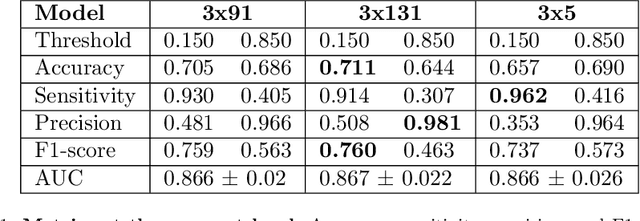
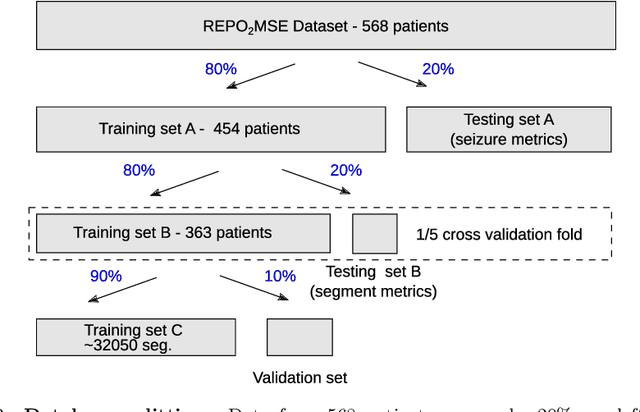
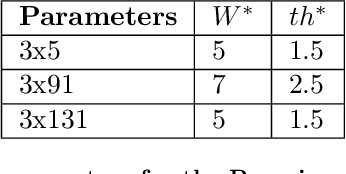
While Deep Learning (DL) is often considered the state-of-the art for Artificial Intelligence-based medical decision support, it remains sparsely implemented in clinical practice and poorly trusted by clinicians due to insufficient interpretability of neural network models. We have tackled this issue by developing interpretable DL models in the context of online detection of epileptic seizure, based on EEG signal. This has conditioned the preparation of the input signals, the network architecture, and the post-processing of the output in line with the domain knowledge. Specifically, we focused the discussion on three main aspects: 1) how to aggregate the classification results on signal segments provided by the DL model into a larger time scale, at the seizure-level; 2) what are the relevant frequency patterns learned in the first convolutional layer of different models, and their relation with the delta, theta, alpha, beta and gamma frequency bands on which the visual interpretation of EEG is based; and 3) the identification of the signal waveforms with larger contribution towards the ictal class, according to the activation differences highlighted using the DeepLIFT method. Results show that the kernel size in the first layer determines the interpretability of the extracted features and the sensitivity of the trained models, even though the final performance is very similar after post-processing. Also, we found that amplitude is the main feature leading to an ictal prediction, suggesting that a larger patient population would be required to learn more complex frequency patterns. Still, our methodology was successfully able to generalize patient inter-variability for the majority of the studied population with a classification F1-score of 0.873 and detecting 90% of the seizures.