 Add to Chrome
 Add to Firefox
 Add to Edge
Generative Bayesian Computation as a Scalable Alternative to Gaussian Process Surrogates
Feb 24, 2026
Gaussian process (GP) surrogates are the default tool for emulating expensive computer experiments, but cubic cost, stationarity assumptions, and Gaussian predictive distributions limit their reach. We propose Generative Bayesian Computation (GBC) via Implicit Quantile Networks (IQNs) as a surrogate framework that targets all three limitations. GBC learns the full conditional quantile function from input--output pairs; at test time, a single forward pass per quantile level produces draws from the predictive distribution. Across fourteen benchmarks we compare GBC to four GP-based methods. GBC improves CRPS by 11--26\% on piecewise jump-process benchmarks, by 14\% on a ten-dimensional Friedman function, and scales linearly to 90,000 training points where dense-covariance GPs are infeasible. A boundary-augmented variant matches or outperforms Modular Jump GPs on two-dimensional jump datasets (up to 46\% CRPS improvement). In active learning, a randomized-prior IQN ensemble achieves nearly three times lower RMSE than deep GP active learning on Rocket LGBB. Overall, GBC records a favorable point estimate in 12 of 14 comparisons. GPs retain an edge on smooth surfaces where their smoothness prior provides effective regularization.

Fast Compute for ML Optimization
Feb 15, 2026We study optimization for losses that admit a variance-mean scale-mixture representation. Under this representation, each EM iteration is a weighted least squares update in which latent variables determine observation and parameter weights; these play roles analogous to Adam's second-moment scaling and AdamW's weight decay, but are derived from the model. The resulting Scale Mixture EM (SM-EM) algorithm removes user-specified learning-rate and momentum schedules. On synthetic ill-conditioned logistic regression benchmarks with $p \in \{20, \ldots, 500\}$, SM-EM with Nesterov acceleration attains up to $13\times$ lower final loss than Adam tuned by learning-rate grid search. For a 40-point regularization path, sharing sufficient statistics across penalty values yields a $10\times$ runtime reduction relative to the same tuned-Adam protocol. For the base (non-accelerated) algorithm, EM monotonicity guarantees nonincreasing objective values; adding Nesterov extrapolation trades this guarantee for faster empirical convergence.
Horseshoe Mixtures-of-Experts (HS-MoE)
Jan 14, 2026Horseshoe mixtures-of-experts (HS-MoE) models provide a Bayesian framework for sparse expert selection in mixture-of-experts architectures. We combine the horseshoe prior's adaptive global-local shrinkage with input-dependent gating, yielding data-adaptive sparsity in expert usage. Our primary methodological contribution is a particle learning algorithm for sequential inference, in which the filter is propagated forward in time while tracking only sufficient statistics. We also discuss how HS-MoE relates to modern mixture-of-experts layers in large language models, which are deployed under extreme sparsity constraints (e.g., activating a small number of experts per token out of a large pool).
Generative Bayesian Hyperparameter Tuning
Dec 23, 2025\noindent Hyper-parameter selection is a central practical problem in modern machine learning, governing regularization strength, model capacity, and robustness choices. Cross-validation is often computationally prohibitive at scale, while fully Bayesian hyper-parameter learning can be difficult due to the cost of posterior sampling. We develop a generative perspective on hyper-parameter tuning that combines two ideas: (i) optimization-based approximations to Bayesian posteriors via randomized, weighted objectives (weighted Bayesian bootstrap), and (ii) amortization of repeated optimization across many hyper-parameter settings by learning a transport map from hyper-parameters (including random weights) to the corresponding optimizer. This yields a ``generator look-up table'' for estimators, enabling rapid evaluation over grids or continuous ranges of hyper-parameters and supporting both predictive tuning objectives and approximate Bayesian uncertainty quantification. We connect this viewpoint to weighted $M$-estimation, envelope/auxiliary-variable representations that reduce non-quadratic losses to weighted least squares, and recent generative samplers for weighted $M$-estimators.
Bayesian Double Descent
Jul 09, 2025Double descent is a phenomenon of over-parameterized statistical models. Our goal is to view double descent from a Bayesian perspective. Over-parameterized models such as deep neural networks have an interesting re-descending property in their risk characteristics. This is a recent phenomenon in machine learning and has been the subject of many studies. As the complexity of the model increases, there is a U-shaped region corresponding to the traditional bias-variance trade-off, but then as the number of parameters equals the number of observations and the model becomes one of interpolation, the risk can become infinite and then, in the over-parameterized region, it re-descends -- the double descent effect. We show that this has a natural Bayesian interpretation. Moreover, we show that it is not in conflict with the traditional Occam's razor that Bayesian models possess, in that they tend to prefer simpler models when possible. We illustrate the approach with an example of Bayesian model selection in neural networks. Finally, we conclude with directions for future research.
Kolmogorov GAM Networks are all you need!
Jan 01, 2025Kolmogorov GAM (K-GAM) networks are shown to be an efficient architecture for training and inference. They are an additive model with an embedding that is independent of the function of interest. They provide an alternative to the transformer architecture. They are the machine learning version of Kolmogorov's Superposition Theorem (KST) which provides an efficient representations of a multivariate function. Such representations have use in machine learning for encoding dictionaries (a.k.a. "look-up" tables). KST theory also provides a representation based on translates of the K\"oppen function. The goal of our paper is to interpret this representation in a machine learning context for applications in Artificial Intelligence (AI). Our architecture is equivalent to a topological embedding which is independent of the function together with an additive layer that uses a Generalized Additive Model (GAM). This provides a class of learning procedures with far fewer parameters than current deep learning algorithms. Implementation can be parallelizable which makes our algorithms computationally attractive. To illustrate our methodology, we use the Iris data from statistical learning. We also show that our additive model with non-linear embedding provides an alternative to transformer architectures which from a statistical viewpoint are kernel smoothers. Additive KAN models therefore provide a natural alternative to transformers. Finally, we conclude with directions for future research.
Generative Bayesian Computation for Maximum Expected Utility
Aug 28, 2024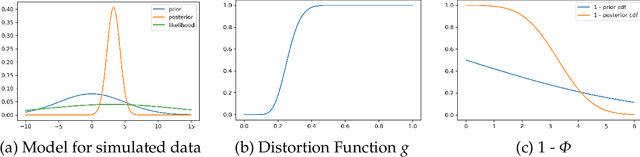

Generative Bayesian Computation (GBC) methods are developed to provide an efficient computational solution for maximum expected utility (MEU). We propose a density-free generative method based on quantiles that naturally calculates expected utility as a marginal of quantiles. Our approach uses a deep quantile neural estimator to directly estimate distributional utilities. Generative methods assume only the ability to simulate from the model and parameters and as such are likelihood-free. A large training dataset is generated from parameters and output together with a base distribution. Our method a number of computational advantages primarily being density-free with an efficient estimator of expected utility. A link with the dual theory of expected utility and risk taking is also discussed. To illustrate our methodology, we solve an optimal portfolio allocation problem with Bayesian learning and a power utility (a.k.a. fractional Kelly criterion). Finally, we conclude with directions for future research.
Deep Learning: A Tutorial
Oct 10, 2023Our goal is to provide a review of deep learning methods which provide insight into structured high-dimensional data. Rather than using shallow additive architectures common to most statistical models, deep learning uses layers of semi-affine input transformations to provide a predictive rule. Applying these layers of transformations leads to a set of attributes (or, features) to which probabilistic statistical methods can be applied. Thus, the best of both worlds can be achieved: scalable prediction rules fortified with uncertainty quantification, where sparse regularization finds the features.
The Value of Chess Squares
Jul 08, 2023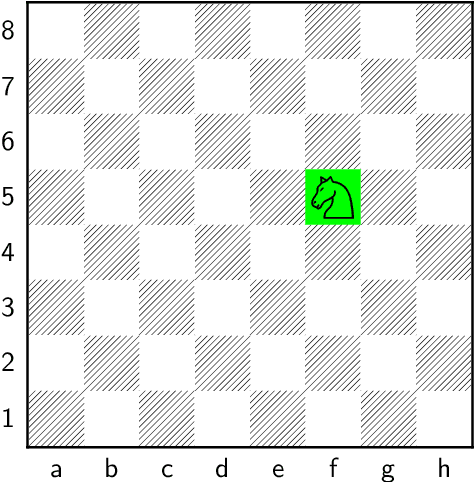
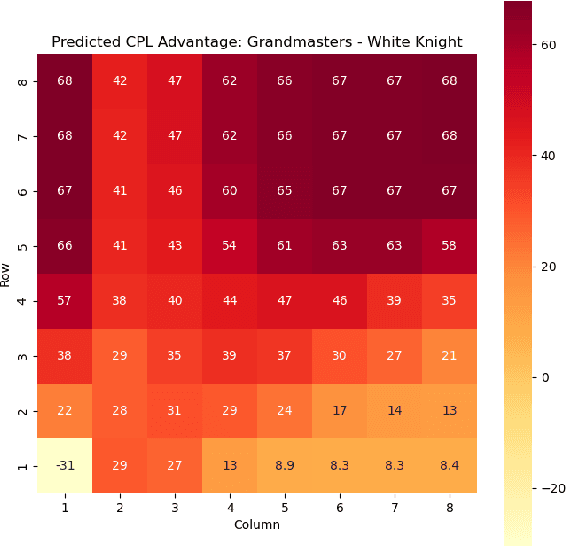
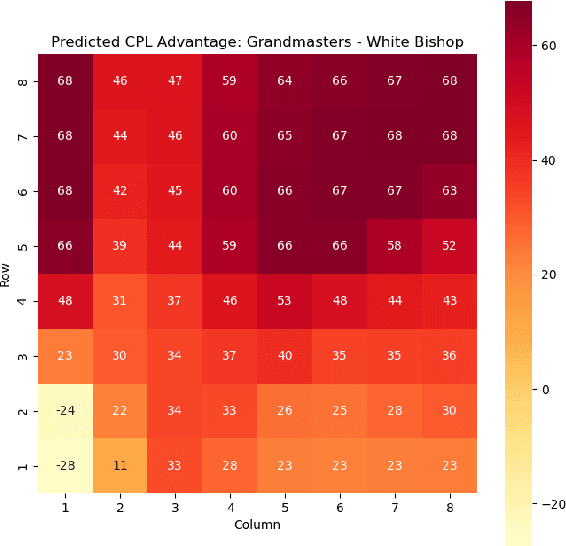
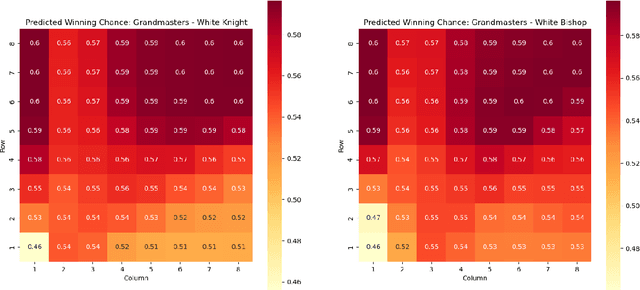
Valuing chess squares and determining the placement of pieces on the board are the main objectives of our study. With the emergence of chess AI, it has become possible to accurately assess the worth of positions in a game of chess. The conventional approach assigns fixed values to pieces $(\symking=\infty, \symqueen=9, \symrook=5, \symbishop=3, \symknight=3, \sympawn=1)$. We enhance this analysis by introducing marginal valuations for both pieces and squares. We demonstrate our method by examining the positioning of Knights and Bishops, and also provide valuable insights into the valuation of pawns. Notably, Nimzowitsch was among the pioneers in advocating for the significance of Pawn structure and valuation. Finally, we conclude by suggesting potential avenues for future research.
Quantum Bayes AI
Aug 17, 2022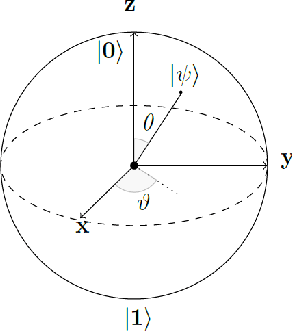
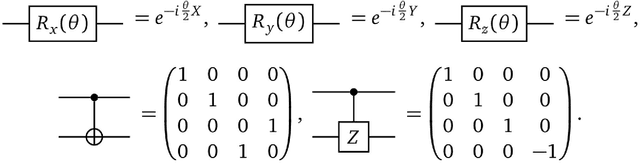
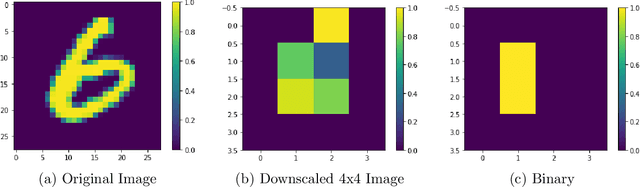
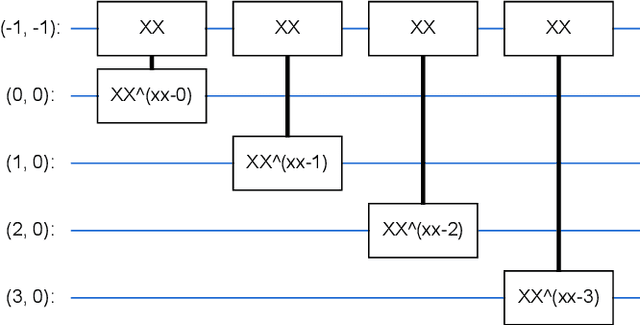
Quantum Bayesian AI (Q-B) is an emerging field that levers the computational gains available in Quantum computing. The promise is an exponential speed-up in many Bayesian algorithms. Our goal is to apply these methods directly to statistical and machine learning problems. We provide a duality between classical and quantum probability for calculating of posterior quantities of interest. Our framework unifies MCMC, Deep Learning and Quantum Learning calculations from the viewpoint from von Neumann's principle of quantum measurement. Quantum embeddings and neural gates are also an important part of data encoding and feature selection. There is a natural duality with well-known kernel methods in statistical learning. We illustrate the behaviour of quantum algorithms on two simple classification algorithms. Finally, we conclude with directions for future research.