 Add to Chrome
 Add to Firefox
 Add to Edge
ISAC Privacy: Challenges and Solutions for 6G
May 27, 2026
Integrated sensing and communication (ISAC) is a promising feature of future communication networks. While spatial sensing can improve network performance and enable external services, it also creates privacy challenges that go beyond the confidentiality of communication content. Future networks using millimeter-wave (mmWave) and sub-terahertz (THz) frequencies may collect or infer detailed information about people, devices, bystanders, passive objects, and environments in a sixth-generation (6G) deployment area. Such sensing can reveal location and environment data, support behavioral profiling such as movement or activity recognition, and, in advanced cases, expose physiological information such as breathing frequency or heart-rate-related data. Thus, the capabilities of spatial sensing must be controlled to satisfy privacy requirements. In this work, we organize privacy-sensitive ISAC data into three sensing levels: location and environment data, behavioral data, and physiological data, and use this classification as the organizing principle throughout the paper. Based on this classification, we discuss internal and external ISAC applications, identify privacy challenges related to consent, transparency, data ownership, profiling, bystander exposure, and sensitive sensing data, review representative solution directions, and outline future research directions for privacy-preserving ISAC.

Dynamic Recognition of Speakers for Consent Management by Contrastive Embedding Replay
May 17, 2022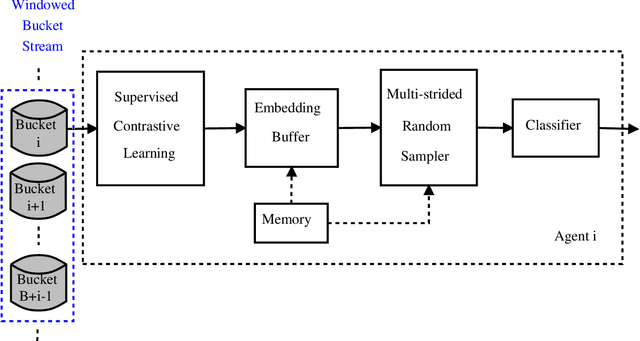

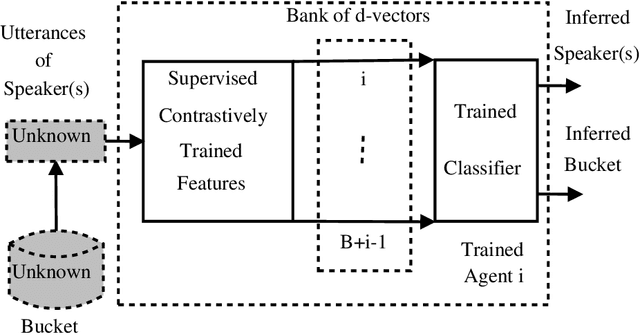
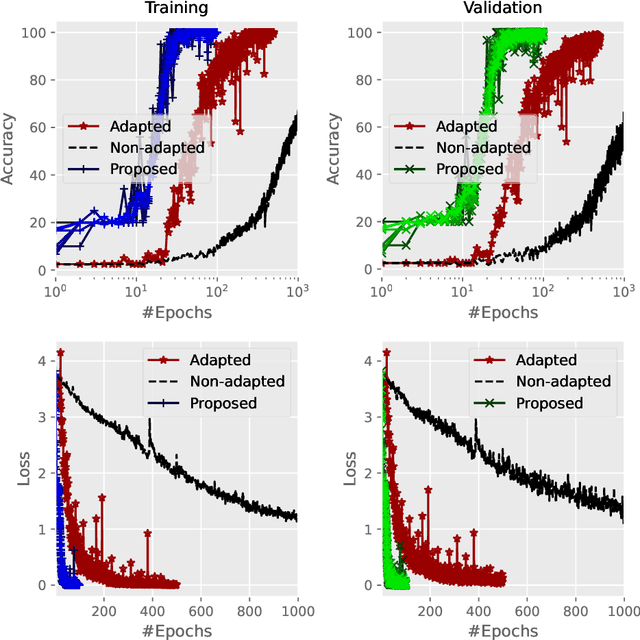
Voice assistants record sound and can overhear conversations. Thus, a consent management mechanism is desirable such that users can express their wish to be recorded or not. Consent management can be implemented using speaker recognition; users that do not give consent enrol their voice and all further recordings of these users is subsequently not processed. Building speaker recognition based consent management is challenging due to the dynamic nature of the problem, required scalability for large number of speakers, and need for fast speaker recognition with high accuracy. This paper describes a speaker recognition based consent management system addressing the aforementioned challenges. A fully supervised batch contrastive learning is applied to learn the underlying speaker equivariance inductive bias during the training on the set of speakers noting recording dissent. Speakers that do not provide consent are grouped in buckets which are trained continuously. The embeddings are contrastively learned for speakers in their buckets during training and act later as a replay buffer for classification. The buckets are progressively registered during training and a novel multi-strided random sampling of the contrastive embedding replay buffer is proposed. Buckets are contrastively trained for a few steps only in each iteration and replayed for classification progressively leading to fast convergence. An algorithm for fast and dynamic registration and removal of speakers in buckets is described. The evaluation results show that the proposed approach provides the desired fast and dynamic solution for consent management and outperforms existing approaches in terms of convergence speed and adaptive capabilities as well as verification performance during inference.