 Add to Chrome
 Add to Firefox
 Add to Edge
Beyond Red-Teaming: Formal Guarantees of LLM Guardrail Classifiers
May 11, 2026
Guardrail Classifiers defend production language models against harmful behavior, but although results seem promising in testing, they provide no formal guarantees. Providing formal guarantees for such models is hard because "harmful behavior" has no natural specification in a discrete input space: and the standard epsilon-ball properties used in other domains do not carry semantic meaning. We close this gap by shifting verification from the discrete input space to the classifier's pre-activation space, where we define a harmful region as a convex shape enclosing the representations of known harmful prompts. Because the sigmoid classification head is monotonic, certifying the worst-case point is sufficient to certify the entire region, yielding a closed-form soundness proof without approximation in O(d) time. To formally evaluate these classifiers, we propose two constructions of such regions: SVD-aligned hyper-rectangles, which yield exact SAT/UNSAT certificates, and Gaussian Mixture Models, which yield probabilistic certificates over semantically coherent clusters. Applying this framework to three author-trained Guardrail Classifiers on the toxicity domain, every hyper-rectangle configuration returns SAT, exposing verifiable safety holes across all classifiers, despite seemingly high empirical metrics. Probabilistic GMM certificates also expose a divergent structural stability in how these models represent harm. While GPT-2 and Llama-3.1-8B maintain robust coverage of 90% and 80% across varying boundaries, BERT's safety guarantees prove uniquely volatile. This 'coverage collapse' to 55% at the optimal threshold reveals a sparsely populated safety margin in BERT, which only achieves full coverage by adopting an extremely conservative pessimistic threshold. These approaches combined, provide new insights on how effective Guardrail Classifiers really are, beyond traditional red-teaming.

Building Machine Learning Challenges for Anomaly Detection in Science
Mar 03, 2025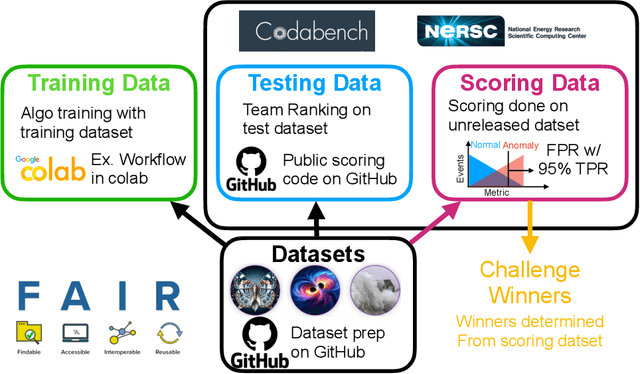
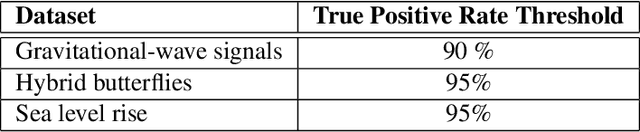
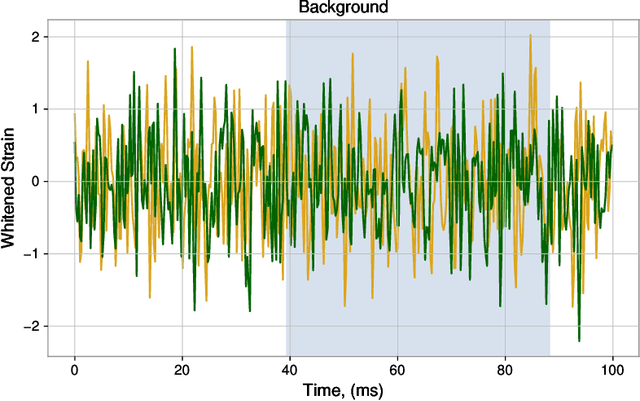
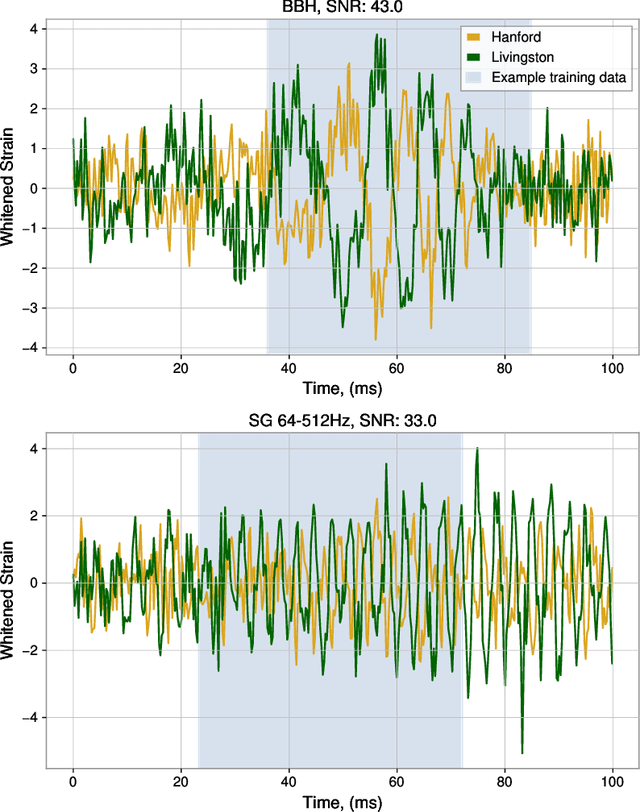
Scientific discoveries are often made by finding a pattern or object that was not predicted by the known rules of science. Oftentimes, these anomalous events or objects that do not conform to the norms are an indication that the rules of science governing the data are incomplete, and something new needs to be present to explain these unexpected outliers. The challenge of finding anomalies can be confounding since it requires codifying a complete knowledge of the known scientific behaviors and then projecting these known behaviors on the data to look for deviations. When utilizing machine learning, this presents a particular challenge since we require that the model not only understands scientific data perfectly but also recognizes when the data is inconsistent and out of the scope of its trained behavior. In this paper, we present three datasets aimed at developing machine learning-based anomaly detection for disparate scientific domains covering astrophysics, genomics, and polar science. We present the different datasets along with a scheme to make machine learning challenges around the three datasets findable, accessible, interoperable, and reusable (FAIR). Furthermore, we present an approach that generalizes to future machine learning challenges, enabling the possibility of large, more compute-intensive challenges that can ultimately lead to scientific discovery.