 Add to Chrome
 Add to Firefox
 Add to Edge
A Comprehensive Comparison of Deep Learning Architectures for COVID-19 Classification on CT & X-ray Imagery
May 19, 2026
COVID-19 was a significant challenge that led to the loss of numerous lives daily. Not only a certain country was involved in this outbreak, but even the world has suffered because of the coronavirus. Imaging techniques using computed tomography (CT) and X-rays of the lungs are the most useful tools for the COVID-19 or any other pandemic disease screening process. Technology today has revolutionized the world by using artificial intelligence to replace manual processes with automated machines, which enable the system to imitate the human brain by making wise decisions based on experience. Motivated by this, our work proposes to use convolutional neural networks (CNN) based models for designing a computer-aided diagnosis (CAD) system that differentiates between COVID-19 and healthy lung pictures. We used two different sets of X-ray images of the lungs in addition to two different sets of CT scans and the classification is done using a variety of networks that have been pre-trained such as VGG (16, 19), Densenet (121), Resnet (50, 50 V2, 101 V2), Mobile net (V2), Xception Inception (V3, Resnet V2), Efficient net (B0) and Nasnet (Large). On the X-ray and CT image datasets, Resnet and VGG architecture have shown the ability to properly differentiate COVID-19 from normal images, with an average accuracy of 95 to 98 percent respectively. Our acquired results on the classification datasets are competitive and superior to previously reported findings in the literature.

Pixel Wised Lesion Prediction on COVID-19 CT Imagery: A Comparative Analysis of Automated Image Segmentation Architectures
May 19, 2026In recent years, there has been a notable increase in the level of attention that is given to algorithms based on deep learning in the context of medical image segmentation. Nevertheless, the reliability of the field has been hindered due to the absence of a standardized methodology for performance analysis and the utilization of different datasets in previous research. The primary objective of the research is to comprehensively evaluate contemporary segmentation frameworks combined with state-of-the-art pre-trained backbones in order to accurately predict COVID-19 lesions in CT images. Moreover, this evaluation can serve as a point of reference for the segmentation of images in various other imaging scenarios. In order to accomplish this, we integrate four distinct deep learning architectures, namely Unet, PSPNet, Linknet, and FPN, with six pre-trained encoders, including VGG 19, DenseNet 121, Inception ResNet V2, MobileNet V2, SeresNet 101, and EfficientNet B0. This approach enables the development of diverse testing architectures. In the context of image segmentation, our research encompassed both binary and multi-class experimentation. The findings derived from our analysis of three distinct COVID-19 CT segmentation datasets indicate that deep learning architectures yield precise and efficient segmentation outcomes. Significantly, a maximum F1-Score of 98% was attained for binary class segmentation, while multi-class segmentation yielded F1-Scores of 75% and 77% across two separate datasets. The utilization of artificial intelligence and deep learning enhances the diagnostic process for pandemic diseases across multiple dimensions.
Automation of Prosthetic Upper Limbs for Transhumeral Amputees Using Switch-controlled Motors
Jan 21, 2014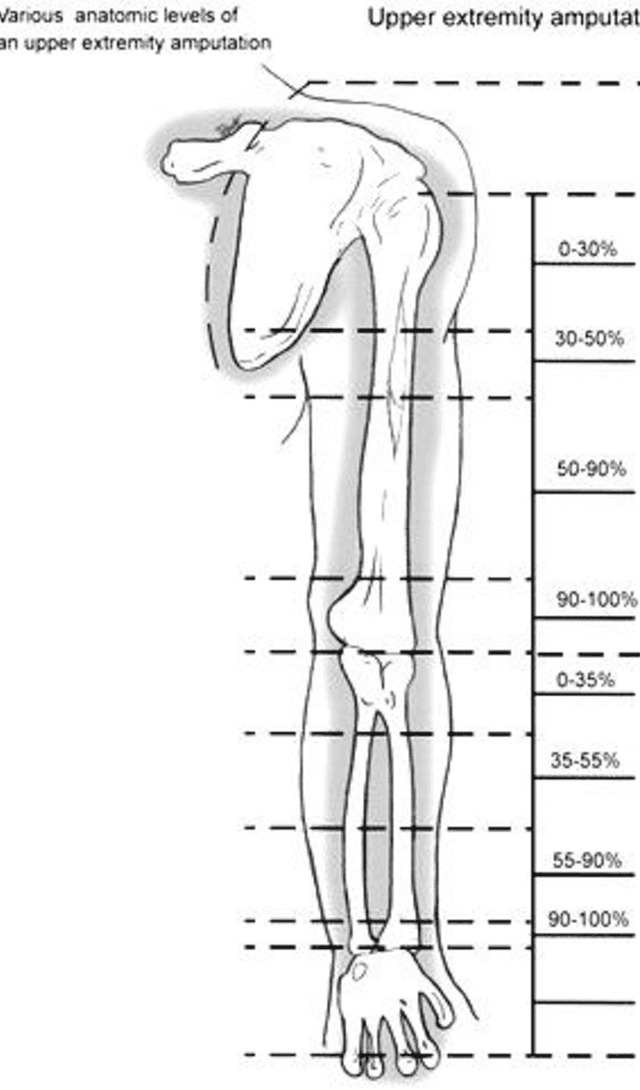
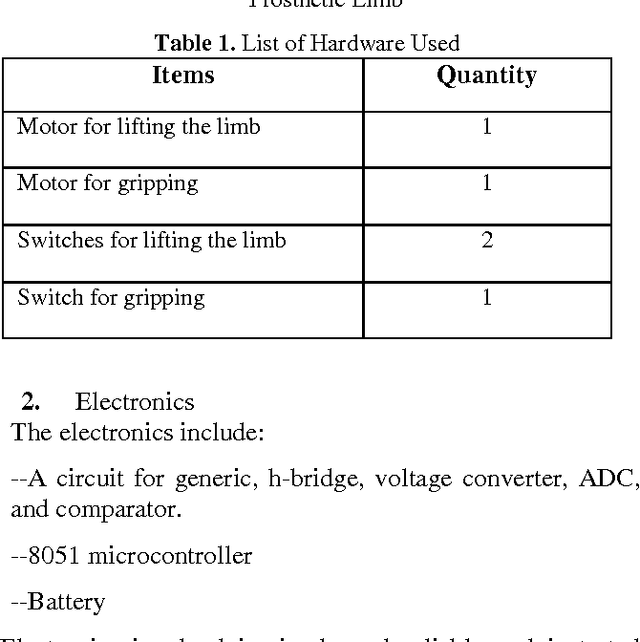
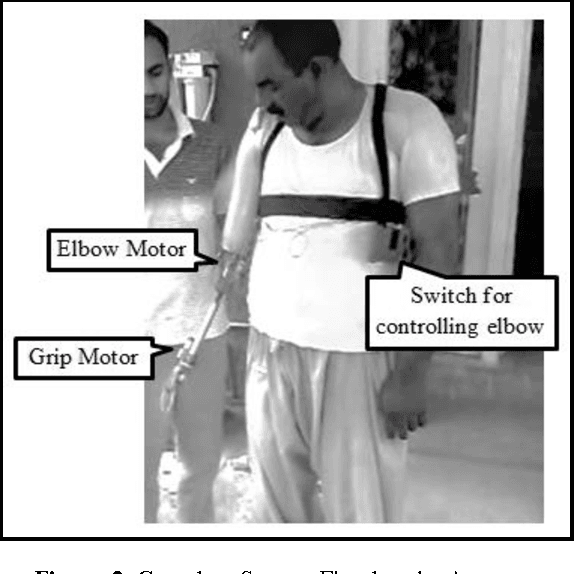
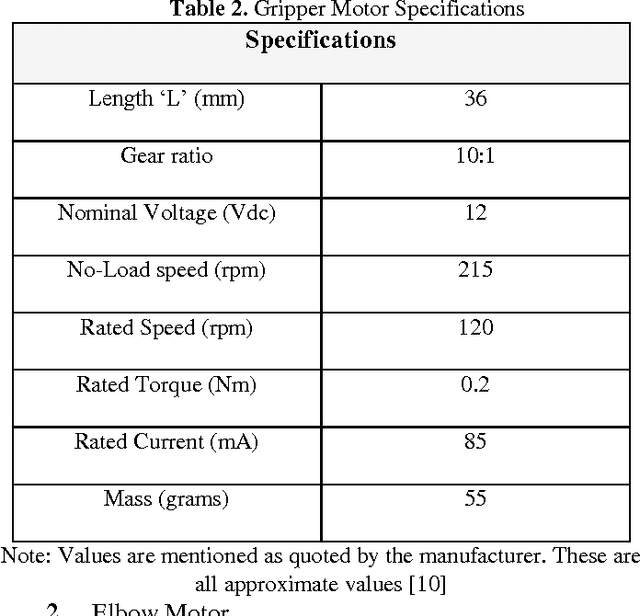
The issues of research required in the field of bio medical engineering and externally-powered prostheses are attracting attention of regulatory bodies and the common people in various parts of the globe. Today, 90 percent of prostheses used are conventional body powered cable-controlled ones which are very uncomfortable to the amputees as fairly large amount of forces and excursions have to be generated by the amputee. Additionally, its amount of rotation is limited. Alternatively, prosthetic limbs driven using electrical motors might deliver added functionality and improved control, accompanied by better cosmesis, however,it could be bulky and costly. Presently existing proposals usually require fewer bodily response and need additional upkeep than the cable operated prosthetic limbs. Due to the motives mentioned, proposal for mechanization of body-powered prostheses, with ease of maintenance and cost in mind, is presented in this paper. The prosthetic upper limb which is being automated is for Transhumeral type of amputees that is amputated from above elbow. The study consists of two main portions: one is lifting mechanism of the limb and the other is gripping mechanism for the hand using switch controls, which is the most cost effective and optimized solution, rather than using complex and expensive myoelectric control signals.
* 7 Pages, The International Journal of Soft Computing and Software Engineering [JSCSE], Vol. 3, No. 3, Special Issue The Proceeding of International Conference on Soft Computing and Software Engineering 2013 [SCSE 13], San Francisco State University, CA, U.S.A., March 2013