 Add to Chrome
 Add to Firefox
 Add to Edge
What's Hidden Matters: Identifying Planning-Critical Occluded Agents using Vision-Language Models
Jul 01, 2026
Autonomous vehicles must safely navigate complex environments where planning-critical agents may be hidden from view. Current approaches often treat all occlusions with uniform conservatism, yielding needlessly defensive driving, or they infer hidden spaces without estimating the impact on the planner. This work bridges the critical gap between perception and planning by enabling Vision-Language Models (VLMs) to identify and reason about the specific hidden agents that are most critical to the ego-vehicle's trajectory. We introduce a novel framework that uses Planning KL-divergence (PKL), an information-theoretic metric, to systematically identify and rank occluded agents based on their impact on the ego vehicle's plan. Using this planning-aware ranking, we employ an expert VLM (GPT-5) to generate rich, structured annotations that capture the visual evidence and reasoning required for this task. We apply this framework to the nuScenes dataset to create a new benchmark focused on high-impact scenarios. We conduct comprehensive experiments on a wide range of general-purpose and domain-adapted VLMs, demonstrating that fine-tuning on our PKL-guided data yields dramatic performance improvements across all models. Notably, our results show that smaller, fine-tuned models significantly outperform their much larger zero-shot counterparts, and that our PKL-guided data selection strategy improves performance by approximately 30\% over random sampling. Our work presents the first systematic approach for training VLMs to focus on planning-critical occlusions, enabling more semantically grounded and efficient risk assessment in autonomous driving.

Modeling the Lane-Change Reactions to Merging Vehicles for Highway On-Ramp Simulations
Apr 15, 2024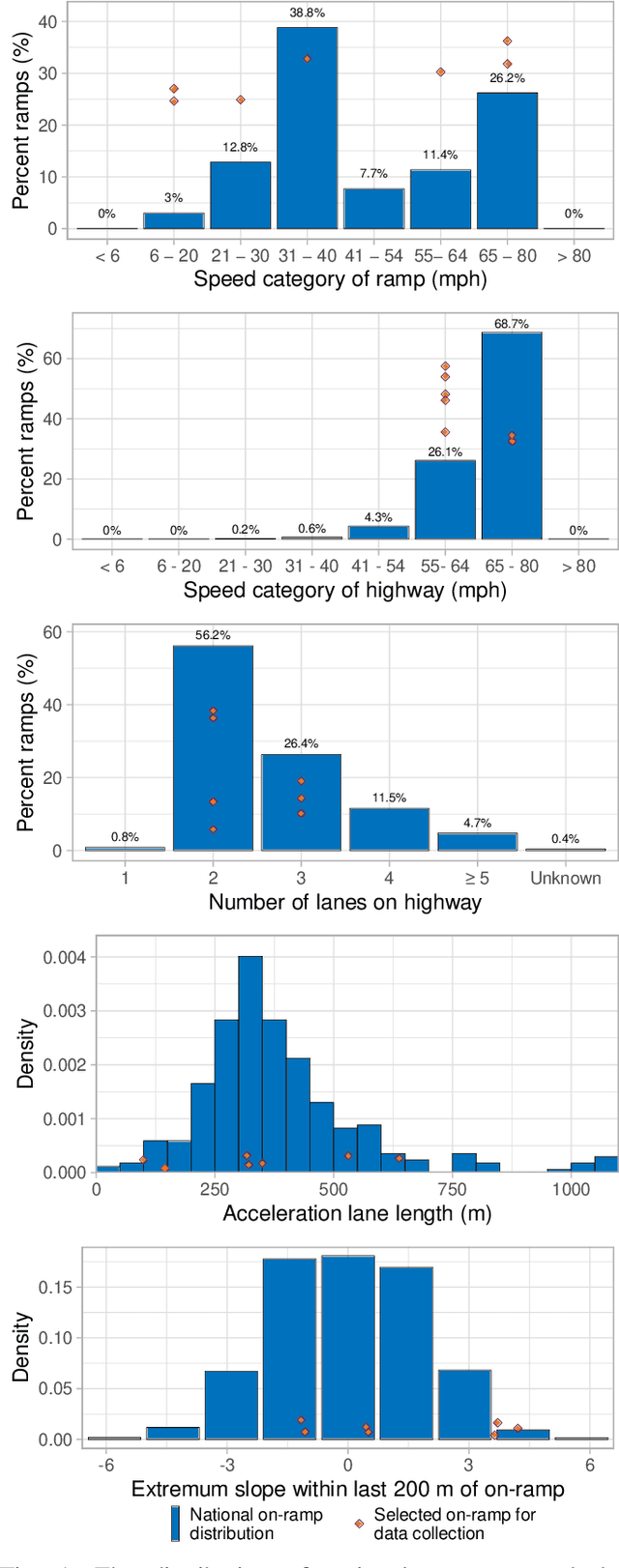
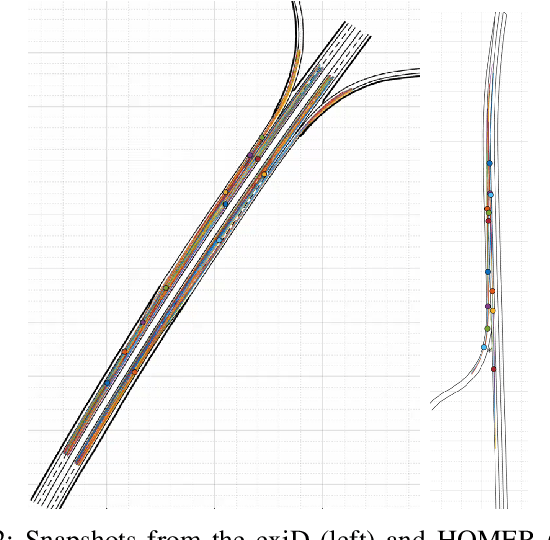
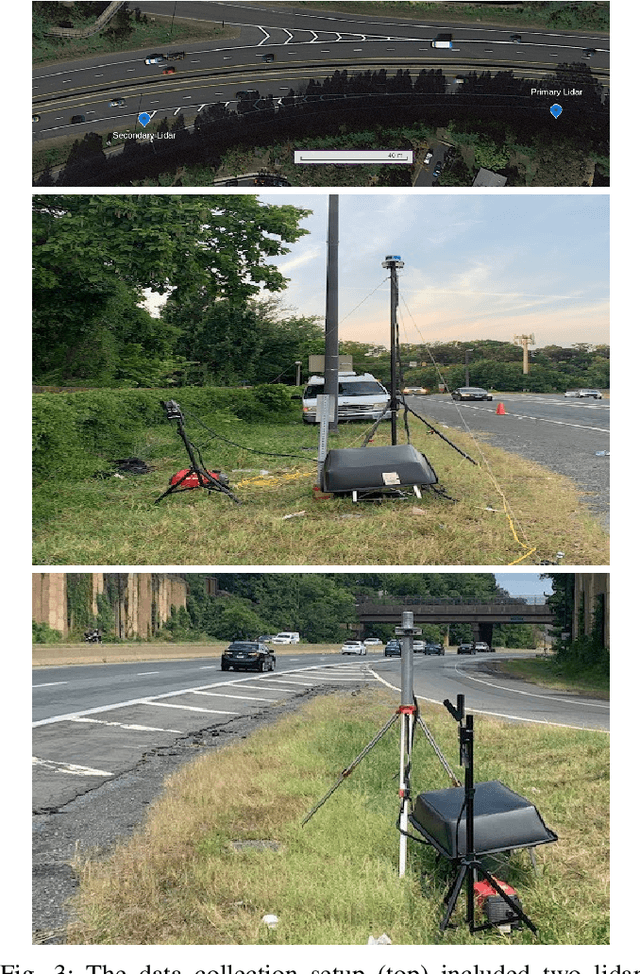
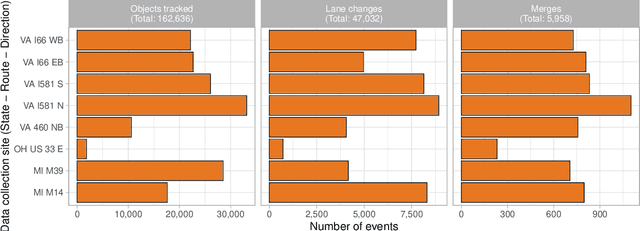
Enhancing simulation environments to replicate real-world driver behavior is essential for developing Autonomous Vehicle technology. While some previous works have studied the yielding reaction of lag vehicles in response to a merging car at highway on-ramps, the possible lane-change reaction of the lag car has not been widely studied. In this work we aim to improve the simulation of the highway merge scenario by including the lane-change reaction in addition to yielding behavior of main-lane lag vehicles, and we evaluate two different models for their ability to capture this reactive lane-change behavior. To tune the payoff functions of these models, a novel naturalistic dataset was collected on U.S. highways that provided several hours of merge-specific data to learn the lane change behavior of U.S. drivers. To make sure that we are collecting a representative set of different U.S. highway geometries in our data, we surveyed 50,000 U.S. highway on-ramps and then selected eight representative sites. The data were collected using roadside-mounted lidar sensors to capture various merge driver interactions. The models were demonstrated to be configurable for both keep-straight and lane-change behavior. The models were finally integrated into a high-fidelity simulation environment and confirmed to have adequate computation time efficiency for use in large-scale simulations to support autonomous vehicle development.
Active Learning with Dual Model Predictive Path-Integral Control for Interaction-Aware Autonomous Highway On-ramp Merging
Oct 11, 2023
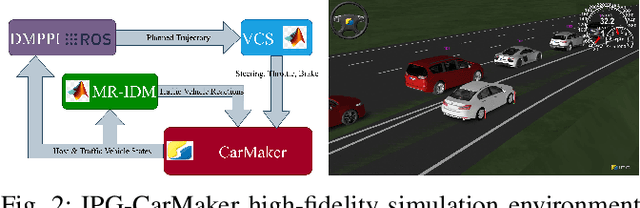
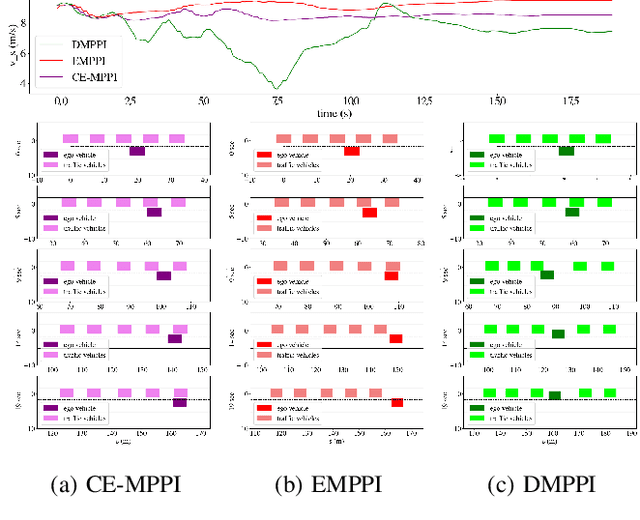
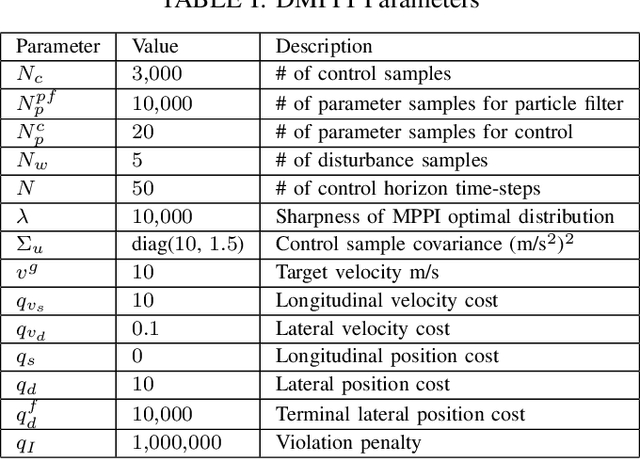
Merging into dense highway traffic for an autonomous vehicle is a complex decision-making task, wherein the vehicle must identify a potential gap and coordinate with surrounding human drivers, each of whom may exhibit diverse driving behaviors. Many existing methods consider other drivers to be dynamic obstacles and, as a result, are incapable of capturing the full intent of the human drivers via this passive planning. In this paper, we propose a novel dual control framework based on Model Predictive Path-Integral control to generate interactive trajectories. This framework incorporates a Bayesian inference approach to actively learn the agents' parameters, i.e., other drivers' model parameters. The proposed framework employs a sampling-based approach that is suitable for real-time implementation through the utilization of GPUs. We illustrate the effectiveness of our proposed methodology through comprehensive numerical simulations conducted in both high and low-fidelity simulation scenarios focusing on autonomous on-ramp merging.