 Add to Chrome
 Add to Firefox
 Add to Edge
Sign Language Recognition in the Age of LLMs
Apr 13, 2026
Recent Vision Language Models (VLMs) have demonstrated strong performance across a wide range of multimodal reasoning tasks. This raises the question of whether such general-purpose models can also address specialized visual recognition problems such as isolated sign language recognition (ISLR) without task-specific training. In this work, we investigate the capability of modern VLMs to perform ISLR in a zero-shot setting. We evaluate several open-source and proprietary VLMs on the WLASL300 benchmark. Our experiments show that, under prompt-only zero-shot inference, current open-source VLMs remain far behind classic supervised ISLR classifiers by a wide margin. However, follow-up experiments reveal that these models capture partial visual-semantic alignment between signs and text descriptions. Larger proprietary models achieve substantially higher accuracy, highlighting the importance of model scale and training data diversity. All our code is publicly available on GitHub.

Exploring Pose-based Sign Language Translation: Ablation Studies and Attention Insights
Jul 02, 2025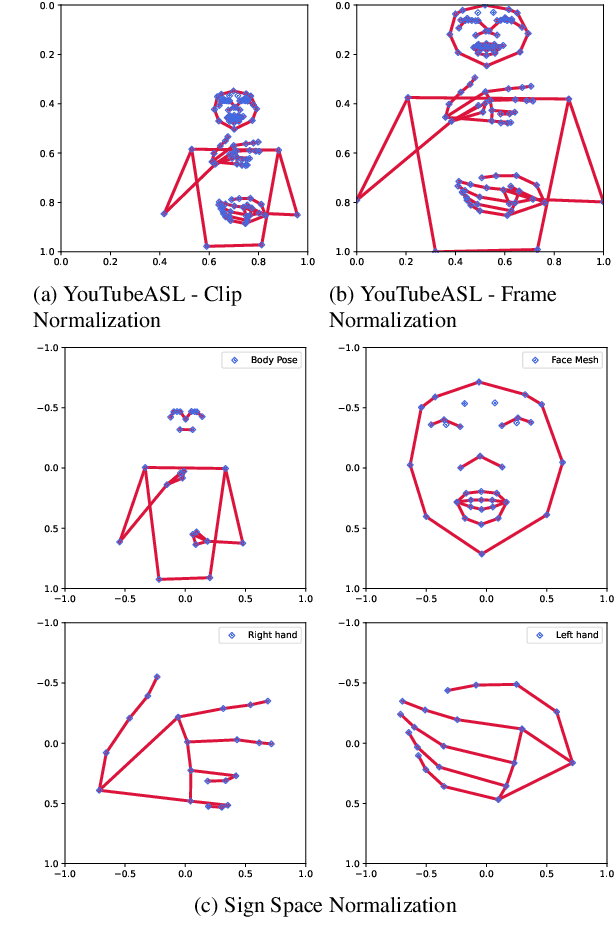
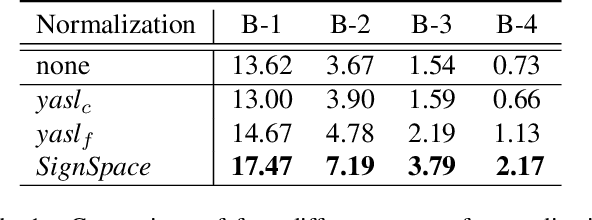
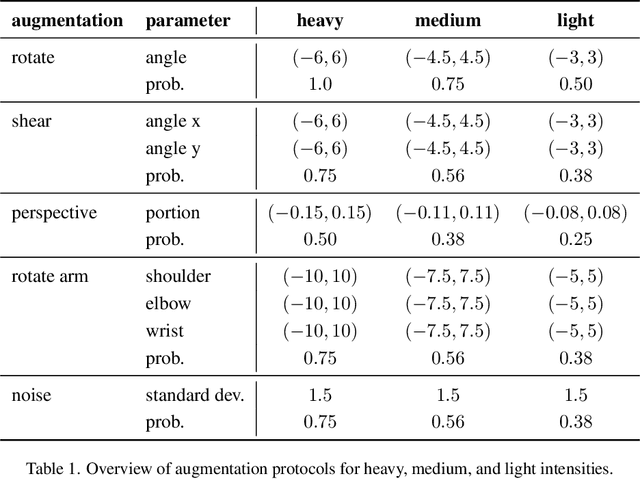
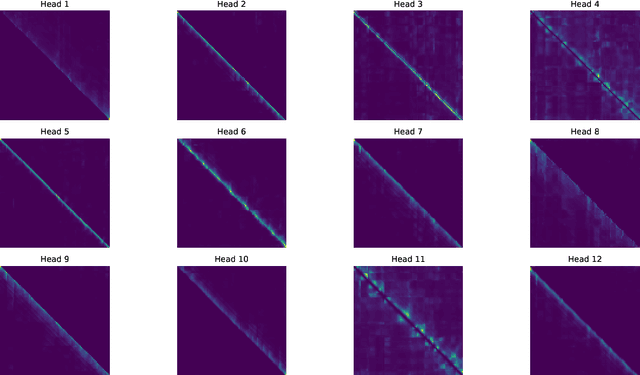
Sign Language Translation (SLT) has evolved significantly, moving from isolated recognition approaches to complex, continuous gloss-free translation systems. This paper explores the impact of pose-based data preprocessing techniques - normalization, interpolation, and augmentation - on SLT performance. We employ a transformer-based architecture, adapting a modified T5 encoder-decoder model to process pose representations. Through extensive ablation studies on YouTubeASL and How2Sign datasets, we analyze how different preprocessing strategies affect translation accuracy. Our results demonstrate that appropriate normalization, interpolation, and augmentation techniques can significantly improve model robustness and generalization abilities. Additionally, we provide a deep analysis of the model's attentions and reveal interesting behavior suggesting that adding a dedicated register token can improve overall model performance. We publish our code on our GitHub repository, including the preprocessed YouTubeASL data.