 Add to Chrome
 Add to Firefox
 Add to Edge
The GELATO Dataset for Legislative NER
Mar 14, 2026
This paper introduces GELATO (Government, Executive, Legislative, and Treaty Ontology), a dataset of U.S. House and Senate bills from the 118th Congress annotated using a novel two-level named entity recognition ontology designed for U.S. legislative texts. We fine-tune transformer-based models (BERT, RoBERTa) of different architectures and sizes on this dataset for first-level prediction. We then use LLMs with optimized prompts to complete the second level prediction. The strong performance of RoBERTa and relatively weak performance of BERT models, as well as the application of LLMs as second-level predictors, support future research in legislative NER or downstream tasks using these model combinations as extraction tools.

Distributed Partial Information Puzzles: Examining Common Ground Construction Under Epistemic Asymmetry
Mar 05, 2026Establishing common ground, a shared set of beliefs and mutually recognized facts, is fundamental to collaboration, yet remains a challenge for current AI systems, especially in multimodal, multiparty settings, where the collaborators bring different information to the table. We introduce the Distributed Partial Information Puzzle (DPIP), a collaborative construction task that elicits rich multimodal communication under epistemic asymmetry. We present a multimodal dataset of these interactions, annotated and temporally aligned across speech, gesture, and action modalities to support reasoning over propositional content and belief dynamics. We then evaluate two paradigms for modeling common ground (CG): (1) state-of-the-art large language models (LLMs), prompted to infer shared beliefs from multimodal updates, and (2) an axiomatic pipeline grounded in Dynamic Epistemic Logic (DEL) that incrementally performs the same task. Results on the annotated DPIP data indicate that it poses a challenge to modern LLMs' abilities to track both task progression and belief state.
Dynamic Epistemic Friction in Dialogue
Jun 12, 2025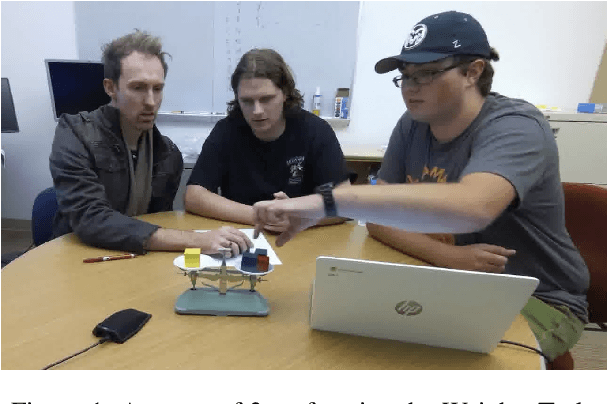
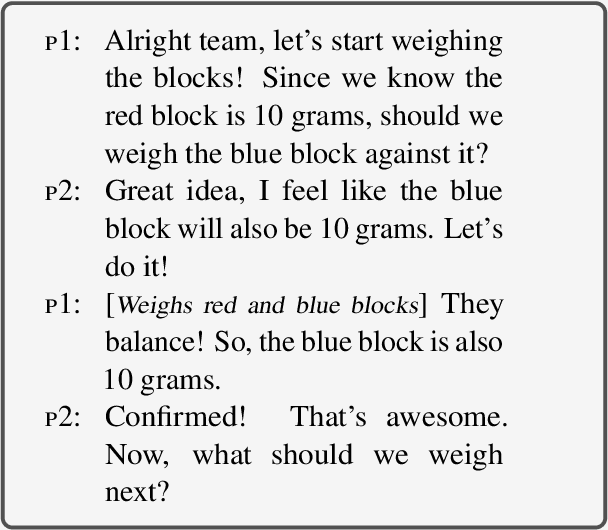
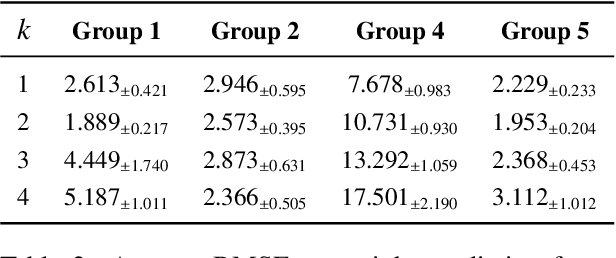
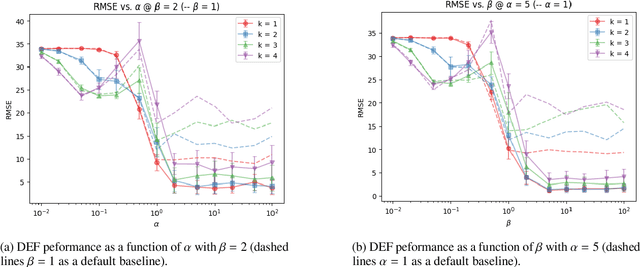
Recent developments in aligning Large Language Models (LLMs) with human preferences have significantly enhanced their utility in human-AI collaborative scenarios. However, such approaches often neglect the critical role of "epistemic friction," or the inherent resistance encountered when updating beliefs in response to new, conflicting, or ambiguous information. In this paper, we define dynamic epistemic friction as the resistance to epistemic integration, characterized by the misalignment between an agent's current belief state and new propositions supported by external evidence. We position this within the framework of Dynamic Epistemic Logic (Van Benthem and Pacuit, 2011), where friction emerges as nontrivial belief-revision during the interaction. We then present analyses from a situated collaborative task that demonstrate how this model of epistemic friction can effectively predict belief updates in dialogues, and we subsequently discuss how the model of belief alignment as a measure of epistemic resistance or friction can naturally be made more sophisticated to accommodate the complexities of real-world dialogue scenarios.