 Add to Chrome
 Add to Firefox
 Add to Edge
Muon Learns More Robust and Transferable Features than Adam
Jun 08, 2026
Muon has recently emerged as a state-of-the-art optimizer for pretraining Large Language Models (LLMs) and vision classifiers. Despite its efficiency advantage over Adam and SGD, the feature-learning advantage of Muon remains unclear. This paper investigates Muon's feature-learning advantage through the lens of robustness and transferability. First, by evaluating pretrained models on corrupted images and texts, we show that features learned by Muon are consistently more robust than those learned by Adam and SGD across different architectures, including transformers and Convolutional Neural Networks (CNNs). Using trained layer-wise probes, we further show that this robustness advantage is reflected in larger logit margins across layers. Second, by training linear classifiers or fine-tuning full models from pretrained parameters on downstream tasks, we demonstrate that Muon-learned features transfer more effectively than those learned by Adam and SGD. This transferability advantage is further supported by the diversity of hidden states across layers, as measured by effective rank. Finally, in a representative classification problem with multi-component features, we prove that Muon attains larger margins and higher effective rank than Adam and SGD, providing theoretical support for our empirical findings.

Towards understanding how attention mechanism works in deep learning
Dec 24, 2024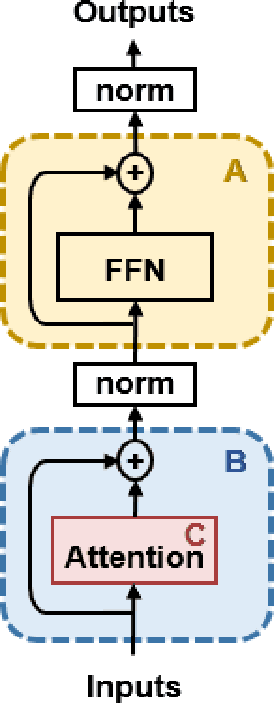
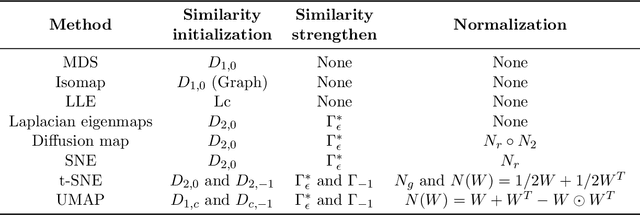
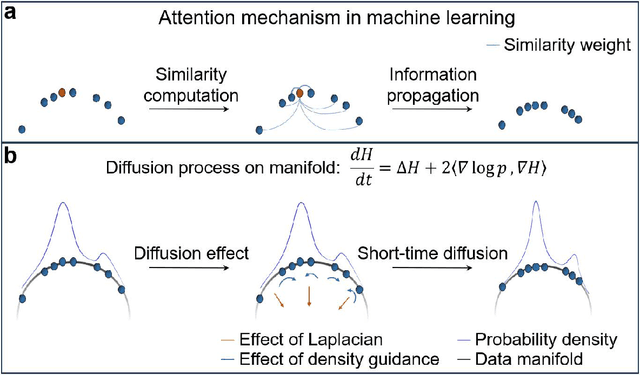
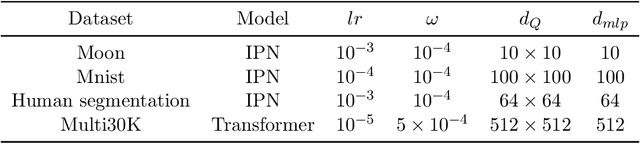
Attention mechanism has been extensively integrated within mainstream neural network architectures, such as Transformers and graph attention networks. Yet, its underlying working principles remain somewhat elusive. What is its essence? Are there any connections between it and traditional machine learning algorithms? In this study, we inspect the process of computing similarity using classic metrics and vector space properties in manifold learning, clustering, and supervised learning. We identify the key characteristics of similarity computation and information propagation in these methods and demonstrate that the self-attention mechanism in deep learning adheres to the same principles but operates more flexibly and adaptively. We decompose the self-attention mechanism into a learnable pseudo-metric function and an information propagation process based on similarity computation. We prove that the self-attention mechanism converges to a drift-diffusion process through continuous modeling provided the pseudo-metric is a transformation of a metric and certain reasonable assumptions hold. This equation could be transformed into a heat equation under a new metric. In addition, we give a first-order analysis of attention mechanism with a general pseudo-metric function. This study aids in understanding the effects and principle of attention mechanism through physical intuition. Finally, we propose a modified attention mechanism called metric-attention by leveraging the concept of metric learning to facilitate the ability to learn desired metrics more effectively. Experimental results demonstrate that it outperforms self-attention regarding training efficiency, accuracy, and robustness.