 Add to Chrome
 Add to Firefox
 Add to Edge
PipeMFL-240K: A Large-scale Dataset and Benchmark for Object Detection in Pipeline Magnetic Flux Leakage Imaging
Feb 04, 2026
Pipeline integrity is critical to industrial safety and environmental protection, with Magnetic Flux Leakage (MFL) detection being a primary non-destructive testing technology. Despite the promise of deep learning for automating MFL interpretation, progress toward reliable models has been constrained by the absence of a large-scale public dataset and benchmark, making fair comparison and reproducible evaluation difficult. We introduce \textbf{PipeMFL-240K}, a large-scale, meticulously annotated dataset and benchmark for complex object detection in pipeline MFL pseudo-color images. PipeMFL-240K reflects real-world inspection complexity and poses several unique challenges: (i) an extremely long-tailed distribution over \textbf{12} categories, (ii) a high prevalence of tiny objects that often comprise only a handful of pixels, and (iii) substantial intra-class variability. The dataset contains \textbf{240,320} images and \textbf{191,530} high-quality bounding-box annotations, collected from 11 pipelines spanning approximately \textbf{1,480} km. Extensive experiments are conducted with state-of-the-art object detectors to establish baselines. Results show that modern detectors still struggle with the intrinsic properties of MFL data, highlighting considerable headroom for improvement, while PipeMFL-240K provides a reliable and challenging testbed to drive future research. As the first public dataset and the first benchmark of this scale and scope for pipeline MFL inspection, it provides a critical foundation for efficient pipeline diagnostics as well as maintenance planning and is expected to accelerate algorithmic innovation and reproducible research in MFL-based pipeline integrity assessment.

Catch Causal Signals from Edges for Label Imbalance in Graph Classification
Jan 07, 2025

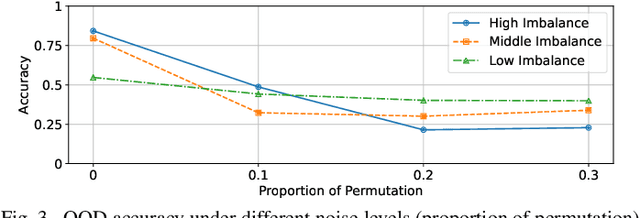

Despite significant advancements in causal research on graphs and its application to cracking label imbalance, the role of edge features in detecting the causal effects within graphs has been largely overlooked, leaving existing methods with untapped potential for further performance gains. In this paper, we enhance the causal attention mechanism through effectively leveraging edge information to disentangle the causal subgraph from the original graph, as well as further utilizing edge features to reshape graph representations. Capturing more comprehensive causal signals, our design leads to improved performance on graph classification tasks with label imbalance issues. We evaluate our approach on real-word datasets PTC, Tox21, and ogbg-molhiv, observing improvements over baselines. Overall, we highlight the importance of edge features in graph causal detection and provide a promising direction for addressing label imbalance challenges in graph-level tasks. The model implementation details and the codes are available on https://github.com/fengrui-z/ECAL