 Add to Chrome
 Add to Firefox
 Add to Edge
From Black Box to Insight: Explainable AI for Extreme Event Preparedness
Nov 17, 2025
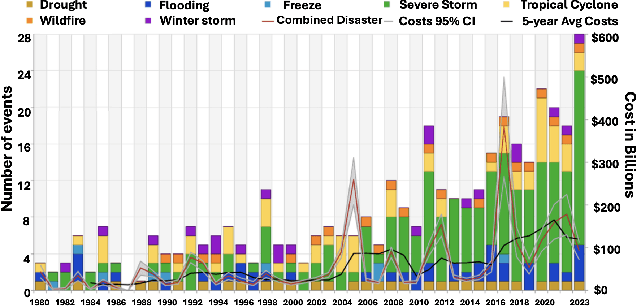
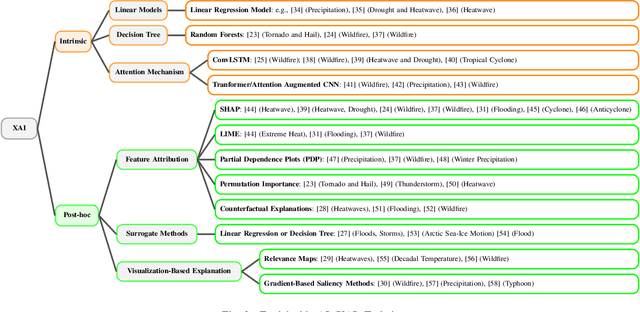
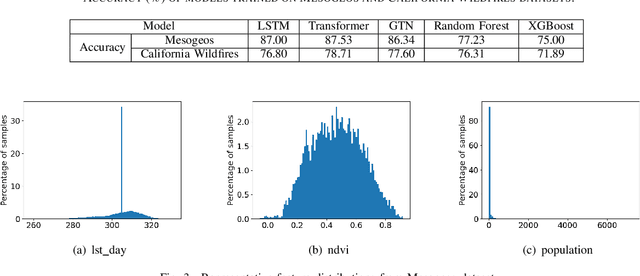
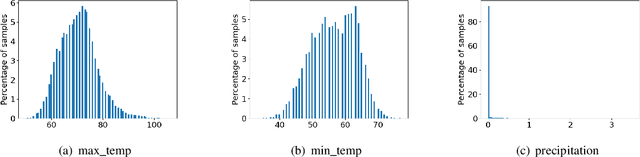
As climate change accelerates the frequency and severity of extreme events such as wildfires, the need for accurate, explainable, and actionable forecasting becomes increasingly urgent. While artificial intelligence (AI) models have shown promise in predicting such events, their adoption in real-world decision-making remains limited due to their black-box nature, which limits trust, explainability, and operational readiness. This paper investigates the role of explainable AI (XAI) in bridging the gap between predictive accuracy and actionable insight for extreme event forecasting. Using wildfire prediction as a case study, we evaluate various AI models and employ SHapley Additive exPlanations (SHAP) to uncover key features, decision pathways, and potential biases in model behavior. Our analysis demonstrates how XAI not only clarifies model reasoning but also supports critical decision-making by domain experts and response teams. In addition, we provide supporting visualizations that enhance the interpretability of XAI outputs by contextualizing feature importance and temporal patterns in seasonality and geospatial characteristics. This approach enhances the usability of AI explanations for practitioners and policymakers. Our findings highlight the need for AI systems that are not only accurate but also interpretable, accessible, and trustworthy, essential for effective use in disaster preparedness, risk mitigation, and climate resilience planning.

Sensing and Mapping for Better Roads: Initial Plan for Using Federated Learning and Implementing a Digital Twin to Identify the Road Conditions in a Developing Country -- Sri Lanka
Jul 30, 2021We propose how a developing country like Sri Lanka can benefit from privacy-enabled machine learning techniques such as Federated Learning to detect road conditions using crowd-sourced data collection and proposed the idea of implementing a Digital Twin for the national road system in Sri Lanka. Developing countries such as Sri Lanka are far behind in implementing smart road systems and smart cities compared to the developed countries. The proposed work discussed in this paper matches the UN Sustainable Development Goal (SDG) 9: "Build Resilient Infrastructure, Promote Inclusive and Sustainable Industrialization and Foster Innovation". Our proposed work discusses how the government and private sector vehicles that conduct routine trips to collect crowd-sourced data using smartphone devices to identify the road conditions and detect where the potholes, surface unevenness (roughness), and other major distresses are located on the roads. We explore Mobile Edge Computing (MEC) techniques that can bring machine learning intelligence closer to the edge devices where produced data is stored and show how the applications of Federated Learning can be made to detect and improve road conditions. During the second phase of this study, we plan to implement a Digital Twin for the road system in Sri Lanka. We intend to use data provided by both Dedicated and Non-Dedicated systems in the proposed Digital Twin for the road system. As of writing this paper, and best to our knowledge, there is no Digital Twin system implemented for roads and other infrastructure systems in Sri Lanka. The proposed Digital Twin will be one of the first implementations of such systems in Sri Lanka. Lessons learned from this pilot project will benefit other developing countries who wish to follow the same path and make data-driven decisions.