 Add to Chrome
 Add to Firefox
 Add to Edge
MuonSSM: Orthogonalizing State Space Models for Sequence Modeling
Jun 29, 2026
State space models (SSMs) have emerged as efficient linear-time alternatives to attention for long-sequence modeling. However, existing SSMs often suffer from instability and memory degradation over extended horizons due to poorly conditioned first-order updates and unbalanced update geometry. We introduce MuonSSM, a general framework that stabilizes SSM training by explicitly conditioning the geometry of memory updates rather than the recurrent transition matrix. MuonSSM augments SSMs with a momentum-based pathway and a lightweight Newton Schulz transformation on low-rank input injections, yielding bounded and spectrally conditioned updates while preserving parallel scan complexity. Theory shows that MuonSSM improves gradient propagation, mitigates spectral amplification, and enriches memory representations over long horizons. Extensive experiments across language, vision, and time-series benchmarks show consistent gains in accuracy, robustness, and long-context performance when integrated into diverse SSM backbones. These results establish geometric conditioning of updates as a principled pathway to stable, scalable sequence modeling.

Functional Equivalence in Attention: A Comprehensive Study with Applications to Linear Mode Connectivity
Jun 16, 2026Neural network parameter spaces are inherently non-injective, as distinct parameter configurations can realize identical functions through functional equivalence. While this symmetry is well understood in classical fully connected and convolutional models, it becomes substantially more intricate in modern attention-based architectures. Existing analyses of multihead attention have largely focused on the vanilla formulation, overlooking positional encodings that fundamentally reshape architectural symmetries. In this work, we provide a formal study of functional equivalence in Transformers with positional encodings. Focusing on the two most widely used variants--sinusoidal and rotary positional encodings (RoPE)--we show that sinusoidal encodings preserve the equivalence structure of vanilla attention, whereas rotary encodings significantly reduce the symmetry group, thereby enhancing expressivity. This offers a principled explanation for the growing prominence of RoPE in practice. We further examine how positional encodings affect linear mode connectivity, and through an alignment algorithm, empirically demonstrate that the presence and variability of connectivity across Transformer settings crucially depend on the positional encoding.
Conservation Laws for Modern Neural Architectures
Jun 16, 2026Understanding gradient descent dynamics is key to explaining the success of over-parameterized models, where implicit bias manifests through conservation laws in gradient flow. While such laws are well understood for linear and ReLU networks, they remain largely unexplored for modern architectures. This work develops a unified framework to characterize conservation laws for contemporary models, including feedforward networks with GELU, SiLU, and SwiGLU activations, multihead attention with sinusoidal and rotary positional encodings, and Mixture-of-Experts architectures under diverse gating designs. Our theoretical findings are supported by experiments that validate the predicted invariants.
Quasi-Equivariant Metanetworks
Apr 26, 2026Metanetworks are neural architectures designed to operate directly on pretrained weights to perform downstream tasks. However, the parameter space serves only as a proxy for the underlying function class, and the parameter-function mapping is inherently non-injective: distinct parameter configurations may yield identical input-output behaviors. As a result, metanetworks that rely solely on raw parameters risk overlooking the intrinsic symmetries of the architecture. Reasoning about functional identity is therefore essential for effective metanetwork design, motivating the development of equivariant metanetworks, which incorporate equivariance principles to respect architectural symmetries. Existing approaches, however, typically enforce strict equivariance, which imposes rigid constraints and often leads to sparse and less expressive models. To address this limitation, we introduce the novel concept of quasi-equivariance, which allows metanetworks to move beyond the rigidity of strict equivariance while still preserving functional identity. We lay down a principled basis for this framework and demonstrate its broad applicability across diverse neural architectures, including feedforward, convolutional, and transformer networks. Through empirical evaluation, we show that quasi-equivariant metanetworks achieve good trade-offs between symmetry preservation and representational expressivity. These findings advance the theoretical understanding of weight-space learning and provide a principled foundation for the design of more expressive and functionally robust metanetworks.
Selective Sinkhorn Routing for Improved Sparse Mixture of Experts
Nov 12, 2025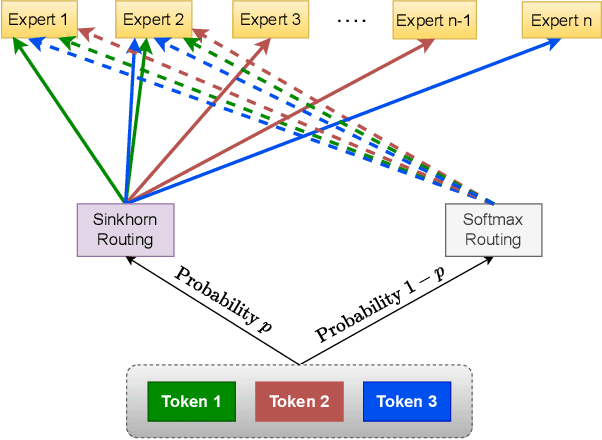
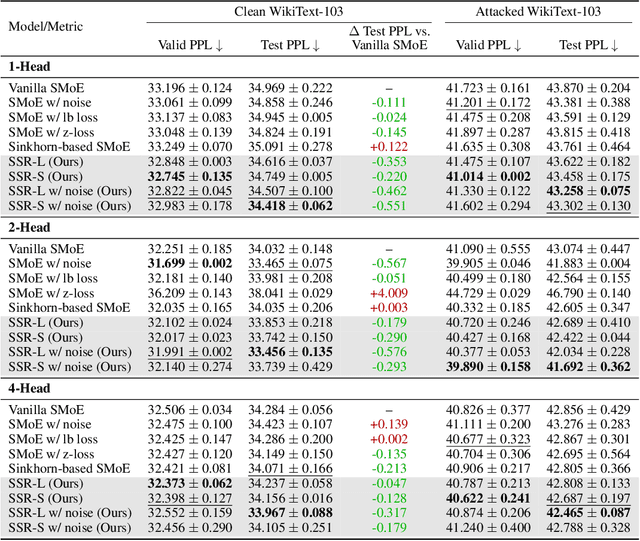
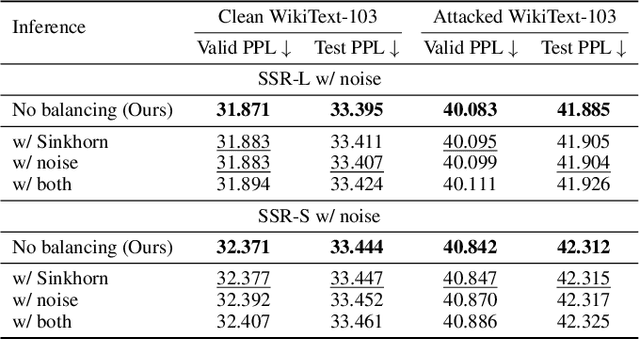
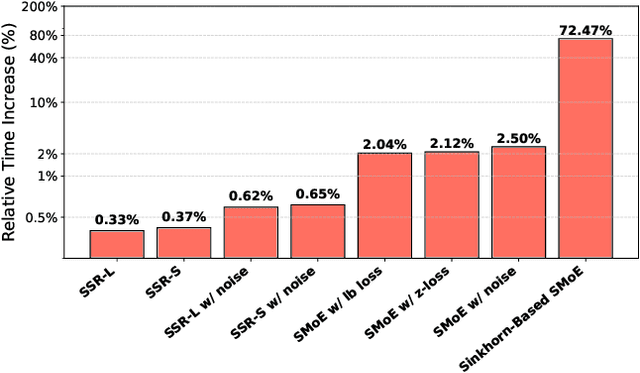
Sparse Mixture-of-Experts (SMoE) has gained prominence as a scalable and computationally efficient architecture, enabling significant growth in model capacity without incurring additional inference costs. However, existing SMoE models often rely on auxiliary losses (e.g., z-loss, load balancing) and additional trainable parameters (e.g., noisy gating) to encourage expert diversity, leading to objective misalignment and increased model complexity. Moreover, existing Sinkhorn-based methods suffer from significant training overhead due to their heavy reliance on the computationally expensive Sinkhorn algorithm. In this work, we formulate token-to-expert assignment as an optimal transport problem, incorporating constraints to ensure balanced expert utilization. We demonstrate that introducing a minimal degree of optimal transport-based routing enhances SMoE performance without requiring auxiliary balancing losses. Unlike previous methods, our approach derives gating scores directly from the transport map, enabling more effective token-to-expert balancing, supported by both theoretical analysis and empirical results. Building on these insights, we propose Selective Sinkhorn Routing (SSR), a routing mechanism that replaces auxiliary loss with lightweight Sinkhorn-based routing. SSR promotes balanced token assignments while preserving flexibility in expert selection. Across both language modeling and image classification tasks, SSR achieves faster training, higher accuracy, and greater robustness to input corruption.
Angular Steering: Behavior Control via Rotation in Activation Space
Oct 30, 2025

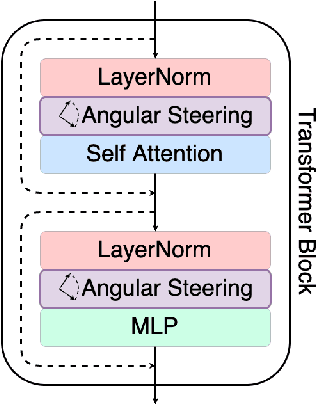
Controlling specific behaviors in large language models while preserving their general capabilities is a central challenge for safe and reliable artificial intelligence deployment. Current steering methods, such as vector addition and directional ablation, are constrained within a two-dimensional subspace defined by the activation and feature direction, making them sensitive to chosen parameters and potentially affecting unrelated features due to unintended interactions in activation space. We introduce Angular Steering, a novel and flexible method for behavior modulation that operates by rotating activations within a fixed two-dimensional subspace. By formulating steering as a geometric rotation toward or away from a target behavior direction, Angular Steering provides continuous, fine-grained control over behaviors such as refusal and compliance. We demonstrate this method using refusal steering emotion steering as use cases. Additionally, we propose Adaptive Angular Steering, a selective variant that rotates only activations aligned with the target feature, further enhancing stability and coherence. Angular Steering generalizes existing addition and orthogonalization techniques under a unified geometric rotation framework, simplifying parameter selection and maintaining model stability across a broader range of adjustments. Experiments across multiple model families and sizes show that Angular Steering achieves robust behavioral control while maintaining general language modeling performance, underscoring its flexibility, generalization, and robustness compared to prior approaches. Code and artifacts are available at https://github.com/lone17/angular-steering/.
Activation Steering with a Feedback Controller
Oct 05, 2025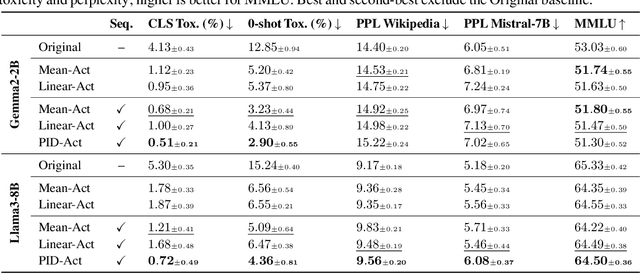
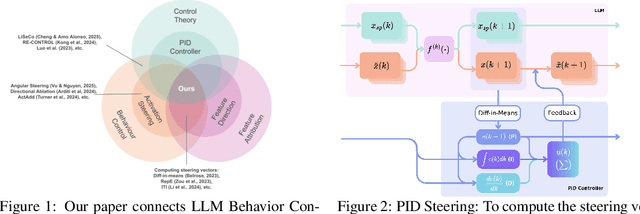
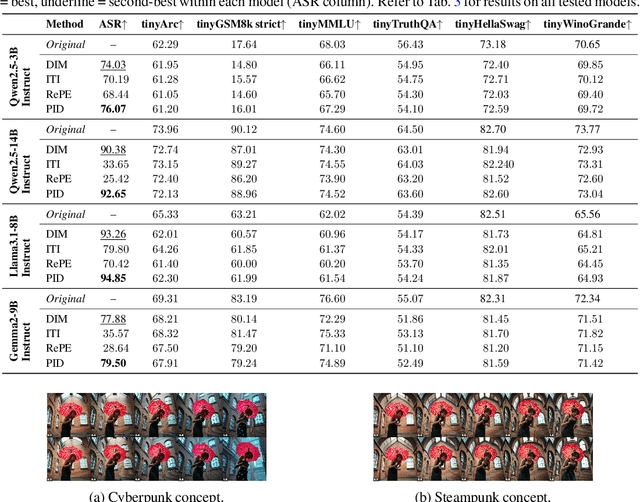
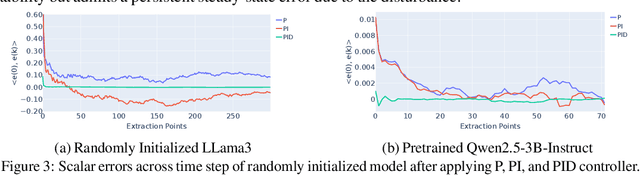
Controlling the behaviors of large language models (LLM) is fundamental to their safety alignment and reliable deployment. However, existing steering methods are primarily driven by empirical insights and lack theoretical performance guarantees. In this work, we develop a control-theoretic foundation for activation steering by showing that popular steering methods correspond to the proportional (P) controllers, with the steering vector serving as the feedback signal. Building on this finding, we propose Proportional-Integral-Derivative (PID) Steering, a principled framework that leverages the full PID controller for activation steering in LLMs. The proportional (P) term aligns activations with target semantic directions, the integral (I) term accumulates errors to enforce persistent corrections across layers, and the derivative (D) term mitigates overshoot by counteracting rapid activation changes. This closed-loop design yields interpretable error dynamics and connects activation steering to classical stability guarantees in control theory. Moreover, PID Steering is lightweight, modular, and readily integrates with state-of-the-art steering methods. Extensive experiments across multiple LLM families and benchmarks demonstrate that PID Steering consistently outperforms existing approaches, achieving more robust and reliable behavioral control.
The Blessing and Curse of Dimensionality in Safety Alignment
Jul 27, 2025The focus on safety alignment in large language models (LLMs) has increased significantly due to their widespread adoption across different domains. The scale of LLMs play a contributing role in their success, and the growth in parameter count follows larger hidden dimensions. In this paper, we hypothesize that while the increase in dimensions has been a key advantage, it may lead to emergent problems as well. These problems emerge as the linear structures in the activation space can be exploited, in the form of activation engineering, to circumvent its safety alignment. Through detailed visualizations of linear subspaces associated with different concepts, such as safety, across various model scales, we show that the curse of high-dimensional representations uniquely impacts LLMs. Further substantiating our claim, we demonstrate that projecting the representations of the model onto a lower dimensional subspace can preserve sufficient information for alignment while avoiding those linear structures. Empirical results confirm that such dimensional reduction significantly reduces susceptibility to jailbreaking through representation engineering. Building on our empirical validations, we provide theoretical insights into these linear jailbreaking methods relative to a model's hidden dimensions. Broadly speaking, our work posits that the high dimensions of a model's internal representations can be both a blessing and a curse in safety alignment.
Revisiting Transformers with Insights from Image Filtering
Jun 12, 2025The self-attention mechanism, a cornerstone of Transformer-based state-of-the-art deep learning architectures, is largely heuristic-driven and fundamentally challenging to interpret. Establishing a robust theoretical foundation to explain its remarkable success and limitations has therefore become an increasingly prominent focus in recent research. Some notable directions have explored understanding self-attention through the lens of image denoising and nonparametric regression. While promising, existing frameworks still lack a deeper mechanistic interpretation of various architectural components that enhance self-attention, both in its original formulation and subsequent variants. In this work, we aim to advance this understanding by developing a unifying image processing framework, capable of explaining not only the self-attention computation itself but also the role of components such as positional encoding and residual connections, including numerous later variants. We also pinpoint potential distinctions between the two concepts building upon our framework, and make effort to close this gap. We introduce two independent architectural modifications within transformers. While our primary objective is interpretability, we empirically observe that image processing-inspired modifications can also lead to notably improved accuracy and robustness against data contamination and adversaries across language and vision tasks as well as better long sequence understanding.
Tree-Sliced Wasserstein Distance with Nonlinear Projection
May 02, 2025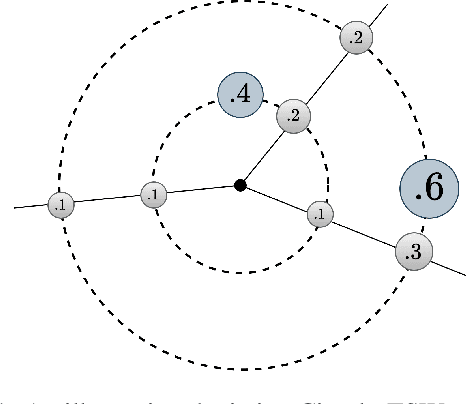
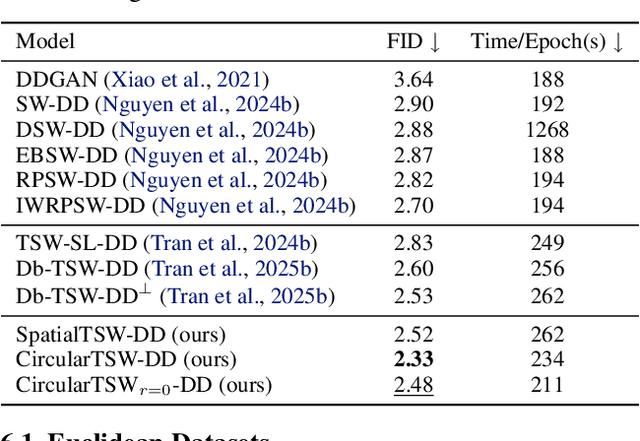
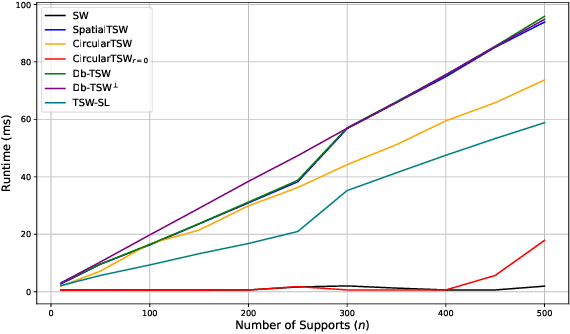
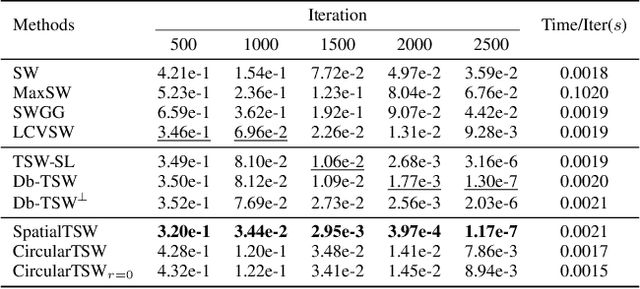
Tree-Sliced methods have recently emerged as an alternative to the traditional Sliced Wasserstein (SW) distance, replacing one-dimensional lines with tree-based metric spaces and incorporating a splitting mechanism for projecting measures. This approach enhances the ability to capture the topological structures of integration domains in Sliced Optimal Transport while maintaining low computational costs. Building on this foundation, we propose a novel nonlinear projectional framework for the Tree-Sliced Wasserstein (TSW) distance, substituting the linear projections in earlier versions with general projections, while ensuring the injectivity of the associated Radon Transform and preserving the well-definedness of the resulting metric. By designing appropriate projections, we construct efficient metrics for measures on both Euclidean spaces and spheres. Finally, we validate our proposed metric through extensive numerical experiments for Euclidean and spherical datasets. Applications include gradient flows, self-supervised learning, and generative models, where our methods demonstrate significant improvements over recent SW and TSW variants.