 Add to Chrome
 Add to Firefox
 Add to Edge
DA-Flow: Degradation-Aware Optical Flow Estimation with Diffusion Models
Mar 24, 2026
Optical flow models trained on high-quality data often degrade severely when confronted with real-world corruptions such as blur, noise, and compression artifacts. To overcome this limitation, we formulate Degradation-Aware Optical Flow, a new task targeting accurate dense correspondence estimation from real-world corrupted videos. Our key insight is that the intermediate representations of image restoration diffusion models are inherently corruption-aware but lack temporal awareness. To address this limitation, we lift the model to attend across adjacent frames via full spatio-temporal attention, and empirically demonstrate that the resulting features exhibit zero-shot correspondence capabilities. Based on this finding, we present DA-Flow, a hybrid architecture that fuses these diffusion features with convolutional features within an iterative refinement framework. DA-Flow substantially outperforms existing optical flow methods under severe degradation across multiple benchmarks.

ESC: Erasing Space Concept for Knowledge Deletion
Apr 03, 2025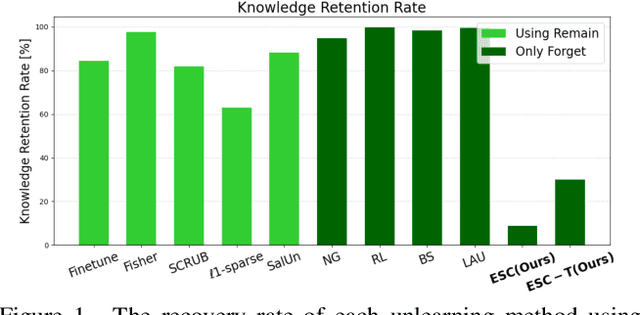
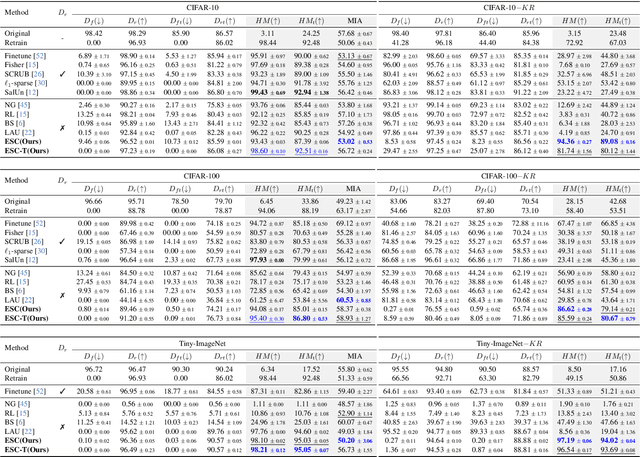
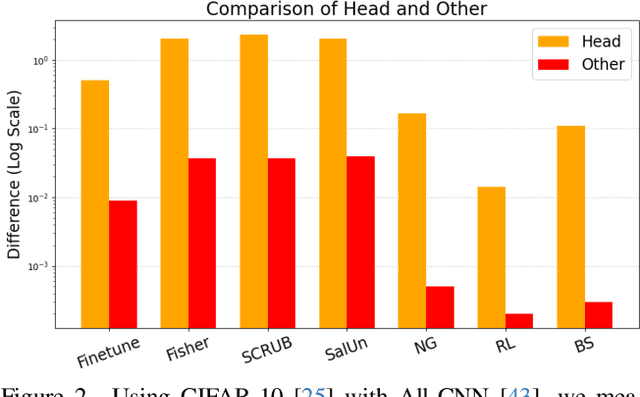
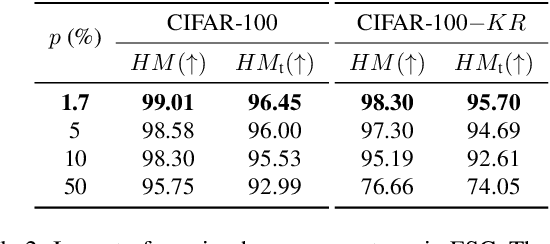
As concerns regarding privacy in deep learning continue to grow, individuals are increasingly apprehensive about the potential exploitation of their personal knowledge in trained models. Despite several research efforts to address this, they often fail to consider the real-world demand from users for complete knowledge erasure. Furthermore, our investigation reveals that existing methods have a risk of leaking personal knowledge through embedding features. To address these issues, we introduce a novel concept of Knowledge Deletion (KD), an advanced task that considers both concerns, and provides an appropriate metric, named Knowledge Retention score (KR), for assessing knowledge retention in feature space. To achieve this, we propose a novel training-free erasing approach named Erasing Space Concept (ESC), which restricts the important subspace for the forgetting knowledge by eliminating the relevant activations in the feature. In addition, we suggest ESC with Training (ESC-T), which uses a learnable mask to better balance the trade-off between forgetting and preserving knowledge in KD. Our extensive experiments on various datasets and models demonstrate that our proposed methods achieve the fastest and state-of-the-art performance. Notably, our methods are applicable to diverse forgetting scenarios, such as facial domain setting, demonstrating the generalizability of our methods. The code is available at http://github.com/KU-VGI/ESC .
Generative Unlearning for Any Identity
May 16, 2024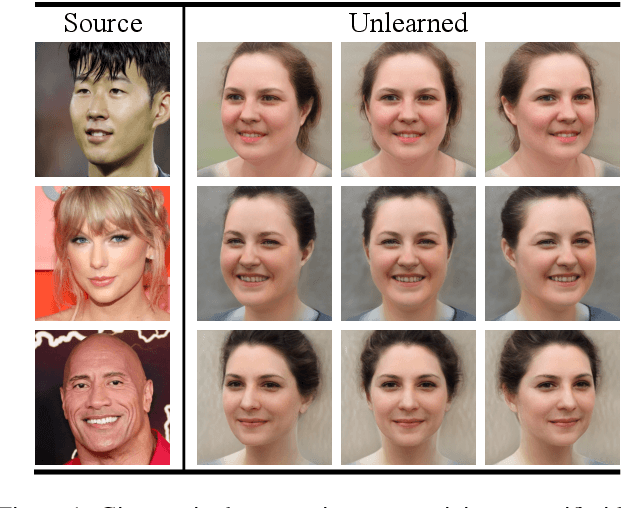

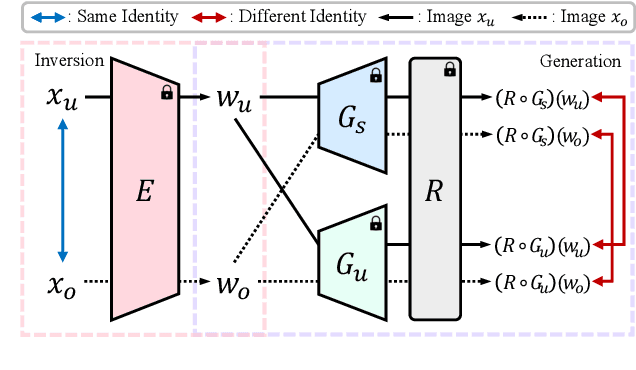

Recent advances in generative models trained on large-scale datasets have made it possible to synthesize high-quality samples across various domains. Moreover, the emergence of strong inversion networks enables not only a reconstruction of real-world images but also the modification of attributes through various editing methods. However, in certain domains related to privacy issues, e.g., human faces, advanced generative models along with strong inversion methods can lead to potential misuses. In this paper, we propose an essential yet under-explored task called generative identity unlearning, which steers the model not to generate an image of a specific identity. In the generative identity unlearning, we target the following objectives: (i) preventing the generation of images with a certain identity, and (ii) preserving the overall quality of the generative model. To satisfy these goals, we propose a novel framework, Generative Unlearning for Any Identity (GUIDE), which prevents the reconstruction of a specific identity by unlearning the generator with only a single image. GUIDE consists of two parts: (i) finding a target point for optimization that un-identifies the source latent code and (ii) novel loss functions that facilitate the unlearning procedure while less affecting the learned distribution. Our extensive experiments demonstrate that our proposed method achieves state-of-the-art performance in the generative machine unlearning task. The code is available at https://github.com/KHU-AGI/GUIDE.