 Add to Chrome
 Add to Firefox
 Add to Edge
PRISM: Personalized Robotic Dataset Generation via Image-based Scene and Motion Synthesis
Jul 06, 2026
Recent advances in large-scale pretrained vision-language-action models have improved robot policy learning, but directly deploying such policies in user-specific environments remains challenging due to limited generalization, which inevitably requires collecting a dataset tailored to the target environment. Teleoperation yields well-aligned data but is costly and difficult to scale, whereas simulation scales easily but struggles to resemble the target environment and generate task-specific trajectories. To meet both simultaneously, we propose PRISM, an end-to-end pipeline that generates personalized robotic datasets from a single image and a natural-language instruction. PRISM constructs digital cousin scenes that are semantically and geometrically aligned with the user environment yet diverse at the instance level, and synthesizes executable demonstrations without human teleoperation. Extensive experiments show that policies trained on PRISM-generated datasets outperform those trained on baseline-generated datasets on LIBERO and LIBERO-Plus, achieve up to 100\% success rate on three real-world manipulation tasks, and maintain stronger performance when evaluated in environments that differ from those seen during training.

Geometry-Preserving in 3D Gaussian Splatting for LiDAR-Camera Extrinsic Calibration
Jun 18, 2026Accurate LiDAR-camera calibration is essential for robust multi-modal perception. Targetless approaches avoid manual setup but remain limited by the scarcity of discriminative cross-modal features. Recent methods address this by reconstructing the scene within a differentiable model, enabling extrinsic optimization through dense photometric supervision. Among these, 3D Gaussian Splatting (3DGS) has been widely adopted as a geometric proxy that bridges LiDAR and camera within a single differentiable framework. However, since 3DGS was originally designed for novel view synthesis, existing methods tend to prioritize rendering quality, causing the proxy geometry to drift from the true LiDAR structure. We propose a framework that preserves the metric geometry of the Gaussian proxy by aggregating multi-view LiDAR observations for dense depth supervision and blocking photometric gradients from updating the Gaussian spatial parameters. We validate our method on public driving datasets, where it consistently outperforms existing targetless methods in calibration accuracy.
Keep it SymPL: Symbolic Projective Layout for Allocentric Spatial Reasoning in Vision-Language Models
Feb 24, 2026Perspective-aware spatial reasoning involves understanding spatial relationships from specific viewpoints-either egocentric (observer-centered) or allocentric (object-centered). While vision-language models (VLMs) perform well in egocentric settings, their performance deteriorates when reasoning from allocentric viewpoints, where spatial relations must be inferred from the perspective of objects within the scene. In this study, we address this underexplored challenge by introducing Symbolic Projective Layout (SymPL), a framework that reformulates allocentric reasoning into symbolic-layout forms that VLMs inherently handle well. By leveraging four key factors-projection, abstraction, bipartition, and localization-SymPL converts allocentric questions into structured symbolic-layout representations. Extensive experiments demonstrate that this reformulation substantially improves performance in both allocentric and egocentric tasks, enhances robustness under visual illusions and multi-view scenarios, and that each component contributes critically to these gains. These results show that SymPL provides an effective and principled approach for addressing complex perspective-aware spatial reasoning.
Stabilizing the Q-Gradient Field for Policy Smoothness in Actor-Critic
Jan 30, 2026Policies learned via continuous actor-critic methods often exhibit erratic, high-frequency oscillations, making them unsuitable for physical deployment. Current approaches attempt to enforce smoothness by directly regularizing the policy's output. We argue that this approach treats the symptom rather than the cause. In this work, we theoretically establish that policy non-smoothness is fundamentally governed by the differential geometry of the critic. By applying implicit differentiation to the actor-critic objective, we prove that the sensitivity of the optimal policy is bounded by the ratio of the Q-function's mixed-partial derivative (noise sensitivity) to its action-space curvature (signal distinctness). To empirically validate this theoretical insight, we introduce PAVE (Policy-Aware Value-field Equalization), a critic-centric regularization framework that treats the critic as a scalar field and stabilizes its induced action-gradient field. PAVE rectifies the learning signal by minimizing the Q-gradient volatility while preserving local curvature. Experimental results demonstrate that PAVE achieves smoothness and robustness comparable to policy-side smoothness regularization methods, while maintaining competitive task performance, without modifying the actor.
Scale-Consistent State-Space Dynamics via Fractal of Stationary Transformations
Jan 27, 2026Recent deep learning models increasingly rely on depth without structural guarantees on the validity of intermediate representations, rendering early stopping and adaptive computation ill-posed. We address this limitation by formulating a structural requirement for state-space model's scale-consistent latent dynamics across iterative refinement, and derive Fractal of Stationary Transformations (FROST), which enforces a self-similar representation manifold through a fractal inductive bias. Under this geometry, intermediate states correspond to different resolutions of a shared representation, and we provide a geometric analysis establishing contraction and stable convergence across iterations. As a consequence of this scale-consistent structure, halting naturally admits a ranking-based formulation driven by intrinsic feature quality rather than extrinsic objectives. Controlled experiments on ImageNet-100 empirically verify the predicted scale-consistent behavior, showing that adaptive efficiency emerges from the aligned latent geometry.
Enhancing Control Policy Smoothness by Aligning Actions with Predictions from Preceding States
Jan 26, 2026Deep reinforcement learning has proven to be a powerful approach to solving control tasks, but its characteristic high-frequency oscillations make it difficult to apply in real-world environments. While prior methods have addressed action oscillations via architectural or loss-based methods, the latter typically depend on heuristic or synthetic definitions of state similarity to promote action consistency, which often fail to accurately reflect the underlying system dynamics. In this paper, we propose a novel loss-based method by introducing a transition-induced similar state. The transition-induced similar state is defined as the distribution of next states transitioned from the previous state. Since it utilizes only environmental feedback and actually collected data, it better captures system dynamics. Building upon this foundation, we introduce Action Smoothing by Aligning Actions with Predictions from Preceding States (ASAP), an action smoothing method that effectively mitigates action oscillations. ASAP enforces action smoothness by aligning the actions with those taken in transition-induced similar states and by penalizing second-order differences to suppress high-frequency oscillations. Experiments in Gymnasium and Isaac-Lab environments demonstrate that ASAP yields smoother control and improved policy performance over existing methods.
ESC: Erasing Space Concept for Knowledge Deletion
Apr 03, 2025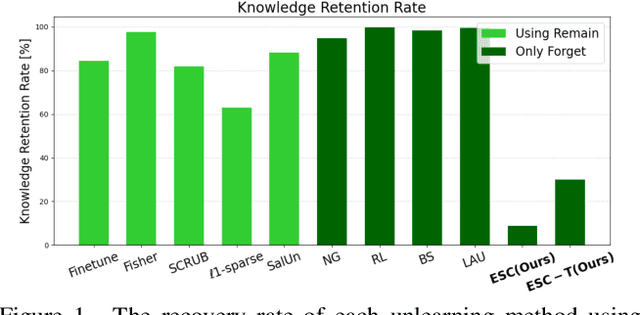
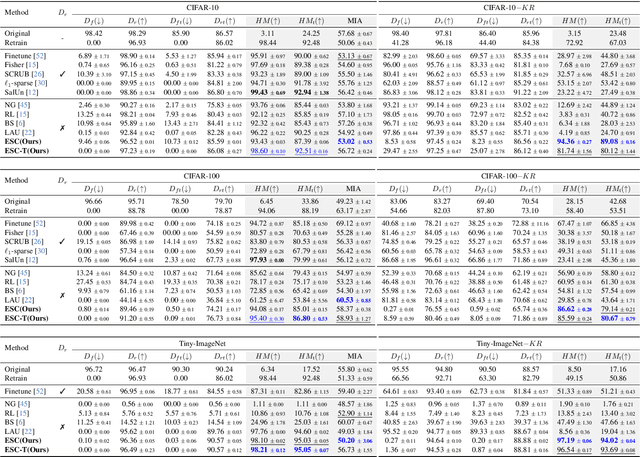
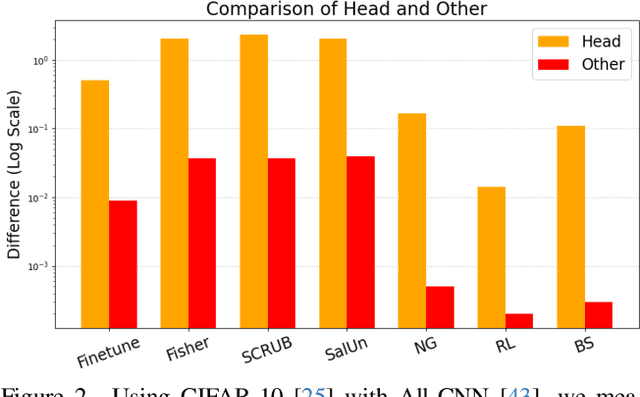
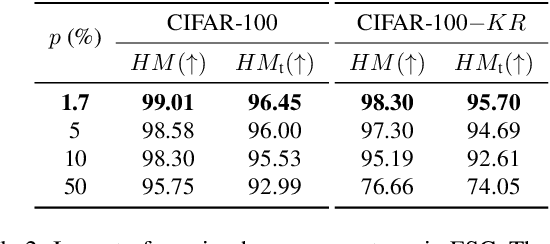
As concerns regarding privacy in deep learning continue to grow, individuals are increasingly apprehensive about the potential exploitation of their personal knowledge in trained models. Despite several research efforts to address this, they often fail to consider the real-world demand from users for complete knowledge erasure. Furthermore, our investigation reveals that existing methods have a risk of leaking personal knowledge through embedding features. To address these issues, we introduce a novel concept of Knowledge Deletion (KD), an advanced task that considers both concerns, and provides an appropriate metric, named Knowledge Retention score (KR), for assessing knowledge retention in feature space. To achieve this, we propose a novel training-free erasing approach named Erasing Space Concept (ESC), which restricts the important subspace for the forgetting knowledge by eliminating the relevant activations in the feature. In addition, we suggest ESC with Training (ESC-T), which uses a learnable mask to better balance the trade-off between forgetting and preserving knowledge in KD. Our extensive experiments on various datasets and models demonstrate that our proposed methods achieve the fastest and state-of-the-art performance. Notably, our methods are applicable to diverse forgetting scenarios, such as facial domain setting, demonstrating the generalizability of our methods. The code is available at http://github.com/KU-VGI/ESC .
ForceGrip: Data-Free Curriculum Learning for Realistic Grip Force Control in VR Hand Manipulation
Mar 11, 2025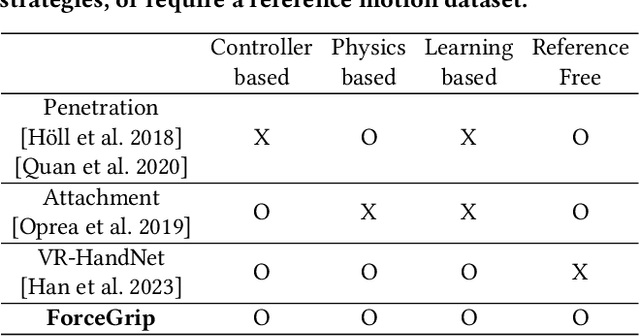
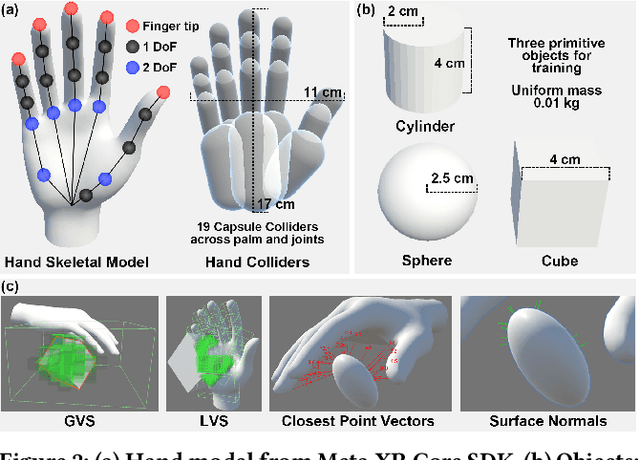
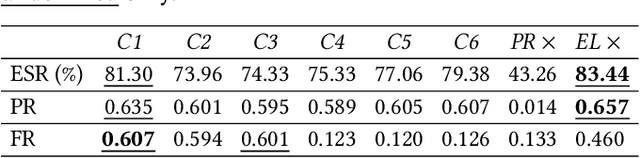
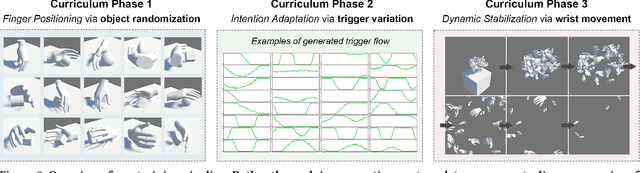
Realistic hand manipulation is a key component of immersive virtual reality (VR), yet existing methods often rely on a kinematic approach or motion-capture datasets that omit crucial physical attributes such as contact forces and finger torques. Consequently, these approaches prioritize tight, one-size-fits-all grips rather than reflecting users' intended force levels. We present ForceGrip, a deep learning agent that synthesizes realistic hand manipulation motions, faithfully reflecting the user's grip force intention. Instead of mimicking predefined motion datasets, ForceGrip uses generated training scenarios-randomizing object shapes, wrist movements, and trigger input flows-to challenge the agent with a broad spectrum of physical interactions. To effectively learn from these complex tasks, we employ a three-phase curriculum learning framework comprising Finger Positioning, Intention Adaptation, and Dynamic Stabilization. This progressive strategy ensures stable hand-object contact, adaptive force control based on user inputs, and robust handling under dynamic conditions. Additionally, a proximity reward function enhances natural finger motions and accelerates training convergence. Quantitative and qualitative evaluations reveal ForceGrip's superior force controllability and plausibility compared to state-of-the-art methods.
A2XP: Towards Private Domain Generalization
Nov 17, 2023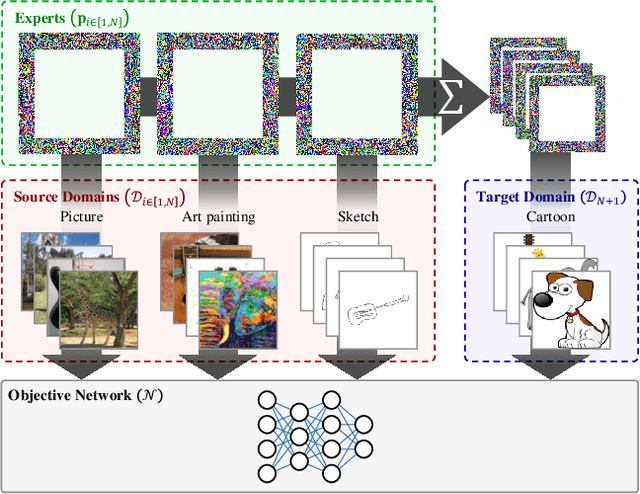
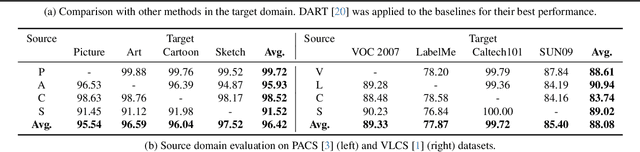
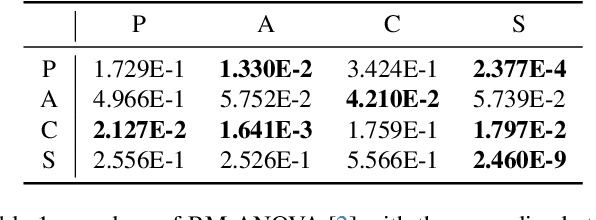
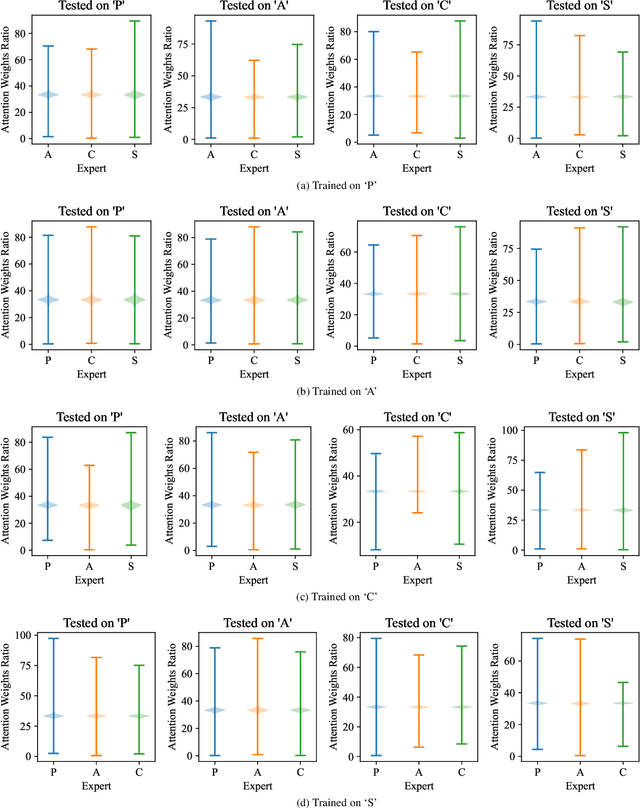
Deep Neural Networks (DNNs) have become pivotal in various fields, especially in computer vision, outperforming previous methodologies. A critical challenge in their deployment is the bias inherent in data across different domains, such as image style, and environmental conditions, leading to domain gaps. This necessitates techniques for learning general representations from biased training data, known as domain generalization. This paper presents Attend to eXpert Prompts (A2XP), a novel approach for domain generalization that preserves the privacy and integrity of the network architecture. A2XP consists of two phases: Expert Adaptation and Domain Generalization. In the first phase, prompts for each source domain are optimized to guide the model towards the optimal direction. In the second phase, two embedder networks are trained to effectively amalgamate these expert prompts, aiming for an optimal output. Our extensive experiments demonstrate that A2XP achieves state-of-the-art results over existing non-private domain generalization methods. The experimental results validate that the proposed approach not only tackles the domain generalization challenge in DNNs but also offers a privacy-preserving, efficient solution to the broader field of computer vision.
Automated Solubility Analysis System and Method Using Computer Vision and Machine Learning
Apr 07, 2023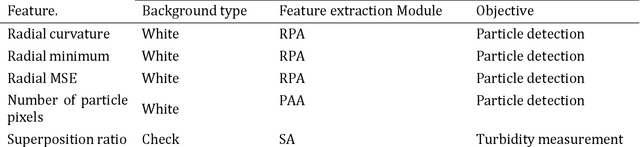
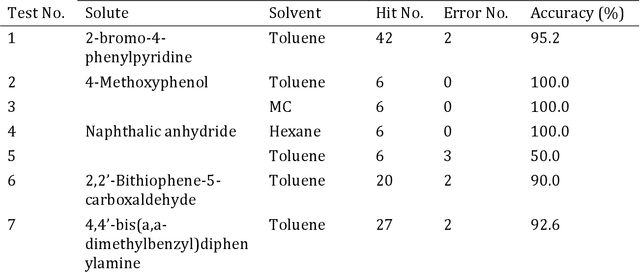
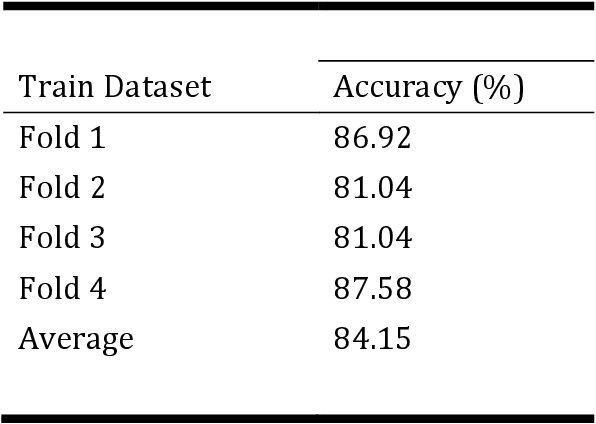
In this study, a novel active solubility sensing device using computer vision is proposed to improve separation purification performance and prevent malfunctions of separation equipment such as preparative liquid chromatographers and evaporators. The proposed device actively measures the solubility by transmitting a solution using a background image. The proposed system is a combination of a device that uses a background image and a method for estimating the dissolution and particle presence by changing the background image. The proposed device consists of four parts: camera, display, adjustment, and server units. The camera unit is made up of a rear image sensor on a mobile phone. The display unit is comprised of a tablet screen. The adjustment unit is composed of rotating and height-adjustment jigs. Finally, the server unit consists of a socket server for communication between the units and a PC, including an automated solubility analysis system implemented in Python. The dissolution status of the solution was divided into four categories and a case study was conducted. The algorithms were trained based on these results. Six organic materials and four organic solvents were combined with 202 tests to train the developed algorithm. As a result, the evaluation rate for the dissolution state exhibited an accuracy of 95 %. In addition, the device and method must develop a feedback function that can add a solvent or solute after dissolution detection using solubility results for use in autonomous systems, such as a synthetic automation system. Finally, the diversification of the sensing method is expected to extend not only to the solution but also to the solubility and homogeneity analysis of the film.